USD/INR Price Forecast 2021: Indian rupee’s four boosters to bolster its recovery
- Coronavirus pandemic drove USD/INR to all-time-highs above 77.00 in FY21.
- Fundamentals, technicals point to sustained recovery in the Indian rupee next fiscal year.
- Rising oil prices, roadblocks to vaccine rollout could challenge the INR bulls.
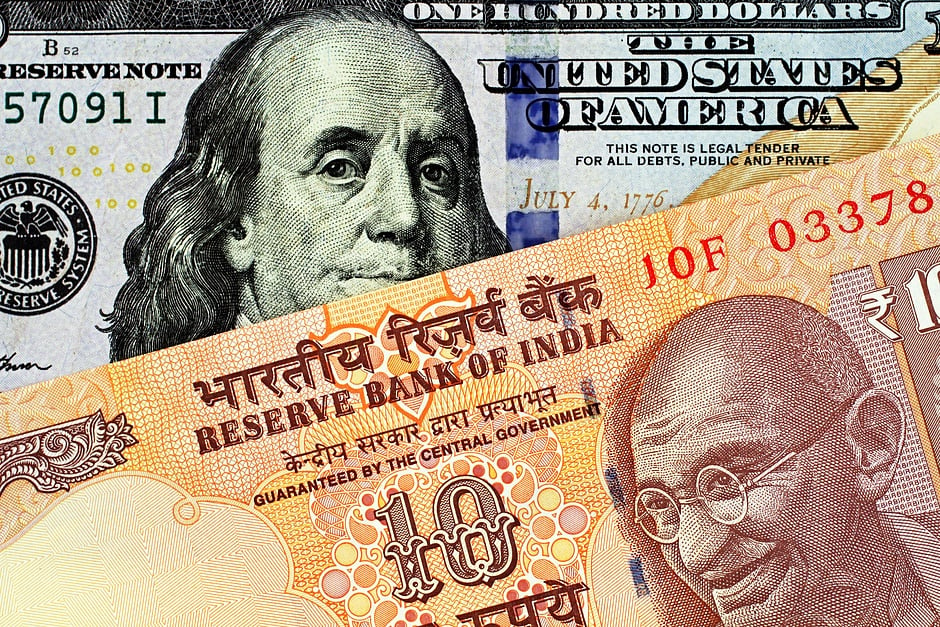

The year 2020 sent the world economy into a tailspin, as the coronavirus pandemic struck without warning. The Indian economic situation was no different amid the unprecedented global health crisis, which knocked-off the rupee (INR) about 3.50% lower against the US dollar in 2020 after falling 2.50% in 2019.
The pandemic-induced two-month nationwide lockdown drove USD/INR to a record high of 77.82 in April 2020. Ever since the Indian rupee has recovered a part of the yearly losses, ranging between 75-72 in the third quarter of the fiscal year (FY) 2020-21.
The recovery could be mainly attributed to a massive influx of foreign direct investment into India amid solid covid relief response, burgeoning forex reserves, political stability and least to say attractive domestic corporate valuations.
Indian rupee forecast: Risks skewed to the upside
Faster economic recovery – A tailwind for INR
Heading into 2021, the prospects for a continued upswing in the domestic currency appear upbeat, as India’s economy is set to recover from damage caused by the pandemic. The INR bulls remain hopeful the Finance Ministry’s USD260 billion fiscal stimulus package would help revive the economy.
S&P Global Ratings upgraded India's FY21 Gross Domestic Product (GDP) growth forecast to -7.7% vs. the previous estimate of -9%. For the next fiscal year, the US-based ratings agency projected a 10% economic growth rebound. The upward revision comes on the heels of a faster-than-expected recovery, improving domestic consumption and falling covid rates amid availability of the coronavirus vaccine.
Rupee to cheer RBI’s status-quo amid high inflation
Following 135 basis points (bps) of rate cuts in 2019, the Reserve Bank of India (RBI) slashed the key repo rate by another 115 bps in 2020 in an effort to boost credit supply and stimulate economic recovery. The effect of a low-interest-rate environment on growth will continue playing out, as the central bank is seen holding rates until the first half of FY21.
The RBI could likely maintain an accommodative stance but refrain from further rate cuts, in the face of the worryingly high inflation levels, which could threaten the economic rebound. November’s annual retail inflation eased to 6.93% after holding above 7% for two straight months. Even so, inflation stayed above the RBI’s tolerance ceiling of 6% for at least the sixth straight month.
Therefore, the Indian central bank is likely to wait for inflation to fall sustainably within its target band before acting on rates, which could render INR-positive.
Surge in foreign inflows, forex reserves
The recovery in the rupee is seen continuing next fiscal amid expectations that the surge in foreign funds inflows could very well extend, as India’s corporate valuations appear more attractive when compared to its global peers.
Foreign Direct Investment (FDI) into India grew by 15% to USD30 billion during the first half of FY21, according to the data of the Department for Promotion of Industry and Internal Trade (DPIIT). Foreign inflows into Indian equities rose to a record in November, while domestic benchmarks reached new life-time highs.
Further exerting upward pressure on the local currency is investors’ confidence in India’s ability to manage the balance of payments (BoP), in light of robust and burgeoning foreign exchange reserves.
The South Asian economy’s total foreign exchange reserves rose to a record high of USD575.3 billion in November 2020, placing it at the fifth position globally, the latest RBI data showed.
US dollar’s value erosion to boost INR further
The USD/INR pair is likely to suffer additional declines next fiscal year, as the US dollar’s downtrend could continue, in turn, aiding the recovery in the Indian rupee.
The outlook for the greenback remains bearish amid negative US real rates, stronger economic growth prospects in Emerging Market (EM) economies, and inflating fiscal deficits – courtesy of the massive covid relief aid package.
The Congressional Budget Office (CBO) expects almost $10 trillion in budget deficits in the next 10 years and this adds to the federal debt, which exert downward pressure on the dollar. The Federal Reserve’s (Fed) revamped inflation-targeting framework will also keep the dollar under pressure.
Meanwhile, bearish bets on the dollar in futures markets are at their highest level in about a decade, according to data from the Commodity Futures Trading Commission. The US currency is sitting near 32-month lows and is down about 7% on the year.
Rising oil prices, vaccine worries may threaten the rupee turnaround
The rebound in the Indian rupee against its American counterpart could run into risk should oil prices continue their rally amid coronavirus vaccine-driven optimism over a swift global economic recovery.
The oil-price surge could widen India’s current account deficit (CAD), which is likely to outweigh the positive impact of the forex reserves growth on the BoP.
Potentially setting the stage for another setback to the rupee recovery could be the roadblocks to the vaccine rollout in the country. Delay in the vaccine availability could derail the economic recovery while the cases continue rising.
Indian regulators refused to grant AstraZeneca’s Covid-19 vaccine an emergency use authorization (EUA) based on a dearth of adequate safety and efficacy data
Indian Rupee Price Analysis: Eyeing 10% upswing?
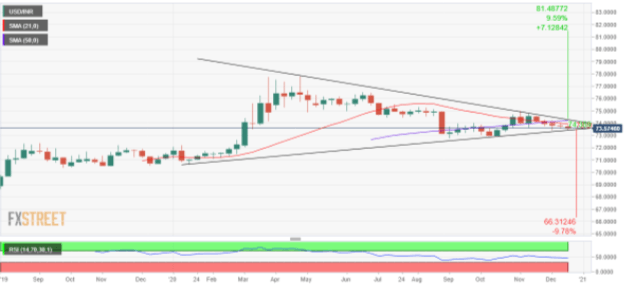
The consolidation in the USD/INR pair that followed the retracement from the record high has carved a symmetrical triangle formation on the weekly time frame.
Over the last couple of months, the trading range has significantly narrowed, with the spot wavering between within a $1.50 band.
The tightening trading range suggests that USD/INR remains primed for a breakout. The odds of a downward move are higher, given that the Relative Strength Index (RSI) lurks in the bearish region, below 50.00.
The bearish crossover adds credence to the case for a downside break. The 21-week simple moving average (WMA) pierced through the 50-WMA from above, confirming the bearish formation.
The Indian rupee could eye a 10% upswing on a symmetrical triangle bearish breakdown, with the measured target for USD/INR aligned around 66.30. Although clearance of the powerful 70.00 support is critical to extending the rupee’s recovery rally.
Conversely, acceptance above 74.30, the confluence of the pattern resistance and 50-WMA, is likely to validate a bullish breakout, calling for a test of another significant hurdle just above 76.50. That resistance is around where the May and June 2020 highs merge. The record highs could be back in the spotlight further out.
Premium
You have reached your limit of 3 free articles for this month.
Start your subscription and get access to all our original articles.
Author
Dhwani Mehta
FXStreet
Residing in Mumbai (India), Dhwani is a Senior Analyst and Manager of the Asian session at FXStreet. She has over 10 years of experience in analyzing and covering the global financial markets, with specialization in Forex and commodities markets.

















