US February consumer inflation vaults to a new 40-year record, real wages fall
- Consumer prices climbed 7.9% over the last year, the sharpest increase since January 1982.
- Core inflation, without food and energy costs, rose 6.4%, highest since August 1982.
- Necessities, food, shelter and gasoline were the biggest components of the CPI increase.
- Real wages fall 0.8% in February and have declined 2.6% on the year.

American consumer prices rose at the steepest rate in four decades, and are poised to go higher as the Ukraine war drives energy and commodities expenses to double digit gains.
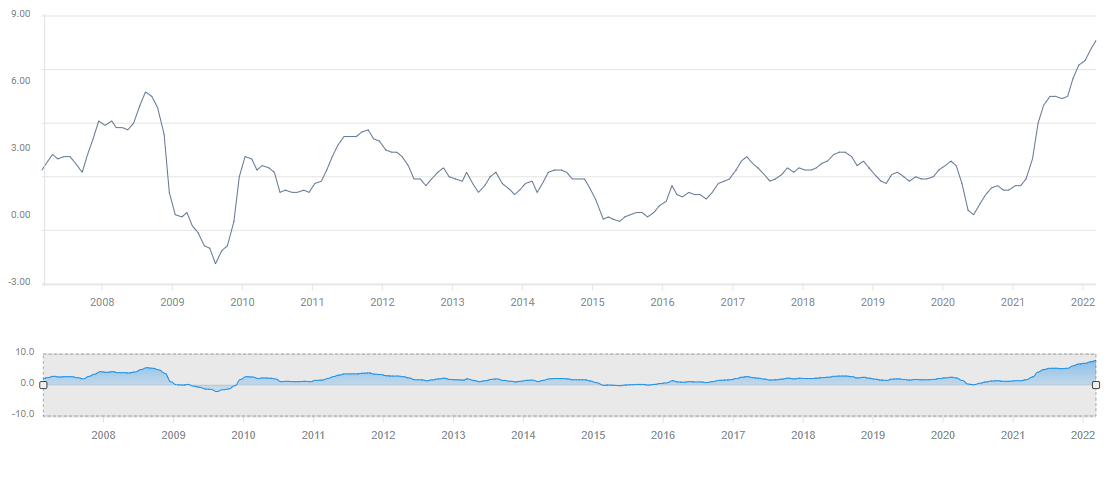
The February Consumer Price Index (CPI) increased 7.9% in a year, the seventh month in a row that the index has set a new 40-year record, and the fastest increase since January 1982, reported the Bureau of Labor Statistics on Thursday. For the month prices jumped 0.8%.
CPI
Core prices, which exclude food and energy costs, rose 6.4% on the year, their sharpest gain since August 1982, and 0.5% in the month.
Food prices, a grouping that includes restaurant and home meals, rose 1% last month, 7.9% annually. Groceries rose 1.4% in February and 8.6% over 12 months.
Energy continued its runaway increases, soaring 3.5% in February and underpinning about one-third of the overall CPI rise. Gasoline of all types rose 6.6% and fuel oil, used to heat many older homes, added 7.7%. They are 38.0% and 43.6% higher respectively on the year. Piped natural gas, for heating and cooking, was 1.5% higher on the month and 23.8% for the year.
Shelter expenses climbed 0.5% in February and 4.7% over 12 months, which was the most rapid annual increase since May 1991.
Inflation has been stoked by several factors including supply-chain disruptions from the lockdowns, a shortage of labor and raw materials, and strong consumer demand as the pandemic fades, all backed by an unprecedented binge of spending flooding out of Washington.
US inflation
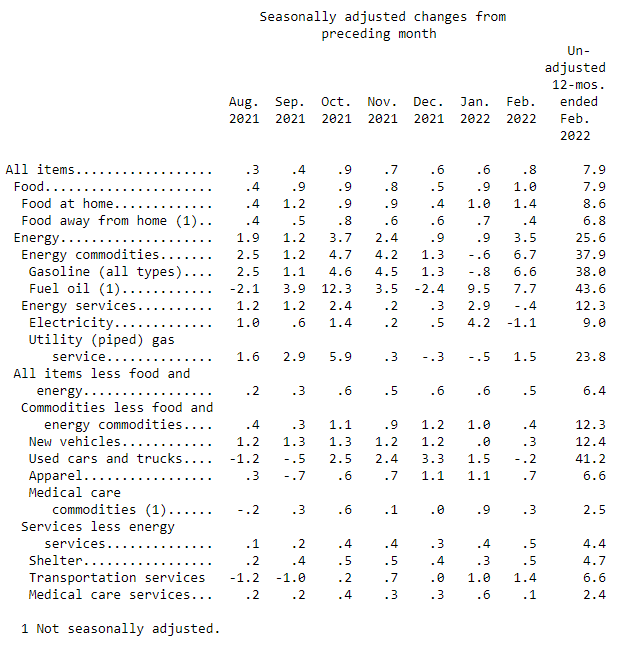
US Bureau of Labor Statistics
Ukraine and energy
The invasion of Ukraine and the subsequent market dislocations and sanctions on the Russian economy have sent oil prices flying higher. In the eight trading days this month to Thursday’s close, Brent, the international pricing standard, has added another 9.9%. West Texas Intermediate (WTI), the US and North American gauge, is 8.6% higher.
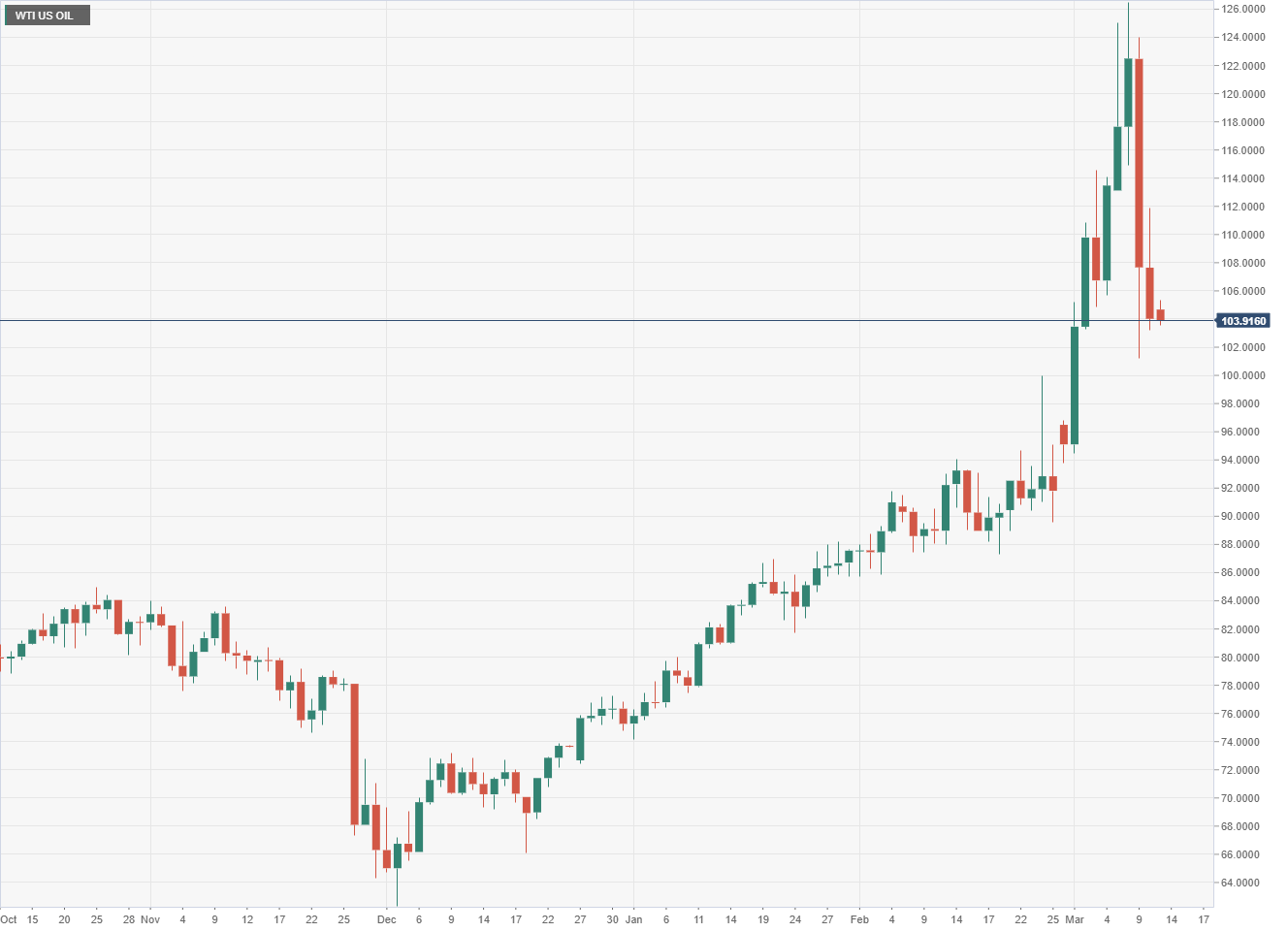
On Wednesday, March 8 Brent had closed at $127.30, a 30.2% increase and WTI finished at $122.50, up 28.8%.
 10-637825597787332083.png)
Cease-fire negotiations on Thursday failed to reach an agreement on any of the points under discussion. Russian troops continue to gather around Kyiv and to shell and bombard several cities in Ukraine. If Russia attacks Kyiv, which the Ukrainians have vowed to defend, energy prices could easily spike again, especially if the Europeans stop importing Russian oil and natural gas.
Wages
Real Average Hourly Earnings, adjusted for inflation, slipped 0.8% in February. Earnings from the payrolls report were flat and CPI rose 0.8%. On the year, seasonally adjusted real wages declined 2.6%.
Consumer purchasing power has been shrinking since last April as inflation has accelerated faster than wage have increased, despite the exceptionally tight labor market and the record number of unfilled jobs over the past seven months.
Markets
Market responses were subdued as 7.9% CPI met the consensus estimate and traders remain focused on Ukraine and the Federal Reserve meeting next week.
The Dow lost 112.18 points, 0.34% to 33,174.07, though it was considerably lower and slightly higher through the course of the day. The S&P 500 shed 0.43%, 18.36 points to 4,259.52 and the Nasdaq dropped 125.58 points, 0.95% to 13,129.96.
Dow
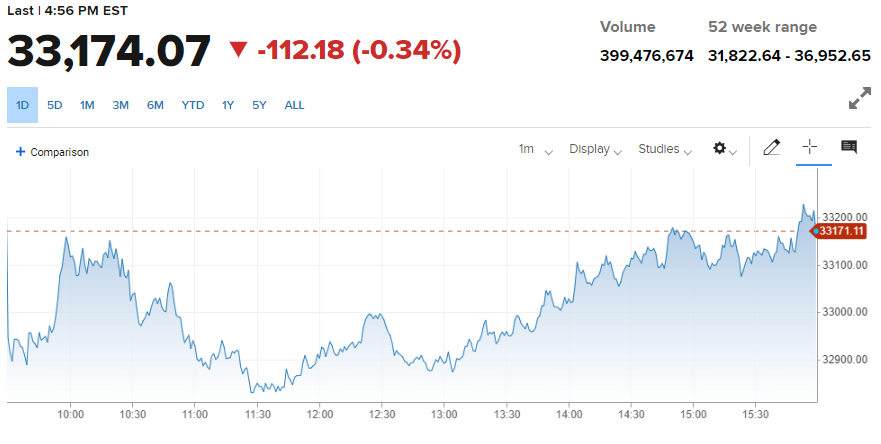
CNBC
Treasury yields continued their rise with the 10-year note finishing at 2.009%, up 14 basis points and the 2-year closed at 1.719% up 4 points.
European currencies lost about half of yesterday’s gains. The EUR/USD ended at 1.0977, down from 1.1071 and the sterling dropped about a figure from 1.3186 to 1.3084. The US dollar rose versus the Japanese yen, moving from 115.81 to 116.12.
-637825600136201241.png)
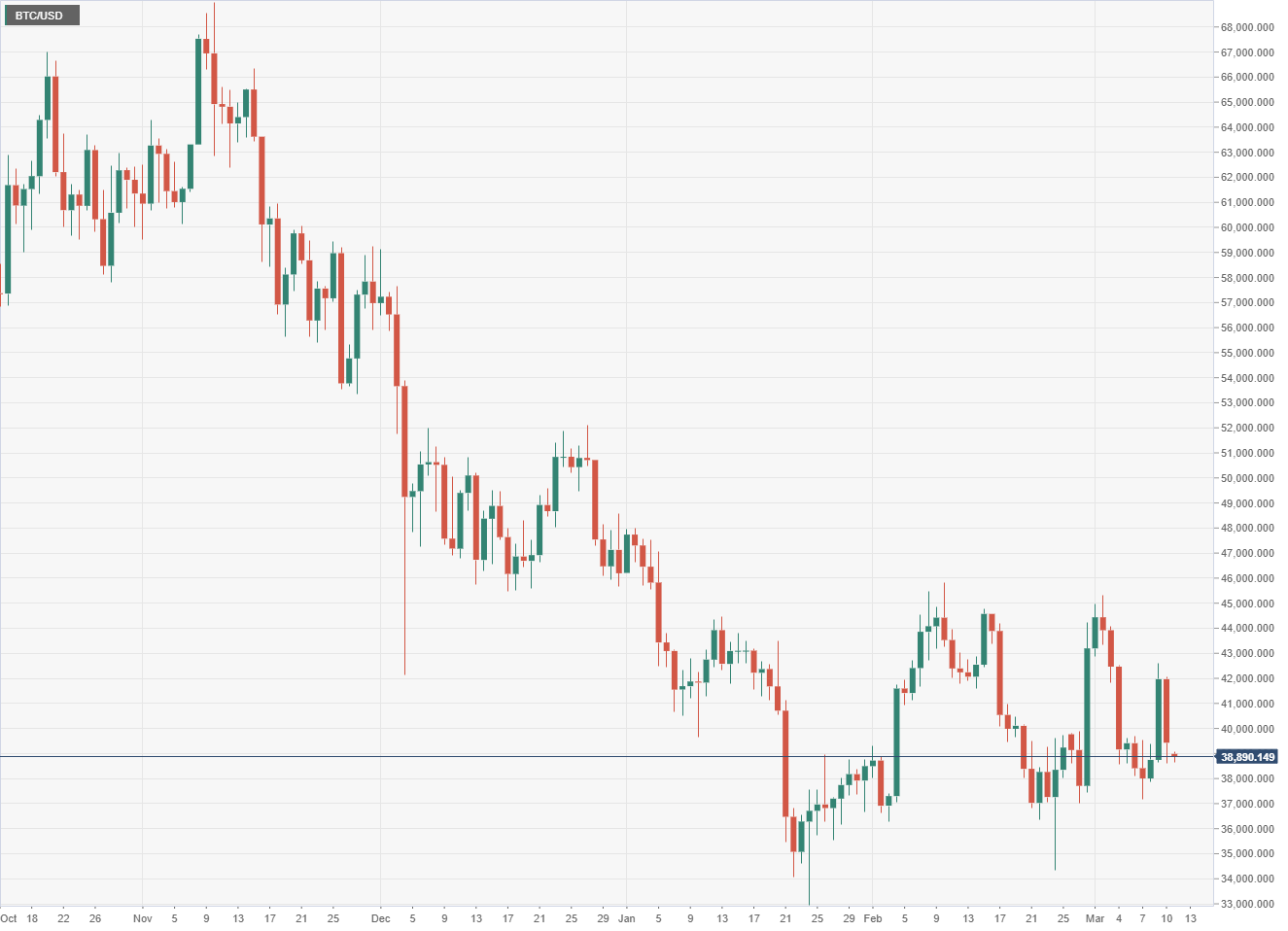
Bitcoin reversed Wednesday's gain, falling from 41,964 to 38,430.
ECB and Fed policies
The European Central Bank (ECB) left its policy rate unchanged at -0.5%, though President Christine Lagared did announce a more rapid departure from its bond support program, ending it in June.
The Fed will raise its base rate 0.25% at this month’s meeting, initiating a series of increases, the end point of which is open to much speculation. The fed funds futures market estimates at least five increases to a base of 1.50%-1.75% by the final Fed meeting on December 14.
The Fed’s own projections will be updated at the March meeting. In the prior set from December, the bankers anticipated three rate hikes to the end of the year.
Final notes
February CPI did not add any information to the economic and policy mix. The Ukraine war has intensified the price pressures in the US and around the world and markedly increased the economic distress. A prolonged bout of inflation, with soaring energy costs could spin the global economy into recession.
The Fed will inaugurate its rate cycle on March 16, beyond that there is almost no certainty.
Premium
You have reached your limit of 3 free articles for this month.
Start your subscription and get access to all our original articles.
Author
Joseph Trevisani
FXStreet
Joseph Trevisani began his thirty-year career in the financial markets at Credit Suisse in New York and Singapore where he worked for 12 years as an interbank currency trader and trading desk manager.