UK wage growth ends in 2018 on a strong footing
- The UK unemployment rate remained at 4.0%, the lowest since December 1974 to February 1975 trimester.
- The UK regular pay excluding bonuses rose 3.4% in three months to December 2018 while the total pay also rose 3.4% ion the same period of time, missing the market estimate slightly.
- The claimant count rose 14.2K in January, up from 12.3K expected.
- The labor market tightness confirmed the prediction of the Bank of England that sees rising wages as the main determinant of inflation picking up in the UK.


The UK labor market ended the year 2018 on a strong footing with the average weekly wages rising 3.4% over the year in three months ending in December 2018 both including and excluding bonuses, while the UK unemployment rate remained stuck to a four-decade low of 4.0%.
While UK total pay including bonuses missed the market estimates, the UK claimant count representing the number of people seeking the unemployment benefits also missed on the upside rising 14.2K in January, up from 12.3K expected by the market.
The total number of unemployed people in the UK reached 1.36 million in January with 32.6 million people in active employment. The economic inactivity rate dropped to 20.9%, the lowest since comparable estimates began in 1971.
The average weekly regular pay excluding bonuses reached £495 per week in nominal terms, rising 3.4% over the yeat in three months to December 2018 and rising 1.2% y/y in real, inflation-adjusted terms.
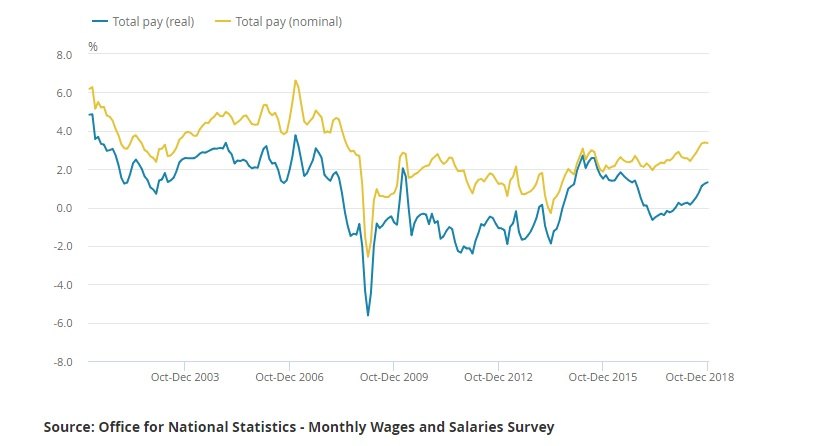
The UK total weekly pay including bonuses also rose 3.4% over the year in three months to December 2018 reaching £527 per week in nominal terms and rising 1.3% in real terms after inflation adjustment.
The UK January labor market report confirmed the prediction from the Bank of England that repeatedly pointed out that the UK labor market tightness is the main determinant of future inflation pressures in the UK.
"While most surveys of employment intentions softened a little in Q4, consistent with a slight slowing in employment growth in early 2019, labor market conditions are projected to remain tight and unemployment is expected to be broadly stable in the near term,” the Bank of England wrote in its February Inflation Report on February 4.
The UK total pay growth rate ending until December 2018
Author
Mario Blascak, PhD
Independent Analyst
Dr. Mário Blaščák worked in professional finance and banking for 15 years before moving to journalism. While working for Austrian and German banks, he specialized in covering markets and macroeconomics.