UK unemployment rate drops to fresh low


The Bank of England has said it will act forcefully at its November meeting, and the latest UK jobs numbers are unlikely to get in its way. Whether we get a 75bp or 100bp rate hike will depend on whether the government's fiscal plan in late October succeeds in stabilising markets.
If you’re looking for a source of good news in the UK right now, the jobs market is not a bad place to look. The unemployment rate fell to another post-1970s low of 3.5%, while wage growth accelerated. And despite all the concerns about recession – which indeed is our base case for this winter – there are few signs of it in the jobs market just yet. Redundancies are low and stable, even if vacancy levels have begun to gradually tail off.
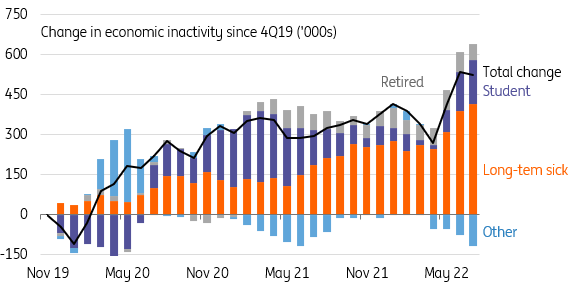
It’s not all rosy, however, and these positive headline figures mask some concerning underlying trends. Employment is still well below pre-virus levels, and the number of people inactive – ie neither working nor actively seeking a job – has risen by more than half a million since Covid-19 began. While that latter figure fell slightly in these latest numbers, the number of people classified as long-term sick and out of the jobs market has continued to climb. These figures are up by almost 170,000 people in the past three months' worth of data alone. It’s hard to escape the conclusion that this is at least partly linked to delays in the NHS.
Long-term sickness continues to draw people out of the labour market
Source: Macrobond, ING
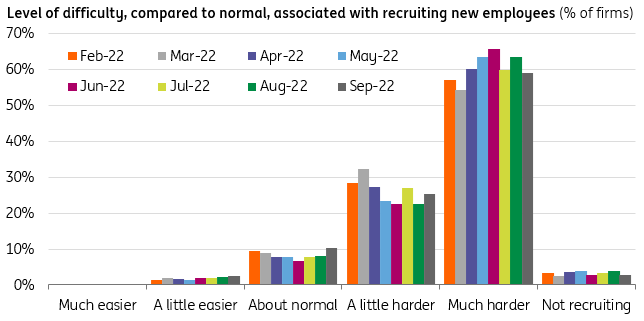
The Bank of England will ultimately view this through the lens of labour shortages, which don’t appear to be improving. The Bank’s own ‘Decision Maker’ survey shows the percentage of firms finding it ‘much harder’ to hire has barely budged this year. A lot could change over winter as firms’ margins get squeezed further by a lack of consumer demand and mounting cost pressures. But even then there is an incentive to retain staff as much as possible, given concerns about rehiring.
Labour shortages don't appear to be improving, according to a BoE survey
Source: Bank of England Decision Maker Survey
The bottom line is that if the Bank of England wants to act forcefully at its November meeting, then these jobs figures aren't likely to stop it. Instead, whether we get a 75bp or 100bp move depends on wider market conditions – in which the BoE's bond purchases are important – and whether the government is able to reassure investors on debt sustainability.
Ministers have brought forward their Medium-Term Fiscal Plan to 31 October, and markets will be looking for bold action to reduce planned debt issuance over the next couple of years. We're closely watching reports that the government is re-considering a form of revenue cap/windfall tax on certain energy providers.
If markets are calmer going into the November BoE meeting, then the BoE will more likely opt for a 75bp hike. But if volatile markets persist, and the pound weakens further, the Bank will be under a lot of pressure to act. We're therefore pencilling in a 100bp hike for the time being.
Read the original analysis: UK unemployment rate drops to fresh low
Author
ING Global Economics Team
ING Economic and Financial Analysis
From Trump to trade, FX to Brexit, ING’s global economists have it covered. Go to ING.com/THINK to stay a step ahead.