UK GDP Preview: BOE’s R-word to overshadow a mild expansion
- The British economy is seen expanding 1.0% in Q1 2022 vs. 1.3% previous.
- The BOE warns risks of a double-whammy - a recession and inflation above 10%.
- The pound remains exposed to downside risks irrespective of any outcome.

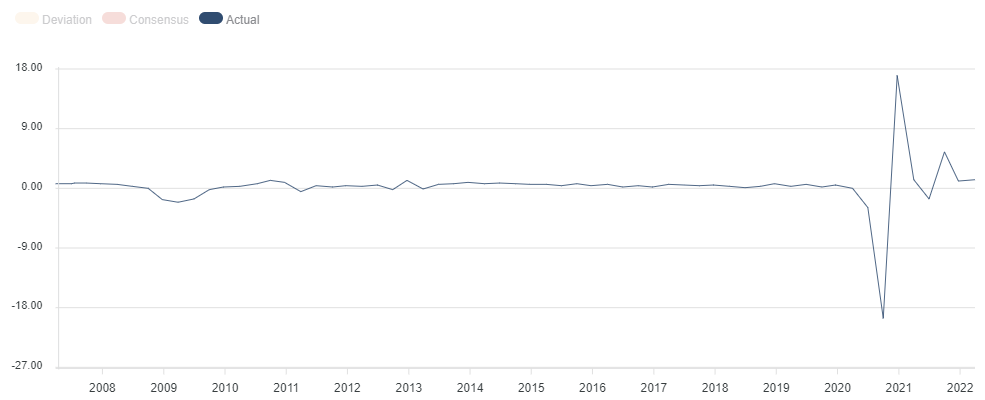
The UK economy expanded by 1.3% in the final three months of 2021, as it overcame the Omicron covid variant-blow. In the first quarter of 2022, the world has been reeling from a protracted Russia-Ukraine war, with the British economy likely to be the worst-hit amid a trade shock.
The quarterly GDP print, due to be released on Thursday at 06:00 GMT, is likely to show a 1.0% expansion in the UK economy in Q1 2022. On an annualized basis, the UK GDP is likely to have grown 9.0% during the same period vs. 6.6% reported in the previous quarter. The March MoM GDP is seen steadying at 0.1%.
Source: FXstreet
BOE flags recession risks
The Bank of England’s (BOE) warnings of an incoming recession and inflation surpassing 10% later this year are likely to offset any optimism on a mild expansion marked in the three months to March. The BOE's recent Monetary Policy Report (MPR) forecasts headline inflation to peak at 10.2% YoY in Q4 2022.
According to the S&P Global / CIPS UK Composite PMI, the private sector activity picked up despite rising price inflationary pressures. Although the service sector showed signs that sustained increases in the cost of doing business and the war in Ukraine combined to limit the pace of expansion at the start of the second quarter.
Meanwhile, the UK’s leading think tank, the National Institute of Economic and Social Research (NIESR) warned on Wednesday that the country will soon be in recession.
“The human misery and devastation it has caused, the Russian invasion of Ukraine has led to further rises in oil and gas prices and inflation more generally. From the point of view of the United Kingdom, this has acted as terms of trade shock and as such would be expected to lead to a rise in inflation and a fall in output and real income,” the NIESR said in its report.
China’s extended covid lockdowns have added to the supply chain crisis, further fuelling higher inflation.
UK PM Boris Johnson pledged to extend measures to support the economic growth during the Queen’s Speech on Tuesday. Johnson, however, warned the government could not fully shield Britons from the impact of soaring inflation.
Trading GBP/USD on the UK GDP
Heading into Thursday’s UK GDP, markets have their eyes on the critical US inflation release, which is likely to show price pressures peaking in the American economy. Given the contrasting US-UK macroeconomic data, the pound is likely to remain on the losing end.
A quarterly increase of 1.0% or higher could fail to lift GBP/USD from near multi-year troughs, as the UK economic outlook appears dire over the coming quarters.
Should the GDP rate fall short of expectations or contract, GBP/USD could see a fresh downside leg towards 22-month lows of 1.2260 en-route 1.2200.
All in all, the quarterly UK growth numbers are unlikely to change the gloomy economic picture, which will likely keep GBP/USD as a ‘sell the bounce’ trade.
Premium
You have reached your limit of 3 free articles for this month.
Start your subscription and get access to all our original articles.
Author
Dhwani Mehta
FXStreet
Residing in Mumbai (India), Dhwani is a Senior Analyst and Manager of the Asian session at FXStreet. She has over 10 years of experience in analyzing and covering the global financial markets, with specialization in Forex and commodities markets.