Three Steps to Making Your Personal Finances More Private in a Digital Age

Imagine a world where every financial move you make gets recorded in databases that are accessible by any number of third parties – from bankers, to government bureaucrats, to data thieves.
It’s the world of the cashless, all-digital economy. And it’s rapidly approaching.
Fortunately, there are some steps you can take to secure your financial privacy – or at least make your wealth less vulnerable to digital prying – before it’s too late.
1. Don’t Trash Your Cash Stash (Yet)
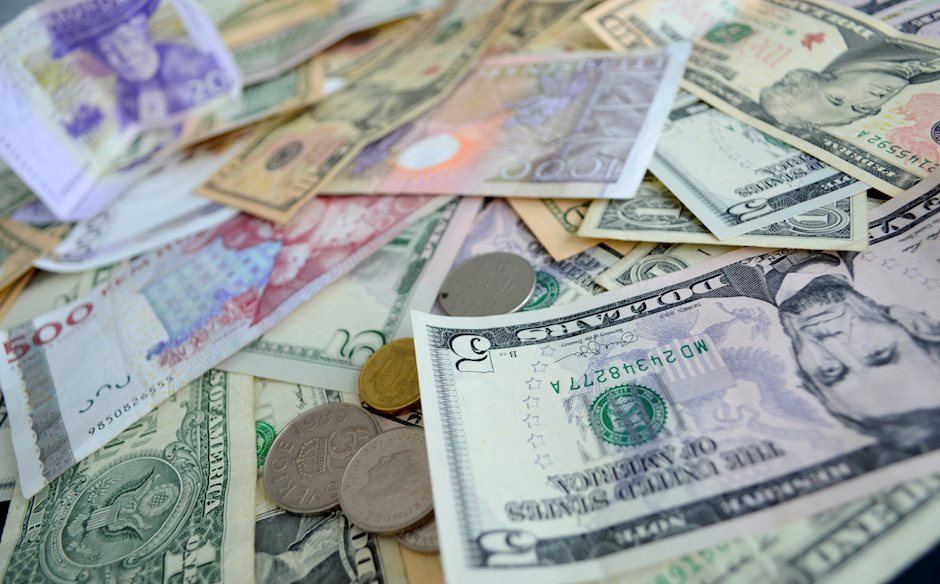
Paper Federal Reserve Notes are a terrible store of value (in fact, they’re guaranteed to lose value over time). Even so, they are still highly useful in everyday commerce.
In some circumstances, it’s just more convenient to use paper money – or you may wish to keep your transactions off the digital grid whenever it’s possible to do so.
In these situations, $20, $50, or $100 bills are superior to checks, credit cards, smartphone payment apps, or even cryptocurrencies.
Contrary to what some Bitcoin enthusiasts believe, blockchain transactions are not “private.” They are recorded on a public ledger and can sometimes be traced back to individual identities.
Obviously, any transactions that get processed through bank or credit card payment systems create digital records that can be exploited. If the financial industry (not to mention the IRS) had its way, all payments would take place in the digital dollar realm.
Anti-money laundering laws already make it legally risky to carry around large amounts of cash – or to deposit or withdraw cash at banks beyond vague “suspicious activity” thresholds. Some politicians are openly calling for $100 and $50 bills to be abolished to further discourage the use of cash for large transactions.
Given the government’s war on cash, it may be more of a privacy risk than advantage to, for example, insist on paying for a new car in physical cash. But for smaller, more routine transactions where paying in cash won’t seem “suspicious” to anyone, you can avoid generating digital records.
As noted above, Federal Reserve Notes are depreciating assets, so you wouldn’t want to keep a large amount of your wealth in them. In the event of a hyperinflationary collapse of the currency, you wouldn’t want to be stuck holding paper cash for any length of time. It could lose half its value literally overnight.
For superior wealth preservation over time, hoard hard money – gold and silver.
2. Invest in Non-Traceable Tangibles
The United States dollar may not necessarily be on the cusp of a Weimer Germany or Zimbabwe-style collapse. But even slow and steady depreciation at the Federal Reserve’s inflation target of 2% can have devastating consequences when compounded over the years.
That’s why it’s essential to park wealth in contra-dollar assets including precious metals.
Sure, you can potentially stay ahead of inflation during good times by owning assets such as rental properties and dividend stocks. But it’s nearly impossible to do so privately.
People who take extraordinary steps to try to hide their financials assets through trusts, corporations, offshore entities, or supposedly anonymous “numbered accounts” risk causing themselves even more trouble by running afoul of laws.
In recent years, most all loopholes for attaining financial privacy legally have been closed.
However, it is still legal to hold high-value tangible assets including memorabilia, diamonds, and gold and silver coins, bars, and rounds without having to set up an account for them, register them with the government, or pay any federal taxes on them unless and until you decide to sell and have capital gains to report.
Obviously, to keep your tangible wealth private, you’ll need to keep quiet about it. Tempting though it may be to show off your latest bullion purchase on Instagram or Twitter, some things are best kept out of the digital public square.
3. Stay Off Social Media
Social media giants and their advertisers are mining our personal data, our time, and our attention spans for billions in profits. We’re only now beginning to fully realize the dangers of social media usage on everything from our mental health and physical safety to our careers and finances.
Over the past year, Facebook, Twitter, and Google have all come out and admitted that they collect more data on us than they previously disclosed – and that they have done a poor job of protecting it from abuse.
It’s not hard to find countless stories of jobs lost and finances wrecked due to simple (and easily avoidable) social media posts. Leftist outrage mobs wage organized and institutionally funded campaigns to expose and punish people for offensive posts.
A Daily Beast “journalist” credited Facebook staff with helping him pin down the identity of the Trump supporter whose recent viral video made Nancy Pelosi’s speech sound inebriated.
A Jordanian-American female novelist who tweeted about a D.C. Metro worker acting inappropriately was cyber bullied off Twitter and lost a book deal potentially worth millions. Why? Because the rule-breaking worker was a black female whose identity currently occupies a more protected place on the left’s “protected group” hierarchy than a lighter-skinned Arab woman with economic privilege.
Even if you never get political on social media, anything you post with the most innocuous of intentions could be interpreted through a warped political lens by people who have nothing better to do than find offense where none was intended.
Just having your name, face, and/or location displayed on social media can enable scammers, hackers, and artificial intelligence bots to connect more dots about you than you even knew existed online.
Social media usage is akin to a dangerous and highly addictive drug. There are always reasons to post, to check notifications, to connect. The side effects are often various levels of jealousy, guilt, anxiety, and stress.
Social media’s next way to keep us hooked may be through digital currencies. Facebook is expected to soon release its own cryptocurrency, which reportedly will be a “stablecoin” linked to global government-issued fiat currencies.
When Big Tech and Big Government combine forces, you can be sure your privacy gets squeezed.
To receive free commentary and analysis on the gold and silver markets, click here to be added to the Money Metals news service.
Author
Stefan Gleason
Money Metals Exchange
Stefan Gleason is President of Money Metals Exchange, the national precious metals company named 2015 “Dealer of the Year” in the United States by an independent global ratings group.