The Fed Goes Nuclear
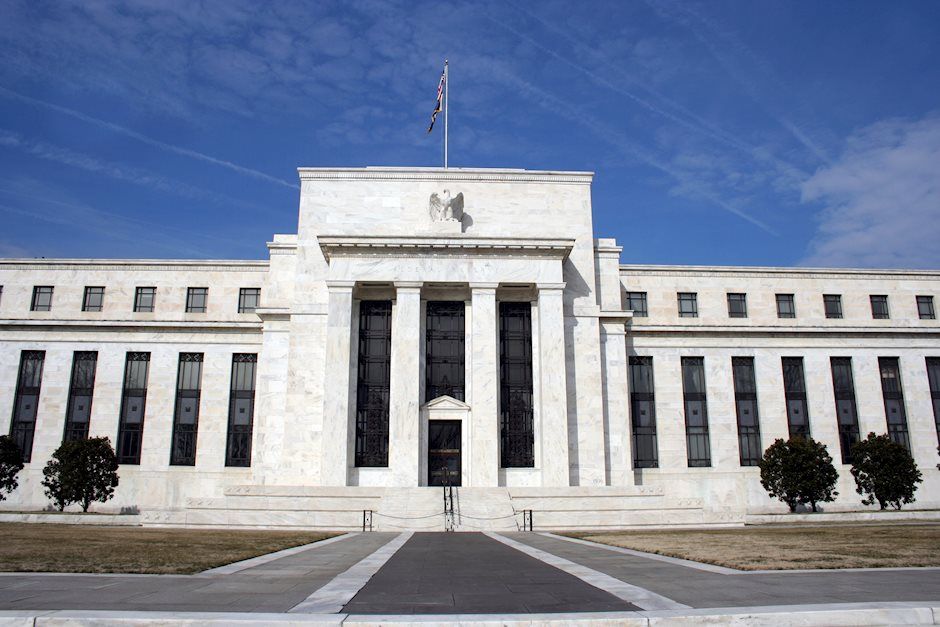

The Federal Open Market Committee (FOMC) announced a series of steps this morning designed to support the flow of credit in the U.S. economy. The actions taken are breath-taking in their scope. Indeed, these steps surpass in breadth and depth the measures that the Fed created in the midst of the financial crisis a decade ago. If the Fed pulled out a monetary policy "bazooka" during that crisis, then the steps it announced this morning are the central bank equivalent of "going nuclear."
First, the Fed will be ramping up its quantitative easing (QE) program even further. Just last week, the FOMC had announced that it would "increase its holdings of Treasury securities by at least $500 billion and its holdings of agency mortgage-backed securities by at least $200 billion" over coming months. The Fed's commitment to QE now appears to be open-ended. Specifically, the Federal Reserve will now buy Treasury securities and agency MBS in "the amounts needed to support smooth market functioning and effective transmission of monetary policy to broader financial conditions and the economy." In short, the Federal Reserve will do whatever it takes to support these markets. Furthermore, the Fed will include commercial mortgage-backed securities in its agency MBS purchases. Purchases of residential and commercial MBS are meant to compress spreads in those markets, which have widened over the past few weeks.
The FOMC is also re-instating some programs that it created during the financial crisis. Last week, the committee announced that it was re-starting some programs that were meant to pump liquidity back into money markets via facilities that will support money market funds and commercial paper. The committee announced this morning that it is reviving the Term Asset-Backed Securities Loan Facility (TALF), through which the Fed will support bond markets that are securitized by student loans, auto loans, credit card loans and other similar types of loans. As during the financial crisis, these steps are meant to support the flow of credit to households and businesses.
But the FOMC went much further this morning than simply dusting off some programs that were created a decade ago during the financial crisis. For starters, the committee announced this morning that it will be creating two facilities to support credit to large employers. The Primary Market Corporate Credit Facility (PMCCF) will support the issuance of investment grade corporate bonds, and the Secondary Market Corporate Credit Facility (SMCCF) is aimed at provide liquidity in the investment grade corporate bond market. This is the first time, of which we are aware, that the Fed has stepped in to provide direct support to the corporate bond market.
The Federal Reserve is also taking steps to support municipalities that may soon experience difficulties accessing financing as their tax revenues dry up.1 As noted above, the Fed created the Money Market Mutual Fund Liquidity Facility (MMLF) last week to support money market funds. The Fed has broadened the MMLF to include variable rate notes that are issued by municipalities. In addition, the Fed will also support municipal financing via its expansion of the Commercial Paper Funding Facility (CPFF) to include high-quality, tax-exempt commercial paper.
Most incredibly, the committee announced that it will soon be releasing details on the Main Street Business Lending Program that is intended to support lending to small-and-medium sized businesses. This program will support efforts that are underway by the Small Business Administration (SBA) to keep credit flowing to businesses that rely primarily on bank lending for financing. The programs that the Federal Reserve announced this morning are being capitalized by a $30 billion equity injection from the U.S. Department of the Treasury.
The economy likely will suffer a very sharp contraction in the second quarter due to the sudden stop in many areas of consumer spending that are underway. We will be releasing details of our updated forecast later this week, because the risks to the forecast that we published on March 16 are skewed significantly to the downside. In our view, the measures that were announced by the Federal Reserve this morning will help to support the flow of credit in the economy. In short, these steps should help prevent a sharp, albeit short-lived, economic contraction from developing into a deeper and more prolonged slump. However, there is a vital immediate role for fiscal policy to play to help support spending in the economy. All eyes are now on Congress.
Author
Wells Fargo Research Team
Wells Fargo