The end of the darkness for real wages in the UK
- Wages in the UK rose 2.8% including bonuses, the fastest growth rate since September 2015.
- The unemployment rate dropped to 4.2% matching 1975 low.
- The Bank of England en course to interest rate hike in May as inflation-adjusted wages rise for the first time since January last year.

The Bank of England always expected that low unemployment would sooner or later see wages rising and feed through into rising prices in the UK. Therefore the relationship between the UK labor market features and the Bank of England monetary policy is traditionally very strong and such logic also stands behind the recent surge in Sterling.
The UK labor market report for the March therefore came in a bit mixed with both average weekly earning including and excluding bonuses missing the market expectations rising 2.8% in three months to February respectively while the unemployment rate dropped to 4.2% in three months to February, its lowest level since 1975 and the claimant count rose above expectations by 11.6K in March after upwardly revised 15.0K in February.
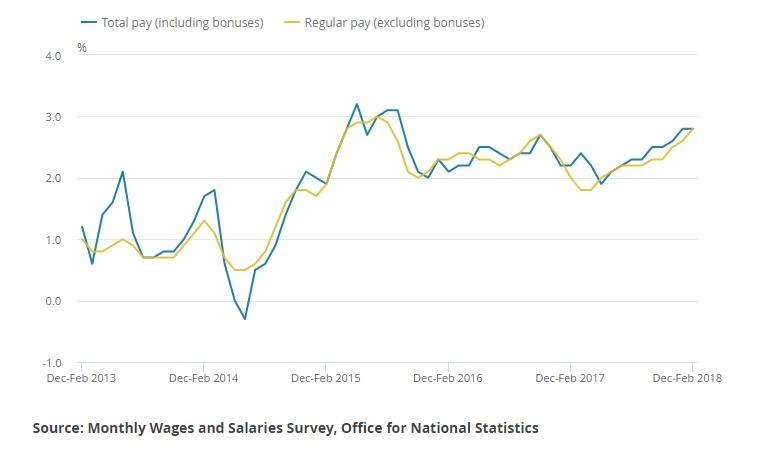
Nominal wages in the UK rose 2.8% including bonuses, the fastest growth rate since September 2015.
Although the wage growth, a key element of the labor market report, missed the market expectations, the nominal wage development is still positive in real, inflation-adjusted terms as inflation in February rose 2.7% y/y while wages including bonuses rose 2.8%, rising faster than inflation for the first time since January 2017 when inflation reached 1.8% y/y while wages rose 2.2% y/y.
With the sharp depreciation of Sterling and its negative effect on rising inflation in the UK now dissipating, the Bank of England will focus on long-term prospects for inflation stemming from the tight labor market and therefore the combination of inflation and labor market data are the key to unlock the monetary policy prospects puzzle.
The UK nominal wage growth rate since 2013
Author
Mario Blascak, PhD
Independent Analyst
Dr. Mário Blaščák worked in professional finance and banking for 15 years before moving to journalism. While working for Austrian and German banks, he specialized in covering markets and macroeconomics.

















