Stock future trade lower ahead of heavy economic data while trade tensions return


Where are markets today?
U.S. and European futures suggest a down opening on Monday, June 2, 2025, as investors react to renewed trade tensions and await major economic reports to be published. U.S. futures declined, including S&P 500 futures by 0.3%, Nasdaq-100 futures by 0.3%, and Dow Jones Industrial Average futures by 108 points, or by 0.3%. European markets were not left out, with the Euro Stoxx 50 futures declining by 14 points, DAX futures declining by 53 points, and the CAC 40 futures declining by 26 points.
The big catalyst for this tentative beginning to the week is President Trump's latest decision to impose a tariff on the import of steel and aluminum by 50%, to take effect on June 4, said Nadir Belbarka, Analyst and Lecturer , Live Broadcast Room at XMarabia. This has resurrected the threat once again of a trade war with China and the EU, both of which have already suggested retaliatory action. Investors are also bracing themselves this week for a deluge of economic data releases, such as the ISM Manufacturing PMI and speeches by Federal Reserve officials, which can shed further light on the central bank's policy outlook.
Even though the market in May was strong, with the S&P 500 up more than 6%, the Nasdaq Composite up more than 9%, and the Dow Jones Industrial Average up by around 4%, recent trade tensions have added yet another element of uncertainty to the equation. Investors are now weighing the potential impact on the bottom line and supply chains globally, particularly among the tech and manufacturing industries. Later in the week, traders will be paying close attention to developments surrounding trade negotiations, economic releases, and central bank communications. How they interact with each other contains the key to the market's movement over the coming days.
Major index performance through May 31, 2025
- S&P 500: Closed at 589.39, down 0.46 points (-0.08%) from the previous session.
- Nasdaq Composite (QQQ): Closed at 519.11, down 0.58 points (-0.11%).
- Russell 2000 (IWM): Closed at 205.07, down 1.02 points (-0.50%).
- Dow Jones Industrial Average (DIA): 422.85 after closing 0.22 points (+0.05)
The Magnificent Seven and the S&P 500
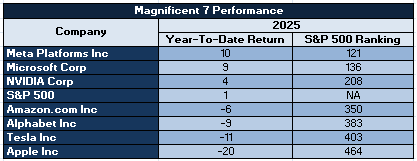
The S&P 500 has been holding firm due to the positive contribution of the "Magnificent Seven," which are big players such as Nvidia, Apple, and Microsoft, and are powered by developments related to AI and solid reports of their earnings.
But amidst these gains, caution is signaled by the broader market. The euphoria of the individual investors, which had powered previous rallies, is wearing off, say analysts. Without new investment from these investors, gains could not be sustained.
Drivers behind the market move
Global markets are lower today due to heightened trade tensions and upcoming releases of economic data. U.S. futures declined, S&P 500 futures down by 0.3%, Nasdaq-100 futures down by 0.3%, and Dow Jones Industrial Average futures down 108 points, which translates to 0.3%. European markets moved in the same way, the Euro Stoxx 50 futures down by 14 points, DAX futures down by 53 points, and CAC 40 futures down by 26 points.
1. Trump tariffs escalation worries global trade
US President Donald Trump, in his recent move to double steel and aluminum import tariffs to 50%, effective from June 4, reawakened fears about an international trade war. It triggered steel and aluminum stocks across the globe to plummet, with steep declines seen among South Korean and Vietnamese steel manufacturers. European Union and Canada have denounced the measure strongly, the EU declaring it is to take retaliatory steps, tightening international trade relations.
2. Federal Reserve action under inflationary pressure
Federal Reserve Governor Christopher Waller indicated that while new tariffs would be inflationary in the short term, he is prepared to reduce interest rates this year if inflation expectations are still well-anchored and the labor market remains firm. That would mean the Fed is prepared to look through temporary inflationary pressures due to tariffs and concentrate on stability in the long term.
3. Expectations for upcoming economic data releases
The investors await release today, at 10:00 a.m. EST, of the ISM Manufacturing PMI, which recently recorded contracting in the manufacturing sector; another fall can be an indicator that economic growth is tapering, which can have monetary policy implications by the Federal Reserve. Besides, speeches by Federal Reserve officials, including Chairman Jerome Powell, can give more indications about the stance by the central bank amidst recent volatility in the economy.
In summary, the intersection of the heightening tensions in trade amid the higher tariffs, the cautious position taken by the Federal Reserve concerning potential inflationary pressure, as well as anticipation of the release of major economic indicators, is all converging to form the nervous sentiment in American and European markets today.
Upcoming economic events
FOMC member Waller speaks, ISM Manufacturing PMI, ISM Manufacturing prices, Fed Chair Powell speaks
As markets process a slew of mixed signals—from abating inflation to rekindled trade tensions—this week's economic calendar assumes greater significance. Investors already have four much-anticipated events in their sights that can recast rate expectations, flip risk appetite, and reimprint the growth narrative into the second half of 2025. The Federal Reserve is at an inflection point and manufacturing data is sending conflicting signals, so every utterance and data release this week carries heft. Here's how each event can influence sentiment and strategy:
FOMC member Waller speaks
Waller's remarks would be followed by a week of monetary cues. Pragmatic by design, his remarks would shape how weaker inflation prints are weighed against continued tariff-driven structural pressures.
- If Waller emphasizes continued caution and ignores recent moderation in core PCE (2.5%), markets would expect a protracted cycle of high rates. Expect Treasury yields to creep up, the U.S. dollar to strengthen, and stress to add to pressures in growth stocks and leveraged assets.
- But if Waller is dovish--perhaps he's sensing the disinflation trend or sluggish consumer spending--markets would interpret that as an early hint of policy accommodation. That would spur a rotation into rate-sensitive groups such as tech, housing, and small caps. Pay close attention to how Waller frames the choice between growth and price stability: it could be a hint that the Fed is about to pivot.
ISM Manufacturing PMI
This report on the economy will be an insightful read about industry health. Stabilization is expected, but any shock, whether positive or negative, would reconsider GDP forecasts.
- A positive print would reinforce economic resilience and suggest manufacturing and related commodities are rebounding even against these headwinds. Cyclical shares could lead there, but risk to the taut supply chain theme could re-emerge, driving yields upward and back into competition for further rate tightening.
- A miss, conversely, would reinforce concerns about manufacturing weakness spilling over out of exports and into domestic demand. That would weigh on industrial, energy, and banking stocks, and push investors back into defensive havens like utilities and health care. It's figures like new orders and orders backlog that investors will be examining to gauge whether or not the comeback has staying power—or falters.
ISM Manufacturing prices
It is the market's first take on whether and when manufacturer-level price increases are developing.
- A stronger-than-expected print would stoke fears of increasing input costs—in anticipation of recent steel and commodity tariffs. Factory-gate price increases would jeopardize margin recovery in Q2 earnings and move the Fed further toward keeping rates steady for longer. Pay attention to bond yields rising and stocks responding negatively, especially in cost-conscious sectors.
- On the contrary, a sub-forecast print would contribute to the narrative of inflation slowing not just at consumer level but further up the chain as well. This would leave space for the Fed to tilt further dovish and help fuel recent rallies in equity markets. The materials, transport, and retail space would benefit most from such a deflationary message.
Fed Chair Powell speaks
Fed Chairman Powell Speaks The focal point is Powell's speech, which has to address where he believes inflation is going, how he views recent numbers, and his take on what Trump’s re-imposed tariffs are going to do to intermediate products.
- If Powell is hawkish and warns that tariffs or rising wage growth can cause inflation to re-accelerate, then markets can quickly price out any future rate reductions and cause yields to rise and stocks to fall.
- Conversely, if Powell adopts real-world disinflation, declining core PCE, and weak spending numbers as persistent trends, investors could take it to mean an opening for rate relief sometime later in 2025. Look for a relief bounce in risk assets, initially led by tech, real estate, and small caps. Any shift in Powell's words about inflation expectations should be expected to indicate an overall shift in Fed policy.
Author
Naeem Aslam
Zaye Capital Markets
Based in London, Naeem Aslam is the co-founder of CompareBroker.io and is well-known on financial TV with regular contributions on Bloomberg, CNBC, BBC, Fox Business, France24, Sky News, Al Jazeera and many other tier-one media across the globe.