South Korea: Inflation picks up, possibly pausing Bank of Korea’s rate cut cycle

An unexpected pickup in inflation complicates the Bank of Korea’s rate cut cycle. The central bank faces some difficult decisions as inflation pressures collide with currency weakness and sluggish domestic demand.
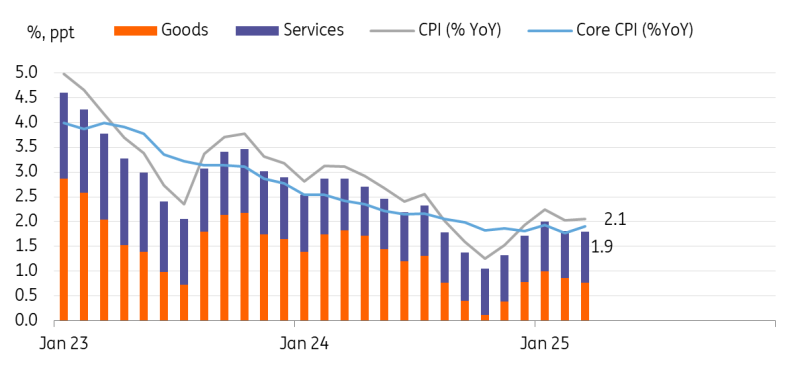
CPI inflation unexpectedly rose to 2.1% YoY in March (vs 1.9% market consensus)
South Korea recorded an unexpected rise in inflation in March thanks to higher processed food (3.6%) and eating-out prices (3.0%). Both accelerated more than expected as companies passed on increased input price to consumers. One-off price increases for university tuition (5.2%) and kindergarten fees (4.2%) also contributed to price gains in March. Yet fresh food prices continued to fall for a second month, down 1.3% in March. Fuel prices also eased to 3.0% (vs 6.8% in February) amid falling global oil prices.
Today’s reading showed that easing supply-side trends are putting downward pressure on prices. But higher import costs are pushing prices up. This will complicate the Bank of Korea’s policy decision ahead.
Both headline and core inflation rose in March
Source: CEIC
BoK watch
The BoK may now pay more attention to core inflation remaining below 2%. At the same time, though, the weakness of the USDKRW bears watching in the coming months. The Constitutional Court ruling on President Yoon’s impeachment will be announced on 4 April. As such, the won is open to risk in both directions in the very near term, depending on the outcome of the ruling.
Just like markets, we expect the BoK to keep its policy rate at 2.75% at its April meeting. Policymakers need to analyse the impact of the previous rate cuts and assess how US tariff policies will affect the economy. Also, the BoK will be wary of the current weakness in the USDKRW. It's driven by global risk-off sentiment and domestic political uncertainty, a dynamic that has persisted in recent months. The BoK will watch to see if this pushes up prices further.
Going forward, processed food prices are expected to rise further, while and fresh food prices may rebound again due to recent adverse weather conditions. Meantime, the government efforts to curb prices will continue. This morning, the government announced that it would freeze utility fees (power and gas) in the first half of 2025 and increase spending to stablize fresh food prices.
We currently expect a rate cut in May. But depending on the inflation path and currency moves, the BoK may delay its rate action until the third quarter of 2025.
Read the original analysis: South Korea: Inflation picks up, possibly pausing Bank of Korea’s rate cut cycle
Author
ING Global Economics Team
ING Economic and Financial Analysis
From Trump to trade, FX to Brexit, ING’s global economists have it covered. Go to ING.com/THINK to stay a step ahead.

















