Saudi Arabia flexes its muscle to project political and financial clout
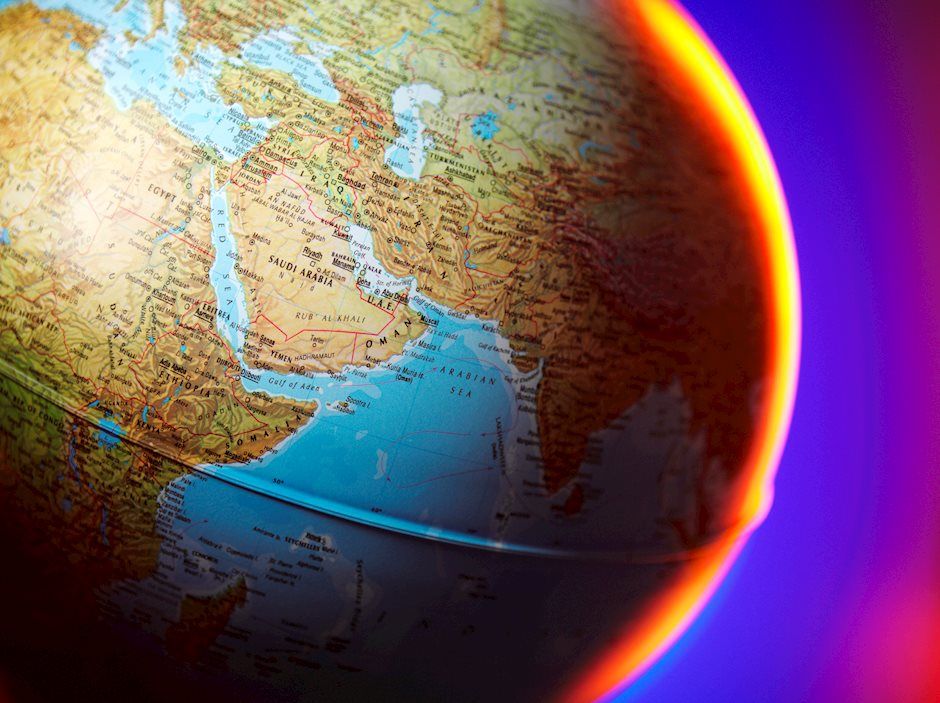

The Kingdom of Saudi Arabia (KSA) will be one the world’s fastest-growing economy in 2022, outperforming the struggling G7 countries as well as all other G20 economies.
The huge petrodollar windfall comes as Riyadh is pushing ahead with an ambitiou plan to diversify its economy and move away from oil and gas. This year would be the kingdom’s fastest economic growth since 2011. While in 2022 Saudi Arabia will grow at 8%, next year, Saudi Arabian real GDP growth is expected to be around 5,5 %. The account balance will register a surplus of at least US$163bn (up from US$44bn in 2021), allowing the Kingdom to rebuild its international reserves to approximately $500 billion. Saudi Aramco, the Kingdom controlled oil company registered profit of USD 48.4 billion (up 90% from 2021) for the second quarter of 2022. Bloomberg reported that this was “the biggest quarterly adjusted profit of any listed company.”
A large portion of Saudi’s national wealth is managed by the Public Investment Fund (PIF), the sixth largest global Sovereign Wealth Fund (SWF) with total assets of $ 607 billions. Here below is the table with the top ten SWF, 4 of which are owned by crude oil and natural gas rich Saudi Arabia, Kuwait, Abu Dhabi, and Qatar. These 4 SWF combined manage 2,5 US$ trillion, and we should expect them to play an increasingly assertive role in global investment in the short to medium term.

Source: SWFI Institute
The PIF, which is chaired by Crown Prince Mohammed Bin Salman (MBS), has been one of the region’s most aggressive SWF, acquiring foreign assets across sports, entertainment, tourism, and technology just to name a few. PIF has committed to spend $40bn annually in the kingdom as it develops large scale projects across smart cities, sustainability, entertainment, and blue/green hydrogen. These investments are in line with the priorities identified in the Vision 2030 which is the MBS blueprint for the transformation of the Kingdom.
The assertiveness of PIF is greatly influenced by recent oil windfall deriving from high oil prices and its derivatives byproducts. Crude oil has consistently been above $90 a barrel since President Putin ordered Russia invasion of Ukraine in February of 2022 destabilizing the energy markets. Crude oil is expected to stay in the $ 90-110 per barrel range over the next 2 years given fragile geopolitical systems, and oil production bottlenecks. In terms of revenues, the Kingdom could bring in an additional $250 billion between 2022, 2023 and 2024, which will have massive implications for the country capacity to acquire foreign assets, execute on its ambitious national projects, and attract businesses and talent to the KSA.
Davos in the Deserts Happened at the Right Time
As the Saudis become more prominent global investors, on October 27th, the Saudi Government closed the three-day Future Investment Initiative (FII), the Saudi economic forum which is also known as the “Davos in the Desert”. The event, at its 6th edition, brought together 520 speakers from more than 50 countries and some 7,000 visitors, among which some of the top executive form Wall Street. It showcased the economic transformation ongoing in the kingdom as well as its openness to foreign investments. FII aimed to capitalize on it big announcements, notably on sustainability investments, technology, and the national infrastructure projects such as NEOM and QUIDDIYA.
The FII was smartly organized at the opening of a busy month of international events including, the Climate Summit COP27 (starting in Egypt next week), the G20 (starting on Nov 15 in Indonesia), and the FIFA World Cup (starting in Qatar on Nov 20). FII was obviously a great branding opportunity for the Kingdom demonstrating its renewed financial and political clout under the Crown Prince MBS.
Kingdom displays fruits of oil boom as it prepares for a busy month on sustainability and economics negotiation
The Saudi’s leadership made a series of sustainability announcements at FII. These incudes the launch of the first Green Bond, as well as the creation of US$ 1.5 billion sustainability focused investment fund. This fund will also invest in Neom, the 500 billion sustainability city that is being built in the Red-Sea.
At the closing of the FII, the Saudi Minister of Finance Mohammed al-Jadaan reiterated, “while many markets around the world are down, the Saudi is up”. He elaborated, “We have been planning for years a really dynamic execution program, and we are seeing the results”. This is show time for the Kingdom as we get busy with these global summits.
What to expect next?
With an ongoing recession, the Kingdom will use its financial power to promote its foreign policy interest while using PIF to acquire technology, invest in the future of energy, as well as build its smart city and tourist center of the future. We should expect more acquisitions around football, tourism assets, entertainment, and logistics as these are expected to fuel the Kingdom economic growth for the next 30 years. Football M&A will continue to play a major role in the short term as the Kingdom seeks to secure the hosting of the 2030 FIFA World Cup in partnership with Greece and Egypt. Oil revenues will continue to be the name of the game and we should all expect PIF to play a leading role ensuring that this economic crisis is used to the Saudis advantage.
Author
Andrea Zanon
Confidente
Andrea Zanon has 20 years of professional experience as a disaster risk management, sustainability, and entrepreneurship specialist. Mr. Zanon has advised international institutions and countries across the Middle East and North Africa. Mr.