Powell warns against higher and stickier inflation, ECB decides
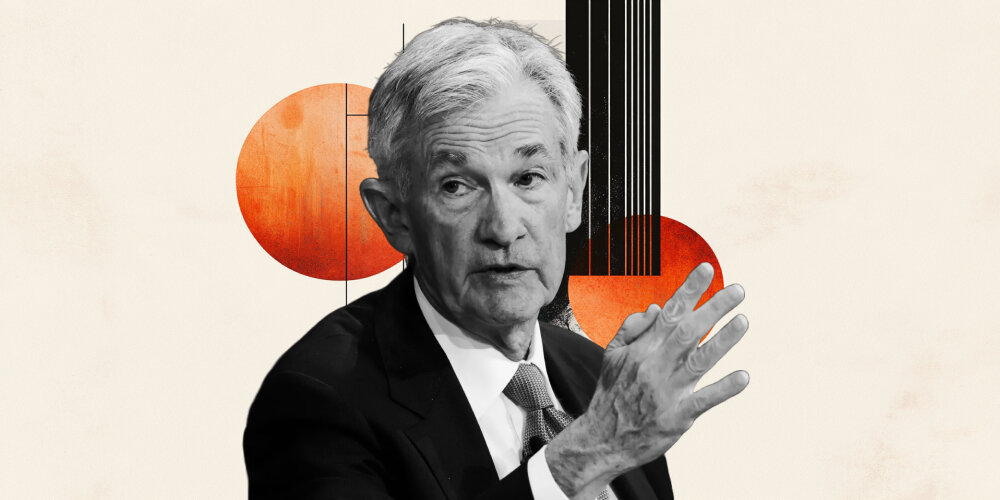

Yesterday was yet another ugly day of trading, especially for the US and the technology companies. Discouraging news started flowing since early hours of the European session: ASML announced a bigger fall in its orders in the Q1 and its CEO blamed the tariff uncertainty for the soft numbers. A few hours before that, Nvidia was told to need a licence to sell its H20 chips – made for the Chinese market – to China and announced the latter would lead to a $5.5bn writeoff in the current quarter. Then, we had a very slight optimism as China said that that the country could be open to negotiations IF Donald Trump and his administration showed respect to China (that’s probably harder to achieve than it sounds). And finally, the Federal Reserve (Fed) President warned that the tariffs were significantly higher than they thought, that they could soften employment and boost inflation, that inflation could stick around longer than they thought, that they don’t know how long the impacts will flow through the economy and how they will impact the long-term inflation expectations. He added that they can’t achieve long-term strong growth and employment if they don’t achieve price stability first. In simple words, Powell said inflation is their priority and that the best thing to do it to wait before cutting rates. Voila.
On the data front, the US retail sales jumped as households rushed to buy things – including cars - before the tariffs hit, industrial production slowed more than expected and the Chinese low-price retailers Temu and Shein said they are raising the prices of their products as they no longer benefit from the ‘de minimis’ exemption from tariffs. Volkswagen on the other hand said that they won’t immediately raise the prices of their cars.
Speaking of inflation... note that this time, the inflation expectations are rising for the US and not necessarily for elsewhere – at least not just yet. Historically, when the US inflation expectations rise, the Fed would be expected to tighten policy and that would lead to a stronger dollar and the strength of the dollar would spread inflation toward the rest of the world. But because the US dollar is weakening on waning US growth expectations, the rising inflationary pressures of the US are less threatening for the rest of the world. A potential supply chain crisis would be broadly harmful, but there is always a chance that the rest of the world reorganizes supply chains to limit the negative impact of the US policies on their own economies.
The European stocks were relatively stable despite a 7% slump in ASML post-earnings. The Stoxx 600 closed just 0.18% lower and above the 500 psychological mark and above the major 38.2% Fibonacci retracement on the March – April retreat. TSM announced better than expected income this morning but a part if that strength could be due to frontloading of demand before the tariffs hit. As such, sentiment remains fragile and any positive momentum could be hard to defend. Note however that the European defense names lead the rebound in European equities as the geopolitical tensions with the US don’t give signs of abating. As such, the euro and the European assets will likely continue to outperform their US peers. Today, the European Central Bank (ECB) is expected to announce a 25bp rate cut to provide relief to the European economies in the middle of a global turmoil. President Lagarde will probably refrain from making commitments to future rate cuts as the path of the monetary policy is highly dependent on the trade developments, the fiscal responses from the underlying EZ governments and the end result on the zone’s economy and price trends. The fact that the euro unexpectedly shined in the Q1, and the significant decline in energy prices are supportive of growth, and there is a chance that the EU and the US reach a trade deal in the coming weeks. That would be the best of both worlds. The EU would still spend big to strengthen military and infrastructure while not taking a hit on the trade front. As per the euro, the outlook remains positive, both against the US dollar and sterling, on rising reserve demand and the bets that the ample fiscal spending would accelerate growth in Europe.
Across the pond, the markets were shattered yesterday. Nvidia lost up to 10% but closed the session near 7% lower, AMD, which is facing the same Chinese pain, tanked more than 7.35%, the Magnificent 7 tanked nearly 4%, the S&P500 fell more than 2% while the US 10-year yield fell below 4.30% - that’s a good sign, it at least means that some safe heaven flows fed into the US 10-year papers instead of going directly into gold and franc. But gold remains bid and hit another record high this morning in Asia, while the franc remained strongly bid on the back of safety reasons. The franc’s strength is reviving bets on a potential Swiss National Bank (SNB) intervention around the 0.92 level against the euro. However, a direct currency move would be politically sensitive, as Switzerland is currently in critical negotiations with the US to lower tariffs below 30%. Now would be the wrong time to reignite Trump-era accusations of currency manipulation.
Author
Ipek Ozkardeskaya
Swissquote Bank Ltd
Ipek Ozkardeskaya began her financial career in 2010 in the structured products desk of the Swiss Banque Cantonale Vaudoise. She worked in HSBC Private Bank in Geneva in relation to high and ultra-high-net-worth clients.