|

NZD short: The US hard landing hedge?

High beta currencies, like the Australian Dollar and the New Zealand Dollar, tend to fare badly when markets are risk off. However, the NZD is one of the worst-performing currencies during a recession. Bloomberg reports that JPMorgan looked back at the last 40 years and found that the NZD tends to perform very badly around a recession and worse than the AUD.
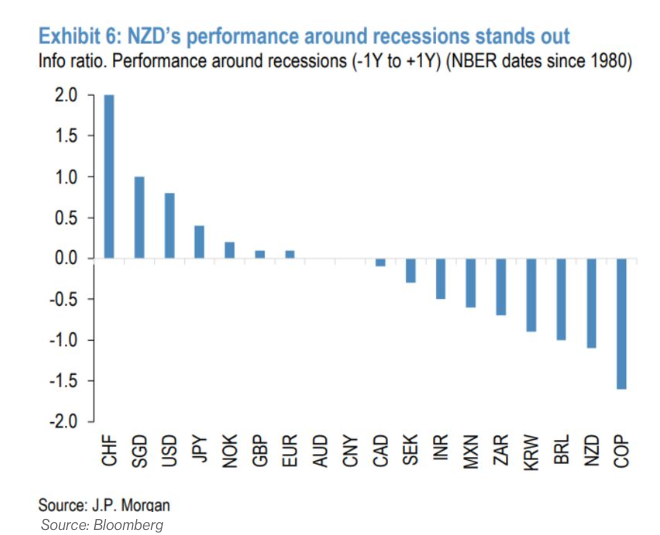
Chart

Latest New Zealand GDP numbers

Last week New Zealand GDP came in lower than expected with the Q4 reading at 2.2% vs 3.3% expected. The slower growth outlook means that the RBNZ will be seen as less likely to hike rates and that is an extra headwind for the NZD.

Chart

From an index level, the NZD has fallen into a near-term support region which will be crucial for the NZD’s direction. The NZD is also around the lowest levels it has been for this year as US recession fears increase. Watch this key support level marked as a break of this region opens up more technical downside.

Chart

The narratives to watch

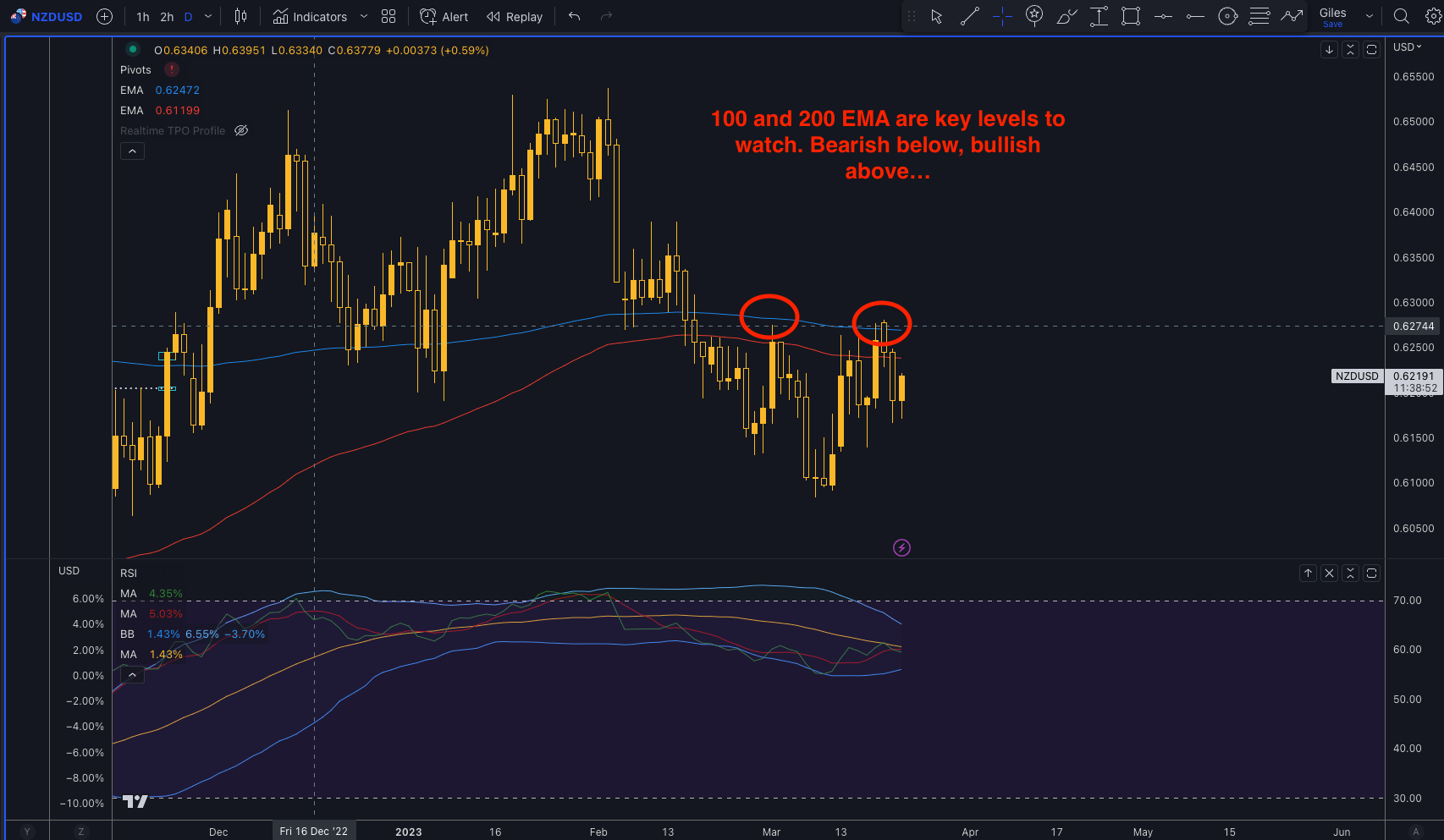
If the prospects of a US hard landing grow, watch for further bank risk to increase expectations of a US recession, then the USD could find some strength. That could weaken the NZDUSD pair. This is why Morgan Stanley is currently projecting a move down to 0.5800 for the NZDUSD. Watch the price around the 100 and 200 EMA on the daily chart to get a sense of the technical direction of the pair moving forward.
Chart

Learn more about HYCM


Author

Giles Coghlan LLB, Lth, MA

Giles is the chief market analyst for Financial Source. His goal is to help you find simple, high-conviction fundamental trade opportunities. He has regular media presentations being featured in National and International Press.


More from Giles Coghlan LLB, Lth, MA
Share:

Editor's Picks

EUR/USD: US Dollar to remain pressured until uncertainty fog dissipates

Unimpressive European Central Bank left monetary policy unchanged for the fifth consecutive meeting. The United States first-tier employment and inflation data is scheduled for the second week of February. EUR/USD battles to remain afloat above 1.1800, sellers moving to the sidelines.

GBP/USD reclaims 1.3600 and above

GBP/USD reverses two straight days of losses, surpassing the key 1.3600 yardstick on Friday. Cable’s rebound comes as the Greenback slips away from two-week highs in response to some profit-taking mood and speculation of Fed rate cuts. In addition, hawkish comments from the BoE’s Pill are also collaborating with the quid’s improvement.

Gold: Volatility persists in commodity space

After losing more than 8% to end the previous week, Gold remained under heavy selling pressure on Monday and dropped toward $4,400. Although XAU/USD staged a decisive rebound afterward, it failed to stabilize above $5,000. The US economic calendar will feature Nonfarm Payrolls and Consumer Price Index data for January, which could influence the market pricing of the Federal Reserve’s policy outlook and impact Gold’s performance.

Week ahead: US NFP and CPI data to shake Fed cut bets, Japan election looms

US NFP and CPI data awaited after Warsh’s nomination as Fed chief. Yen traders lock gaze on Sunday’s snap election. UK and Eurozone Q4 GDP data also on the agenda. China CPI and PPI could reveal more weakness in domestic demand.

Three scenarios for Japanese Yen ahead of snap election

The latest polls point to a dominant win for the ruling bloc at the upcoming Japanese snap election. The larger Sanae Takaichi’s mandate, the more investors fear faster implementation of tax cuts and spending plans. 

XRP rally extends as modest ETF inflows support recovery

Ripple is accelerating its recovery, trading above $1.36 at the time of writing on Friday, as investors adjust their positions following a turbulent week in the broader crypto market. The remittance token is up over 21% from its intraday low of $1.12.