Laying out economic scenarios... a “what if” game


Summary
The spread of the Delta COVID variant has raised some concerns over the pace of global economic growth. Rising case numbers have reintroduced fears that restrictions could be imposed, or at a minimum, consumer behavior might be disrupted. For now, we remain fairly confident in the underlying health of the global economy and optimistic on global growth prospects; however, we believe risks around our global growth forecast are tilted to the downside. In this report, we lay out our base case assumptions and forecasts for the global economy, while also highlighting what a downside scenario for the global economy could entail and how our forecasts could change. On the other hand, should COVID cases and fears recede quickly and consumers disregard the current wave of infections, we lay out what an upside scenario for the global economy could look like as well.
Global Growth Risks Are Building
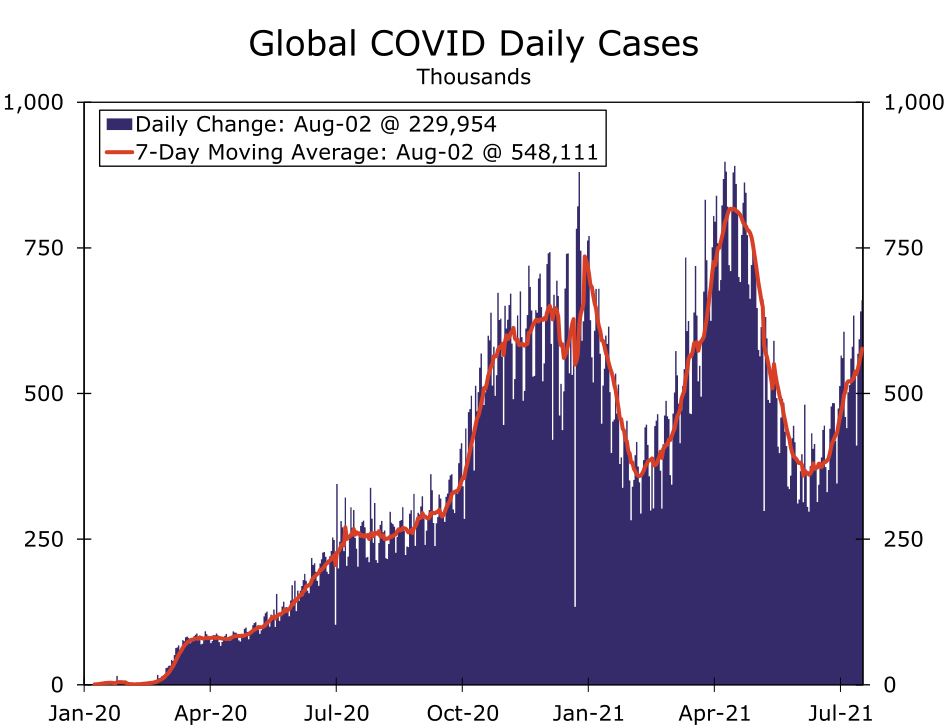
Seemed like not long ago COVID cases were falling, vaccine distribution was improving, and the world was finally on a path toward getting back to "normal." While the world is certainly more protected from COVID today than this time last year now that vaccines are available, confirmed case numbers are once again rising. The renewed wave of infections can be attributed to the Delta variant of the virus, which originated in India earlier this year. As more research was conducted, agencies, such as the World Health Organization, determined the Delta variant is more transmissible than prior strains of the virus. To that point, the Delta strain now makes up about 80% of all infections globally and has been detected in over 90 countries. In addition, the Delta variant is responsible for pushing global confirmed case numbers up to around 548,000 infections per day on average, the highest global average since early May (Figure 1).
Figure 1
Author
Wells Fargo Research Team
Wells Fargo