JPY and Japanese equities: Navigating political instability and BoJ uncertainty


Key points
-
Political instability: Japan’s ruling LDP lost its majority, sparking political uncertainty that raises risks for the yen and Japanese assets. The coalition formation process may take weeks and could finally mean more fiscal spending.
-
Impact on BoJ policy: The instability pressures the BoJ's policy path, with Thursday’s meeting in focus. Governor Ueda may hint at delayed policy normalization due to potential fiscal risks.
-
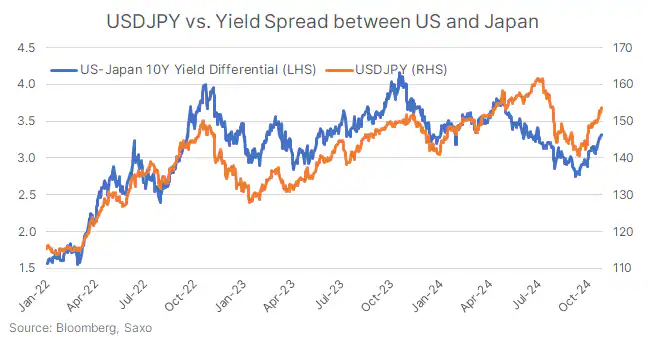
Yen Weakness: Rising U.S. yields and Japan’s political uncertainty have pushed USDJPY to three-month highs, increasing downside risks for the yen.
-
Support for Japanese equities: Despite the political noise, yen weakness, more spending and structural corporate reforms in Japan may keep Japanese equities attractive, especially amid potential supply chain shifts and Japan’s role as a stable regional player.
Japan’s ruling LDP coalition lost its majority in snap elections over the weekend, as voter frustration over a series of scandals diminished support for PM Shigeru Ishiba’s party. With the need to form a new coalition, the government could face weeks of political negotiations, adding a layer of instability that signals risk for both Japanese assets and the yen.
Looking further ahead, a more divided coalition may feel compelled to implement substantial fiscal spending, complicating the Bank of Japan's (BoJ) path to policy normalization. The BoJ’s policy decision on Thursday will be closely watched in light of these developments.
BoJ path becomes more clouded
The BoJ’s meeting this week comes amid significant political uncertainty, making the outlook increasingly complex. Although Governor Ueda preemptively ruled out a rate hike for this meeting, markets are anticipating a possible rate increase in December or January. A key focus will be on whether Ueda indicates further delays in BoJ policy normalization as he navigates the potential for heightened fiscal spending in an unstable political environment.
Political instability weighs on Yen
The Yen has faced headwinds from rising U.S. yields, driven by:
-
The resilience of the U.S. economy, which limits expectations for a sharp easing from the Federal Reserve.
-
Growing odds of a Republican victory in the November 5 U.S. elections, which could raise fiscal spending.
Political uncertainty in Japan has added further pressure, with USD/JPY reaching fresh three-month highs of 153.84 after the election results. Given these conditions, the yen could face additional downside as markets assess the implications of fiscal uncertainty on BoJ policy.
Japanese equities: Opportunities amid instability
Despite the political turbulence, Japanese equities may find support. Yen weakness and easing oil prices, helped by a moderation in geopolitical risks following Israel's measured response to Iran over the weekend, have boosted near-term sentiment.
In the long term, these election results could suggest a structurally weaker yen which remains broadly positive for Japanese exporters. Moreover, scope for increased fiscal stimulus as well as a potential for slower BOJ rate hikes could also be a tailwind for Japanese corporates, that are already enjoying the momentum from corporate reforms. The focus on capital expenditure, governance, and return on equity underscores structural resilience in Japanese equities. As Japan is viewed as a stable geopolitical player in Asia, particularly amid U.S. election risks, Japanese equities appear well-positioned. They could also benefit from potential supply chain restructuring in the wake of U.S. policy shifts.
Read the original analysis: JPY and Japanese equities: Navigating political instability and BoJ uncertainty
Author
Saxo Research Team
Saxo Bank
Saxo is an award-winning investment firm trusted by 1,200,000+ clients worldwide. Saxo provides the leading online trading platform connecting investors and traders to global financial markets.