Job openings slide, but layoffs remain low


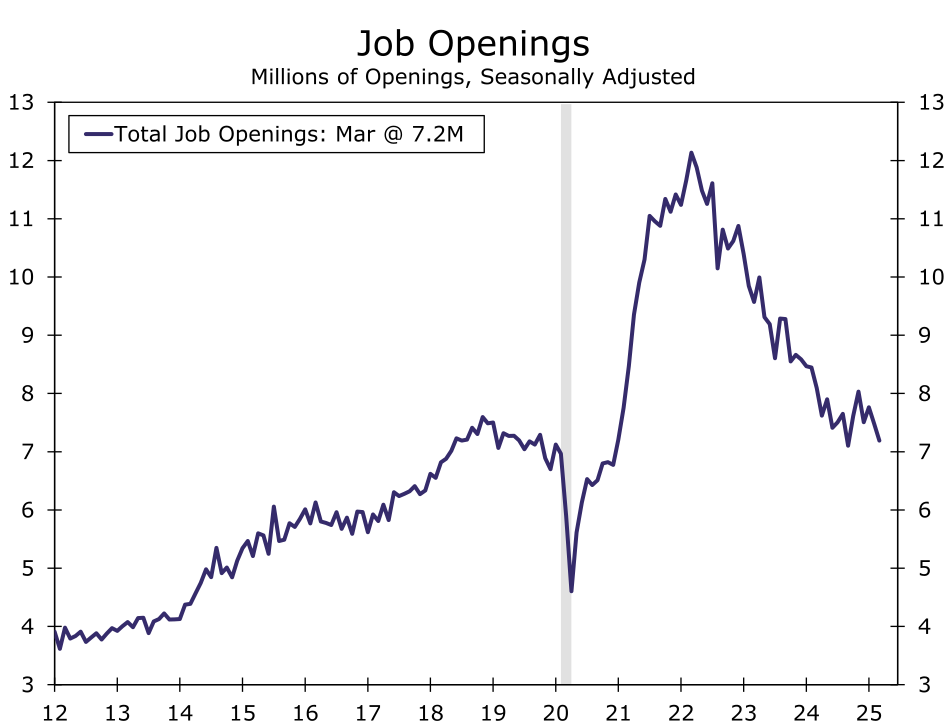
The March JOLTS report showed employers growing cautiously pessimistic about the outlook. Job openings fell to 7.2 million as policy uncertainty intensified, while the hiring rate was unchanged despite a slight pickup in quits garnering the need to backfill more positions. Even as interest in bringing on new workers cooled, businesses are still reluctant to pare back current staff; the layoff & discharge rate slipped in March and remains below its pre-pandemic rate.
Pulling back to hold the line
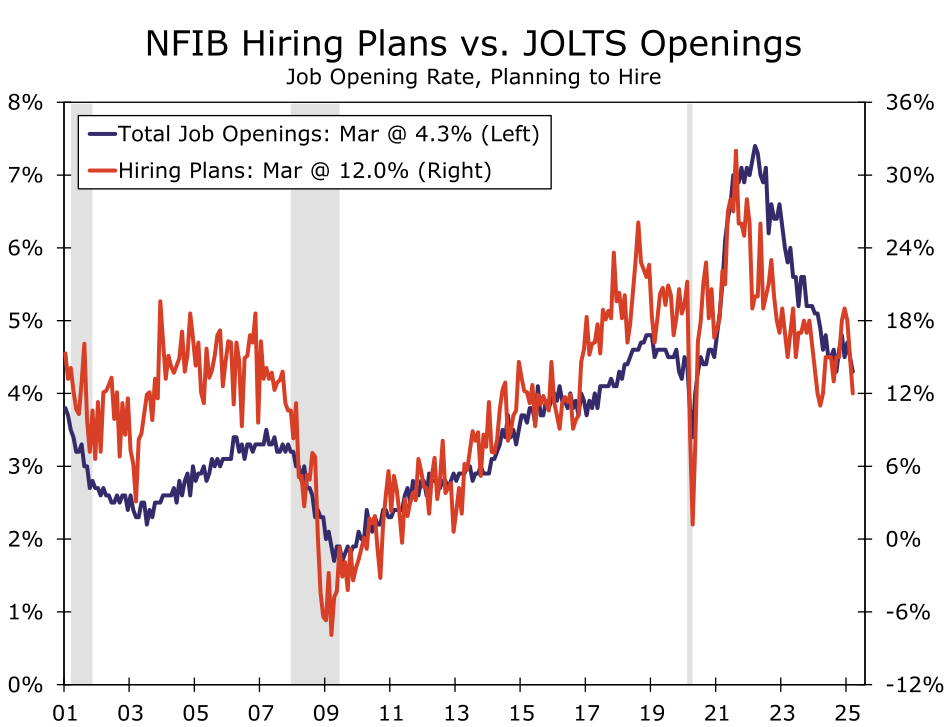
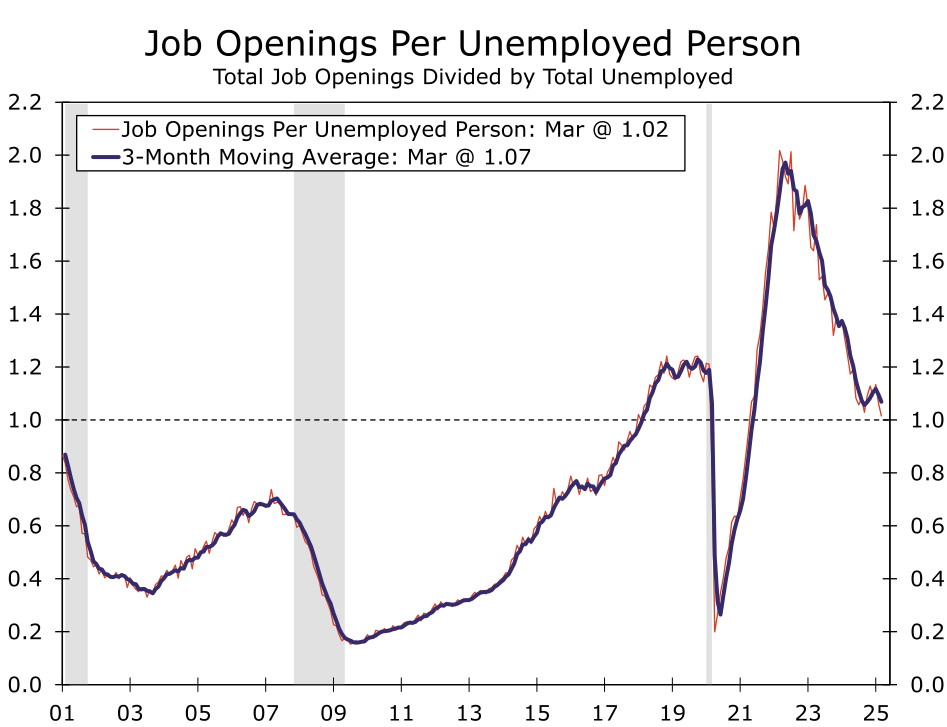
Uncertainty has crimped already-flagging labor demand. Job openings fell more than expected to 7.2 million in March, just above last year's low of 7.1 million in September. The decline aligns with separate data showing job postings on Indeed resuming their downward slide after briefly stabilizing in late 2024 and small business hiring plans pulling back to their lowest level in a year (chart). The fall in job vacancies coincided with essentially unchanged unemployment in March, leading the job openings-to-unemployed workers ratio down to 1.02 (chart). In our view, the resumption of this ratio's decline in the past month is reflective of a steady weakening in labor demand, rather than a benign rebalancing of supply and demand.
The pullback in job openings was broad-based across industries. A few goods-related industries that appeared to ramp up labor demand in the first few months of the year to accommodate tariff front-running saw vacancies fall back in March—namely, transportation, warehousing & utilities down 59K. Federal funding freezes have weighed on hiring demand in industries reliant on government funds, which coincided with falling job openings across professional & business services, private educational services and state & local governments in March. Meantime, ongoing efforts to shrink the federal workforce led to 36K fewer openings in the sector, with the openings rate sinking to its lowest level since 2020.
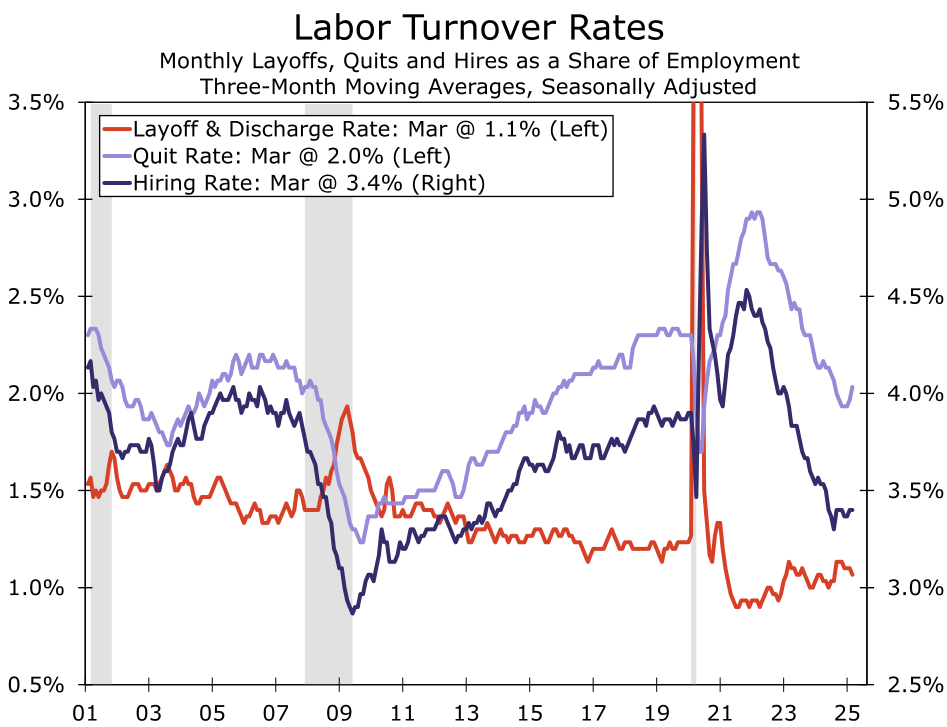
Further signs of caution among businesses were evident in the turnover figures. The gross hiring rate was unchanged at 3.4%, keeping it near its lowest level in roughly a decade (excluding the pandemic collapse in spring 2020, chart). The stable pace of hiring came despite a small uptick in the quit rate, which rose to an eight-month high of 2.1%. The pickup in quits seems somewhat at odds with the gradually cooling trend in labor demand, but stemmed largely from the high-churn leisure & hospitality industry. We see further gains in the quit rate as unlikely in the near term given the increasingly tepid hiring environment that is likely to limit job-switching opportunities and keep wage growth in check. But while firms remain reluctant to hire, they also remain reluctant to release existing employees. The layoff & discharge rate slipped back to 1.0%, consistent with the message from initial jobless claim filings that businesses are holding on to current workers as they await more certainty on the outlook before resorting to the drastic step of letting workers go.
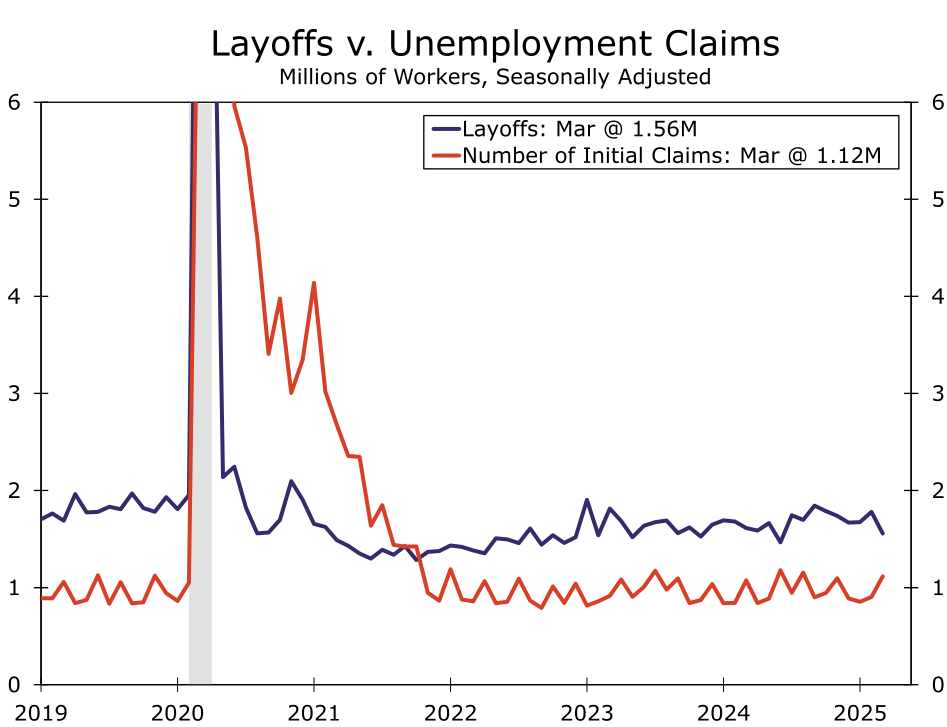
Today's data illustrate a labor market that is treading water in a choppy sea. In the Federal Reserve's latest Beige Book, several employers reported they are pausing or slowing hiring efforts until they have more clarity on the outlook. Yet, at the same time, firms report they remain reluctant to let go of existing workers in the event economic conditions prove to be better than expected and to avoid the difficulty associated with rehiring in that scenario. The push and pull has left the labor market in a fragile stasis that makes it vulnerable to being knocked off balance should the deteriorating outlook for growth come to fruition.
Author
Wells Fargo Research Team
Wells Fargo