Is the US playing with fire using the Dollar as a foreign policy weapon?
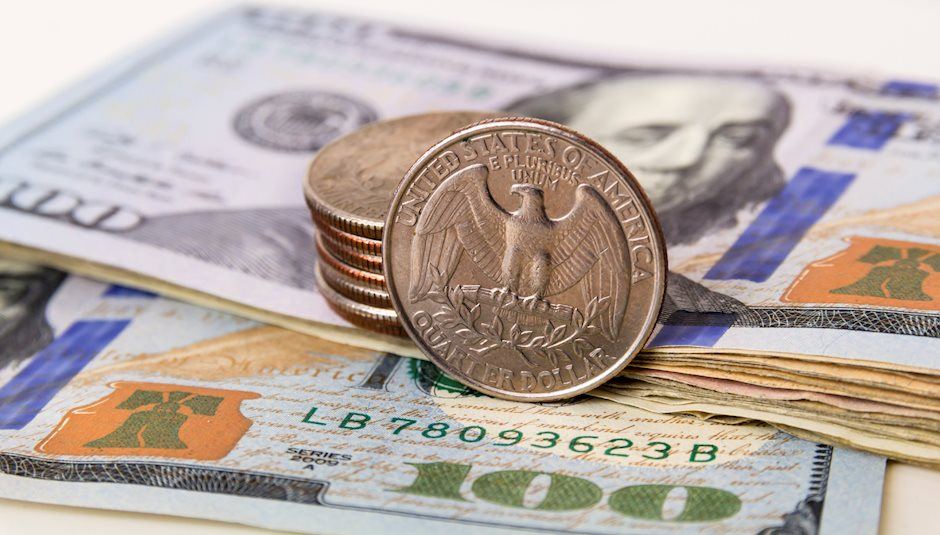

The United States has weaponized the dollar, leveraging it to achieve foreign policy objectives. But is the U.S. playing with fire? Is it setting itself up for significant blowback? In this episode of the Money Metals' Midweek Memo, host Mike Maharrey explains how the U.S. has turned the dollar into a weapon and the risk it takes by using its privilege as the issuer of the reserve currency to bend other countries to its will.
Mike opens the episode by asking the listener to imagine a gun with the barrel pointing back at the shooter. He argues that this illustrates the inherent danger the U.S. faces by using the dollar as a foreign policy weapon.
Mike then pivots to describe the recent bull run in gold and silver. What is driving precious metals higher? Mike says there are many factors, but for one thing, gold is climbing a wall of hope – hope that interest rate cuts are coming sooner rather than later. He explains that two data releases last week seemed to indicate that price inflation was cooling, renewing hope that the Federal Reserve can proceed with loosening monetary policy.
"The gold and silver rallies on Friday followed a pattern we’ve seen over the last couple of years. Any indication that price inflation is cooling, or the economy is weakening, has been bullish for gold and silver. The hope is a victory over inflation will allow the Fed to cut interest rates. Since gold is a non-yielding asset, most people consider a higher interest rate environment negative for gold.
"Now, I hate to throw cold water on the party, but the mainstream seems to be totally ignoring the reality of price inflation. Despite the PCE, price inflation is far from beaten. The CPI trend has been hotter; and more significantly, the Fed hasn’t done enough to put inflation in its grave."
While the mainstream is focused on the inflation issue, Mike argues that there could be another factor driving gold and silver higher.
Fear.
With the U.S. threatening to seize Russian assets and give them to Ukraine, other countries may be worried about holding dollars. He quotes a post on X by economist Jim Rickards who supports this theory.
“Nice rally in gold. New all-time highs. There are always multiple factors but I have no doubt a main driver is Biden's push to steal $300 billion in Treasury notes from Russia. Once Treasuries are unsafe, Euro and Yen notes don't look any better. Countries are going for gold.”
Mike describes some of the past actions taken by the U.S. and its allies against the Russians, and he points out that using economic warfare is nothing new. He also explains why the U.S. has so much power due to the dollar's status as the global reserve currency. He then focuses on the most recent threat articulated by Treasury Secretary Janet Yellen - the seizure of Russian assets - calling it "one heck of a precedent."
Mike quotes Sen. Jim Risch (R-Idaho), who called the Repo Act (the legislation that would authorize the asset seizure) “a big hammer.”
"This is intended to be a big hammer. It's intended to be a very new way of attacking a country that does not behave itself."
Mike concedes that using dollars as a foreign policy billy club could certainly incentivize other countries to “behave.”
"But you’d have to be nuts not to realize there might be some backlash."
And as Mike points out, there already is.
"If you were holding something that could be used against you, what would you do?
"You’d get rid of it to minimize the risk. After all, something you don't have can't be used against you.
"In other words, if you are concerned that the U.S. could pull the 'dollar rug' out from under you, why not pull out from the dollar system first?
"This is already happening.
"And if enough countries diversify away from the dollar, it could ultimately undermine the greenback’s role as the world reserve currency."
Mike argues that the best alternative to the dollar is gold. Many countries apparently agree, judging by the fact that central bank gold buying has been at record levels for the last two years.
But why should we care?
Mike argues that de-dollarization would be a disaster for the United States.
"The dollar’s status as the reserve currency indirectly supports the U.S. government’s ability to borrow and spend. Demand for dollars props up the greenback’s value and somewhat shields Americans from the impact of its inflationary monetary policy.
"A de-dollarization of the world economy would cause the value of the U.S. currency to crash and likely spark a currency crisis. This would further erode the purchasing power of the dollar and drive prices even higher. It could even lead to hyperinflation."
Mike wraps up the show by explaining that individuals should also consider the threat to the dollar.
"We can debate the efficacy of economic sanctions, but it’s always wise to be careful when you start pointing fingers, or guns, you should be aware of what’s pointing back.
"Now, all of this has some application to you, dear listener. Should you maybe consider minimizing your own exposure to dollars? Or at least diversifying your wealth?"
To receive free commentary and analysis on the gold and silver markets, click here to be added to the Money Metals news service.
Author
Mike Maharrey
Money Metals Exchange
Mike Maharrey is a journalist and market analyst for MoneyMetals.com with over a decade of experience in precious metals. He holds a BS in accounting from the University of Kentucky and a BA in journalism from the University of South Florida.

















