|

Iron ore hits record-low as demand drops
By the end of 2022, the price of iron ore is expected to hit their lowest level in three or four years as global demand for the commodity continues to slow down, particularly from China, the world's largest consumer of iron ore.

In recent years, China has been cutting down its iron ore demand especially after the government placed restrictions on the industry to reduce carbon emissions. In 2021, the country's iron ore import fell to 1.12 billion tons from 1.17 billion tons in the prior-year period.

Expectations for 2022 from the production side are no better with Australia, the world's biggest exporter of iron ore, projecting a 0.6% drop in global steel output to 1.947 billion tons.

"Combined with growing global recessionary fears, new COVID-19 outbreaks and weakness in China's housing sector have dampened world steel and iron ore demand in recent months," the Australian government said in its October quarterly report.
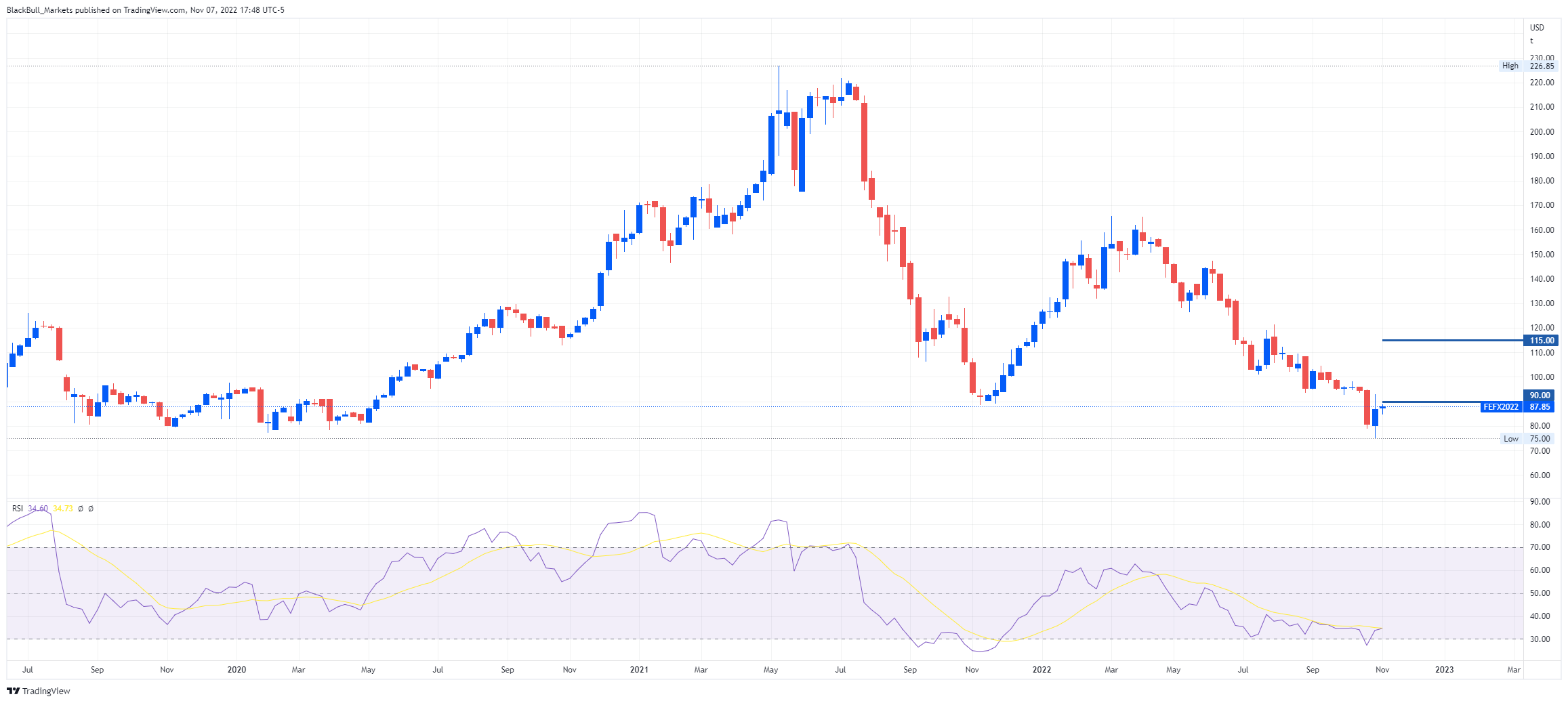
Iron Ore 1W, with RSI

A Reuters survey in October showed that prices are expected within the $90/ton to $115/ton range by the end of the year. MetalMiner data shows the price in early 2022 were at $160.30/ton at the beginning of Russia's war against Ukraine.

The decline comes despite forecasts of growth in the demand for iron ore through to 2026. The global market for iron ore is estimated to reach 2.7 billion metric tons, while production is expected to reach 3.17 billion metric tons.

Until definite signs of recovery are observed, maybe it is best to err on the side of caution regarding iron ore prices, especially considering the threats of a recession in Europe and the persisting problems in China's property sector, which could heavily impact on the demand for the key steelmaking ingredient.

Author

Mark O’Donnell

Mark O’Donnell

Blackbull Markets Limited

Mark O’Donnell is a Research Analyst with BlackBull Markets in Auckland, New Zealand.

More from Mark O’Donnell
Share:

Editor's Picks

EUR/USD hits two-day highs near 1.1820

EUR/USD picks up pace and reaches two-day tops around 1.1820 at the end of the week. The pair’s move higher comes on the back of renewed weakness in the US Dollar amid growing talk that the Fed could deliver an interest rate cut as early as March. On the docket, the flash US Consumer Sentiment improves to 57.3 in February.

GBP/USD reclaims 1.3600 and above

GBP/USD reverses two straight days of losses, surpassing the key 1.3600 yardstick on Friday. Cable’s rebound comes as the Greenback slips away from two-week highs in response to some profit-taking mood and speculation of Fed rate cuts. In addition, hawkish comments from the BoE’s Pill are also collaborating with the quid’s improvement.

Gold climbs further, focus is back to 45,000

Gold regains upside traction and surpasses the $4,900 mark per troy ounce at the end of the week, shifting its attention to the critical $5,000 region. The move reflects a shift in risk sentiment, driving flows back towards traditional safe haven assets and supporting the yellow metal.

Crypto Today: Bitcoin, Ethereum, XRP rebound amid risk-off, $2.6 billion liquidation wave

Bitcoin edges up above $65,000 at the time of writing on Friday, as dust from the recent macro-triggered sell-off settles. The leading altcoin, Ethereum, hovers above $1,900, but resistance at $2,000 caps the upside. Meanwhile, Ripple has recorded the largest intraday jump among the three assets, up over 10% to $1.35.

Three scenarios for Japanese Yen ahead of snap election

The latest polls point to a dominant win for the ruling bloc at the upcoming Japanese snap election. The larger Sanae Takaichi’s mandate, the more investors fear faster implementation of tax cuts and spending plans. 

XRP rally extends as modest ETF inflows support recovery

Ripple is accelerating its recovery, trading above $1.36 at the time of writing on Friday, as investors adjust their positions following a turbulent week in the broader crypto market. The remittance token is up over 21% from its intraday low of $1.12.