Inflation in Europe: The Swiss exception

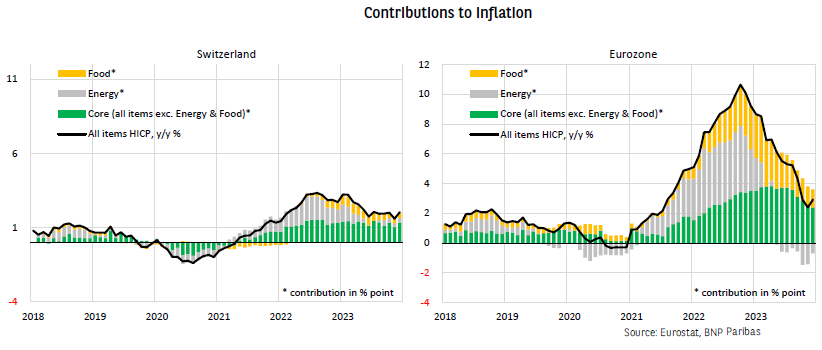
The sharp rise in inflation seen in Europe since 2021 has mainly been caused by the increase in the cost of energy (gas, electricity, and oil products), which have subsequently spread to the other components of the Harmonised Index of Consumer Prices (HICP). While euro area inflation peaked at 10.6% y/y in October 2022, Swiss inflation has never exceeded 3.3% y/y, in July-August 2022. The country has been able to avoid the damaging high-inflation shock seen in the Eurozone thanks to its structural characteristics, most notably its energy mix, as well as thanks to its strong currency.
Switzerland’s energy mix depends only on 2% of fossil fuels1. By contrast, this figure stands at 38% in the Eurozone. The weight from hydropower energy (68%), nuclear energy (19%) and photovoltaic and wind energy (11%) has enabled the Swiss economy to be moderately impacted by the increase in gas prices from Russia2 and by the surge in oil prices (with energy price inflation reaching +29% y/y at its highest between 2021 and 2022, compared to +44% y/y in the euro area over the same period). Energy also accounts for a lower share of household consumer spending, meaning that the weight assigned to its contribution when calculating inflation is automatically lower than in the Eurozone (5.5% compared to 10.2%, respectively). As a result, the energy component has only contributed 38% to Switzerland’s headline inflation on average, compared with 54% in the euro area. The first-round effects of this shock have then spread to the other HICP components. However, as the rise in energy prices has generally been contained in Switzerland, no significant increases have been seen in the food and core components either.
The appreciation of the Swiss franc has also helped to contain inflation by reducing the cost of imported goods and services. This strategy has helped the country to get an even firmer grip on the prices of imported oil and gas, which are largely traded in EUR and USD. Due to this limited rise in prices, the Swiss National Bank has also become one of the last central banks to emerge from the negative interest rates period. It has also only hiked its rates five times since mid-2022 (250 basis points in total), taking the nominal interest rate to 1.75% and thereby leaving the real rate in negative territory (with inflation standing at around 2% y/y at the end of 2023).
Author
BNP Paribas Team
BNP Paribas
BNP Paribas Economic Research Department is a worldwide function, part of Corporate and Investment Banking, at the service of both the Bank and its customers.