Gold shows strength ahead of US PMI data with safe-haven demand driving momentum
-
Gold prices rose significantly in 2024, marking the best annual performance since 2010.
-
A breakout above $2,720-$2,790 could lead to record highs.
-
Geopolitical tensions and economic recovery support gold’s uptrend.


Gold prices continue to increase and build on an impressive 27% gain in 2024. This marks the metal's best annual performance since 2010. On the first trading day of 2025, gold prices edged higher for the fourth consecutive session. This increase was driven by strong safe-haven demand. Several key factors, including geopolitical tensions, US economic data, and China’s economic policies, are shaping the current gold market outlook.
Symmetrical triangle pattern and technical outlook
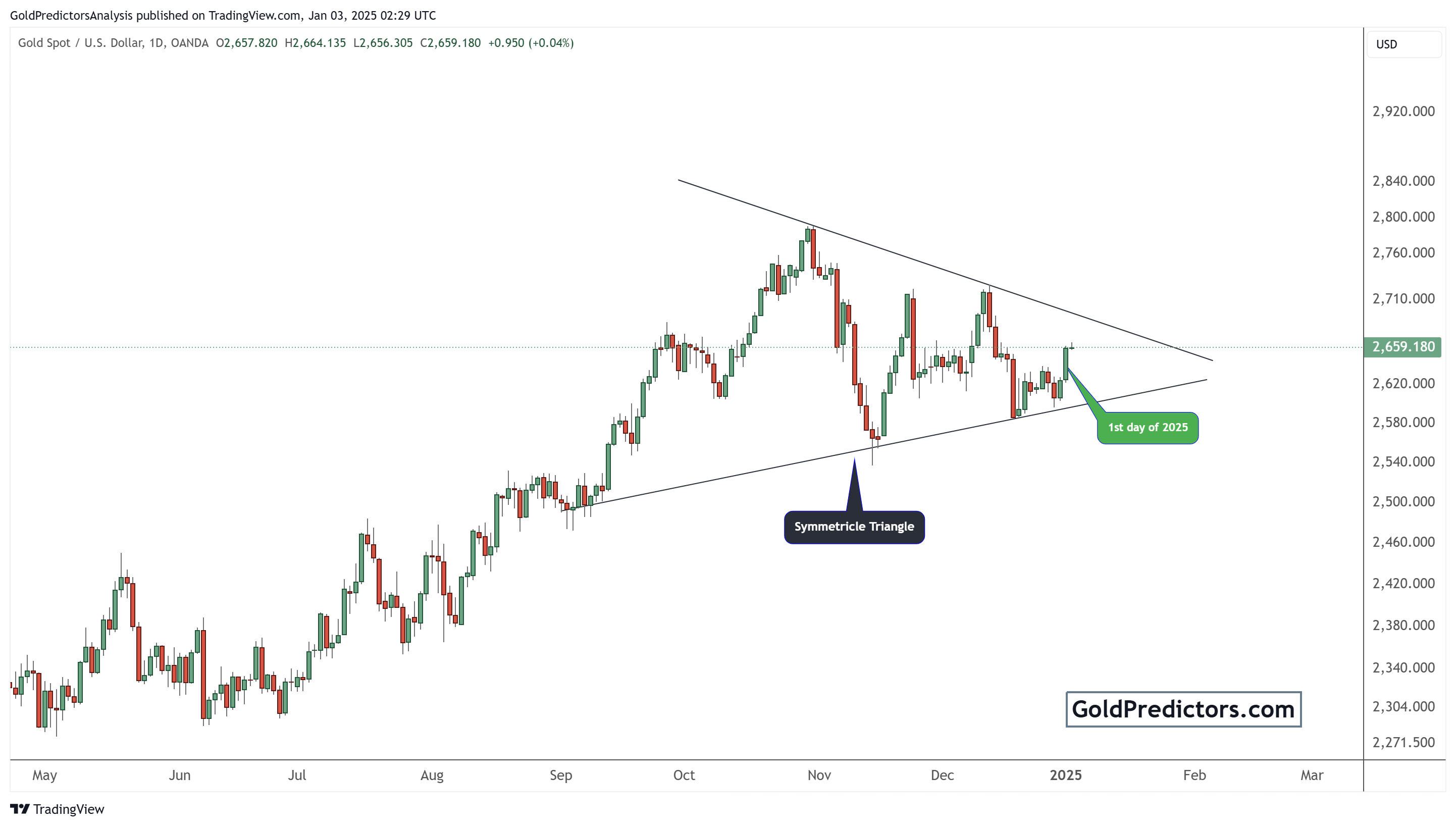
Gold prices are currently trading within a symmetrical triangle pattern, as seen on the daily chart below. The price is rebounding from the lower support of this triangle, showing bullish momentum. If gold breaks above the critical resistance zone between $2,720 and $2,790, it could pave the way for a significant surge. This breakout has the potential to lead to new record highs.
The first trading day of 2025 demonstrated strength, with gold prices closing higher despite a strong US Dollar Index (DXY). The DXY remains near its multi-year high of 109.56, reached on Thursday. This reflects robust demand for the dollar in a risk-averse market environment. Despite this, gold has maintained its uptrend.
Geopolitical and fundamental drivers
-
Geopolitical tensions: Safe-haven flows into gold intensified after reports that US President Joe Biden discussed contingency plans to strike Iran's nuclear facilities. This news highlights the ongoing geopolitical uncertainty in the Middle East, which continues to underpin gold’s appeal as a hedge against risk.
-
US Dollar and Treasury yields: Gold’s performance is closely tied to movements in the US dollar and bond yields. While a stronger dollar typically weighs on gold, the subdued yields on US Treasury bonds are providing a counterbalance, offering support to the non-yielding metal. The weekly Initial Jobless Claims data released by the Department of Labor, which showed a decline to 211,000, further bolstered the dollar’s strength.
-
China’s economic recovery: Developments in China are also influencing gold demand. The People's Bank of China (PBoC) plans to cut interest rates in 2025, signalling a commitment to economic growth. President Xi Jinping reaffirmed this focus by promising proactive policies to stimulate the economy. The National Development and Reform Commission (NDRC) expressed confidence in achieving continued recovery, which could boost gold demand as China is one of the largest consumers of the metal.
Conclusion
Gold’s uptrend remains intact despite challenges posed by a strong US dollar. The metal’s ability to maintain gains reflects robust safe-haven demand amid geopolitical tensions and economic uncertainty. Moreover, technical indicators point to a decisive moment, with the $2,720-$2,790 decision zone acting as a critical resistance level. A breakout above this range could open the door for gold to reach new highs.
As markets look ahead to the release of US PMI data, traders will closely monitor how these fundamental and technical factors evolve. Safe-haven flows, geopolitical developments and economic recovery efforts in China will continue to shape gold’s trajectory in the coming weeks.
Unlock exclusive gold and silver trading signals and updates that most investors don’t see. Join our free newsletter now!
Unlock exclusive gold and silver trading signals and updates that most investors don’t see. Join our free newsletter now!
Author
Muhammad Umair, PhD
Gold Predictors
Muhammad Umair is a financial markets analyst and investor who focuses on the forex and precious metals markets.