Gold Price Forecast: XAU/USD struggles but eyes a 14% gain in 2023
- Gold price is back in the green after the previous pullback from three-week highs.
- The US Dollar weakens again amid sluggish US Treasury bond yields on the final trading day of 2023.
- Gold price looks to take out $2,100 as the daily technical setup remains in favor of buyers.
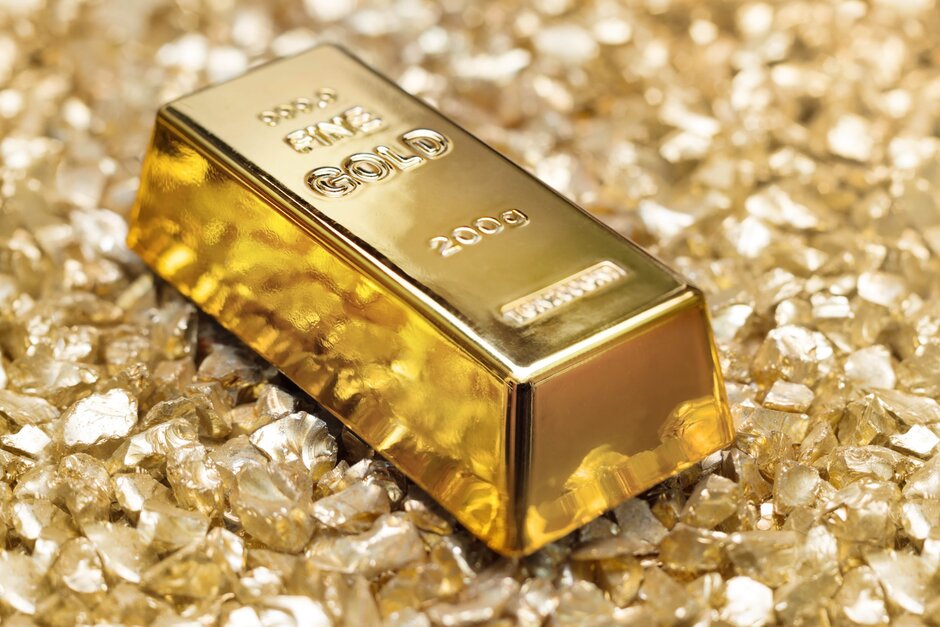

Gold price remains on track to end the year on a positive note, despite the previous day’s pullback from three-week highs of $2,089, eyeing a 14% annual gain.
Gold price outshines as 2023 draws to an end
Gold price is finding demand in the Asian session on the final trading day of the year, in the wake of a cautiously optimistic market mood and renewed US Dollar weakness. Investors brace for the end-of-the-year flows and refrain from placing any fresh directional bets on the Gold price, leaving the bright metal in a phase of upside consolidation at around $2,070.
In the day ahead, risk sentiment, the US Dollar price action and profit-taking could significantly impact Gold price, as traders switch to the sidelines ahead of the extended New Year weekend.
On Thursday, Gold price enjoyed two-way businesses, initially refreshing a three-week top before reversing to settle below the $2,070 level. In the first half of the day, Gold price benefitted from a sustained weakness in the US Dollar and the US Treasury bond yields, as strong US bond auctions and increased dovish US Federal Reserve (Fed) rate cut expectations underwhelmed.
However, the US Dollar staged a solid rebound from five-month lows against its major rival currencies, helped by a modest uptick in the US Treasury bond yields, as markets resorted to profit-taking on the US Dollar shorts heading into thinner liquidity conditions on Friday.
Investors shrugged off the mixed US economic data, allowing the US Dollar to breathe a sigh of relief. The US Pending Home Sales Index, a forward-looking indicator based on contract signings rather than closings, declined 5.2% from a year ago, monthly data from the National Association of Realtors showed. Meanwhile, the US Labor Department said that new state unemployment benefit claims rose by 12,000 last week to 218,000.
Gold price technical analysis: Daily chart

Gold price is likely to maintain its consolidative mode heading into the New Year, holding the higher ground.
Having closed Thursday below the rising trendline resistance, now at $2,084, Gold buyers may be a bit cautious but the bullish 14-day Relative Strength Index (RSI) indicator continues to keep them hopeful.
Acceptance above the latter is needed to convincingly take on the $2,100 barrier, above which a fresh uptrend towards the all-time high of $2,144 cannot be ruled out.
If the Gold price correction regains traction, initial support is seen at Wednesday’s low of $2,061. Further down, the $2,050 round figure could be tested.
The last line of defense for Gold buyers is pegged at the 21-day Simple Moving Average (SMA) at $2,035.
Gold FAQs
Why do people invest in Gold?
Gold has played a key role in human’s history as it has been widely used as a store of value and medium of exchange. Currently, apart from its shine and usage for jewelry, the precious metal is widely seen as a safe-haven asset, meaning that it is considered a good investment during turbulent times. Gold is also widely seen as a hedge against inflation and against depreciating currencies as it doesn’t rely on any specific issuer or government.
Who buys the most Gold?
Central banks are the biggest Gold holders. In their aim to support their currencies in turbulent times, central banks tend to diversify their reserves and buy Gold to improve the perceived strength of the economy and the currency. High Gold reserves can be a source of trust for a country’s solvency. Central banks added 1,136 tonnes of Gold worth around $70 billion to their reserves in 2022, according to data from the World Gold Council. This is the highest yearly purchase since records began. Central banks from emerging economies such as China, India and Turkey are quickly increasing their Gold reserves.
How is Gold correlated with other assets?
Gold has an inverse correlation with the US Dollar and US Treasuries, which are both major reserve and safe-haven assets. When the Dollar depreciates, Gold tends to rise, enabling investors and central banks to diversify their assets in turbulent times. Gold is also inversely correlated with risk assets. A rally in the stock market tends to weaken Gold price, while sell-offs in riskier markets tend to favor the precious metal.
What does the price of Gold depend on?
The price can move due to a wide range of factors. Geopolitical instability or fears of a deep recession can quickly make Gold price escalate due to its safe-haven status. As a yield-less asset, Gold tends to rise with lower interest rates, while higher cost of money usually weighs down on the yellow metal. Still, most moves depend on how the US Dollar (USD) behaves as the asset is priced in dollars (XAU/USD). A strong Dollar tends to keep the price of Gold controlled, whereas a weaker Dollar is likely to push Gold prices up.
Premium
You have reached your limit of 3 free articles for this month.
Start your subscription and get access to all our original articles.
Author
Dhwani Mehta
FXStreet
Residing in Mumbai (India), Dhwani is a Senior Analyst and Manager of the Asian session at FXStreet. She has over 10 years of experience in analyzing and covering the global financial markets, with specialization in Forex and commodities markets.