GBP/USD Weekly Forecast: Will the Bank of England step out?
- Improving COVID and strengthening economy encourage sterling.
- Bank of England meeting next week brings rate hike speculation.
- The contrast between Federal Reserve and BOE policies benefits the pound.
- FXStreet Forecast Poll sees consolidation below 1.4000.


The rapidly improving coronavirus situation in the UK, a strengthening economy and rising inflation helped propel the sterling to its best close against the US dollar in a month. The GBP/USD rose 1.2% on the week, is up 2.1% since its low of 1.3628 eight sessions ago and reversed on Friday just shy of the 61.8% Fibonacci retracement of the May 31 to July 20 4.1% decline.

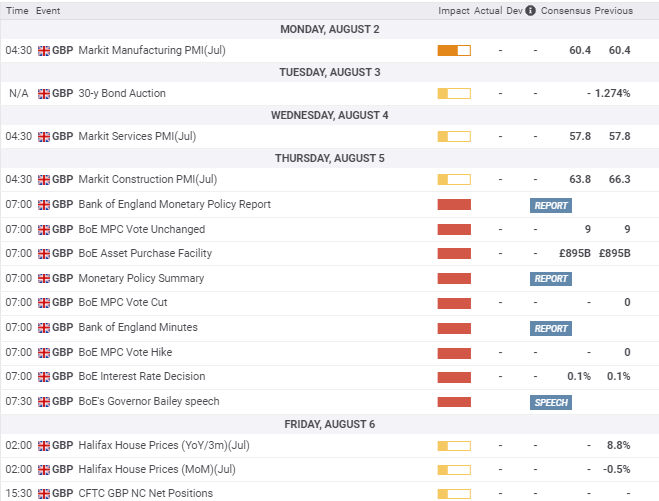
Expectations for a positive economic assessment out of the Bank of England (BOE) and perhaps hints at the timing and conditions for a reduction in the Asset Purchase Facility were an undercurrent for the week’s gains.
Until the BOE meeting on Thursday the comparison to the dovish rate pronouncements from the Federal Reserve will continue to aid the sterling.
The Federal Open Market Committee (FOMC) statement issued with the status quo Wednesday rate decision noted that “progress” had been made toward the bank's goals but provided no guidance on the timing of a much anticipated reduction in the bond purchase program.
Chair Jerome Powell was equally recitient, leaving markets largely without policy directive until the next Fed meeting on September 21-22.
In his press conference, Mr. Powell said that the withdrawal of monetary support has become an active topic among the governors. He noted the US job market still had “some ground to cover” before the bank would begin the reduction of its $120-billion-a-month in purchases of Treasury and mortgage-backed securities.
Treasury yields in the US were slightly lower on the week, reflecting the lack of a counter view in the credit market to moderating US growth and the still active pandemic-induced labor market and supply chain problems..
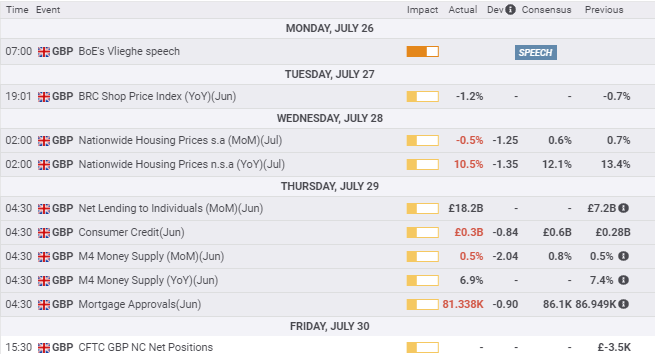
British economic information was limited with Housing Prices in July not quite as buoyant as expected, but that comes after the very strong gains of the past year.
Inflation remains a key ingredient for the BOE. The Consumer Price Index (CPI, y/y) has jumped from 0.7% in January to 2.5% in June. Unlike the Federal Reserve with its adoption of inflation-averaging, the BOE has not tried to insulate rate policy from its responsibility for inflation control.
In the US, Durable Goods Orders in June were weaker than forecast though the impact was mitigated by substantial positive revision in May. Second quarter GDP came in at 6.5%, well below the 8.5% forecast. The Core PCE reading for June was slightly lower than predicted, but as the Fed has disavowed any policy impact it made no print on the market.
GBP/USD outlook
Bias in the GBP/USD is higher with an emphasis on the stronger economic situation in the UK. The rapid recent improvement in the sterling leaves some room for profit-taking, especially if the BOE is more cautious than expected
The contrast between the Fed and the BOE approach to inflation is a fundamental benefit for sterling. Even if the BOE governors do not begin the countdown to a policy reversal this week, they are not constrained from acting on inflation if they judge it appropriate.
The Fed has deliberately removed inflation from consideration, asserting the steep rise this year is temporary, something that the governors cannot know and on which their own record of prognostication is poor.
In his comments on Wednesday, Chair Powell admitted that the price increases are likely to be higher and longer than they had anticipated.
British data is sparse this week and no competition for the BOE meeting.
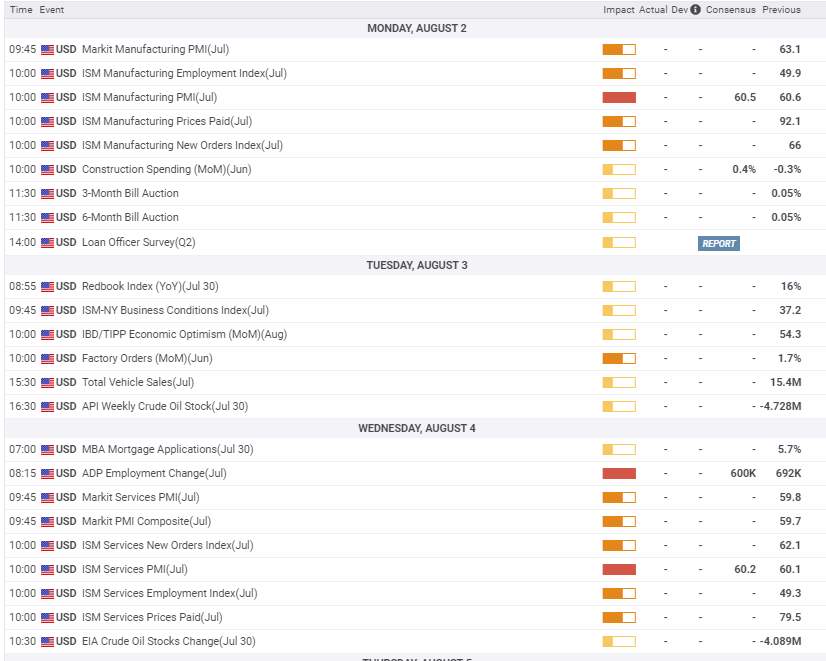
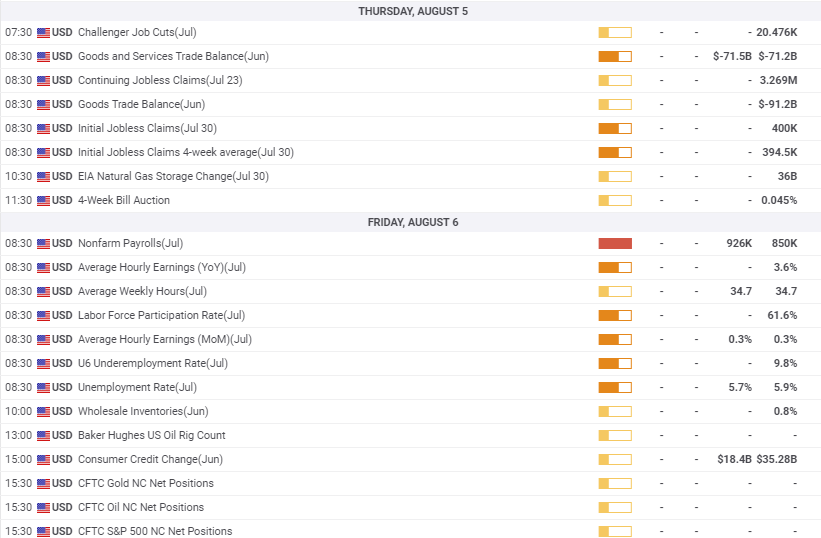
Nonfarm Payrolls in the US for July will be issued this Friday, August 6. A strong result is capable of giving the dollar a boost and relieving some of the disappointment from the second quarter growth miss at 6.5%. Purchasing Managers Indexes for the service and manufacturing sectors in July could, if better than expected, revive some of the economic optimism lost to GDP.
United Kingdom statistics July 26–July 30
US statistics July 26–July 30


FXStreet
United Kingdom statistics August 2–August 6
FXStreet
US statistics August 2–August 6
GBP/USD technical outlook
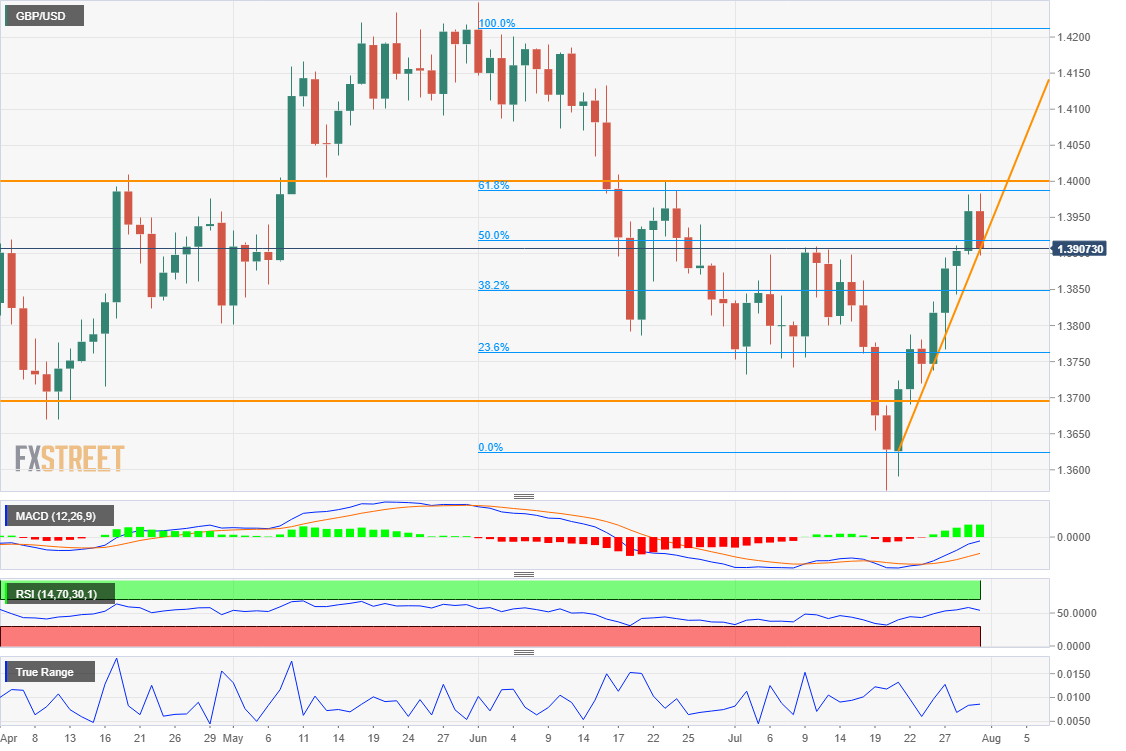
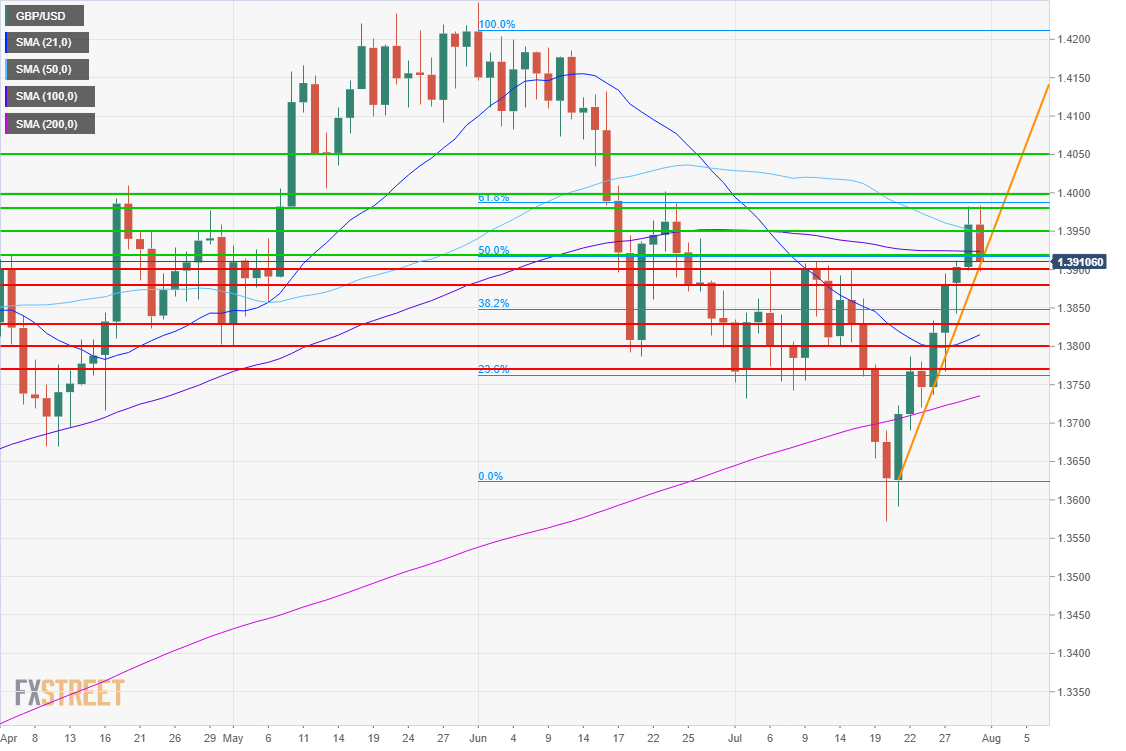
The Friday reversal before the 61.8% Fibonacci level (1.3987) of the June 1 to July 20 gain is logical given the steep ascent since that bottom. The finish at 1.3912, just below the 50% Fibonacci at 1.3917 and at the trend line, likely heralds further increases next week.
Momentum tailed off on Friday as the GBP/USD reversed into profit-taking. The MACD closed the week as a buy, though a bit less so than at the peak on Thursday.
The month-long sojourn above 1.4050 is the current goal but the area between 1.3980 and 1.4050 saw almost no trading and could be passed in a rush if 1.4000 is breached.
The 100-day moving average (MA) at 1.3924 joins resistance at 1.3920 and the 50% Fibonacci at 1.3917 in a moderate band of resistance just above Friday's close. Were it a further distance from the market it would be more substantial. The 50-day MA at 1.3947 is one with resistance at 1.3950.
Resistance: 1.3920, 1.3950, 1.3980, 1.4000, 1.4050
FXStreet Forecast Poll
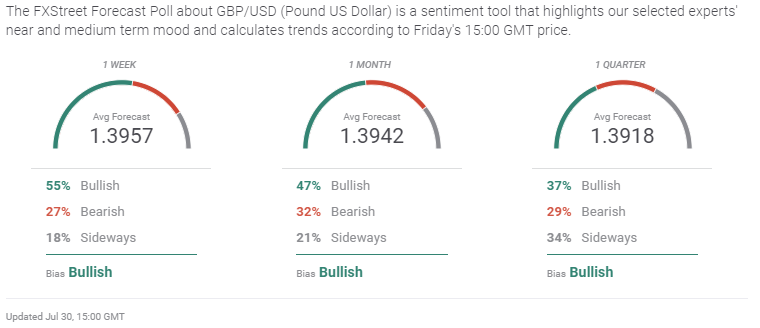
The FXStreet Forecast Poll is bullish in name only, foreseeing consolidation below 1.4000. The BOE remains a wild card.
Premium
You have reached your limit of 3 free articles for this month.
Start your subscription and get access to all our original articles.
Author
Joseph Trevisani
FXStreet
Joseph Trevisani began his thirty-year career in the financial markets at Credit Suisse in New York and Singapore where he worked for 12 years as an interbank currency trader and trading desk manager.