GBP/USD Weekly Forecast: Will oversold conditions rescue GBP bulls?
- GBP/USD extended its three-week losing streak towards the March 2020 low of 1.1411.
- The US Dollar Index hit 20-year highs near 110.00 on hawkish Fed bets.
- Eyes on new UK leadership and Fed’s Powell amid oversold RSI on the daily chart.


GBP/USD crumbled like a house of cards to its cheapest since March 2020, below 1.1500 amid a volatile week that drove the US dollar index to a 20-year peak, while investors scurried for safety. The week ahead will be interesting, as the UK announces a new Prime Minister, in the face of an inevitable recession.
GBP/USD: What happened last week?
Markets witnessed a volatile end to another volatile week, with recession fears and aggressive Fed rate hike expectations dominating throughout the week. Relentless US dollar strength followed alongside the Treasury yields, as markets priced odds of a 75 bps Fed rate hike for September to roughly around 74% vs. a probability of nearly 60% seen a week ago. At the same time, ECB hawks re-emerged and jacked up bets of an outsized rate hike next week to about 80%. ECB policymakers joined the chorus of their US counterparts following the Jackson Hole Symposium, in a strong response to bringing inflation down even if it meant more pain for the economy. Eurozone Preliminary inflation print rose to a new record high of 9.1% in August.
The US currency remained the go-to safe haven, as investors fretted over higher rates for longer amid growing risks of a global recession. China’s fresh covid lockdowns, energy crisis and property market concerns exacerbated the risk-averse market conditions. A big miss on the US ADP private sector employment data and mixed US ISM Manufacturing PMI failed to douse aggressive Fed tightening bets. US private payrolls grew by just 132,000 for the month, down from a 268,000 gain in July. Meanwhile, US manufacturing grew steadily at 52.8 in August even though the price paid component dropped sharply to 52.5.
On the GBP side of the story, the dire UK economic outlook continued to remain a weight on the domestic currency, in the face of the deepening energy and cost-of-living crisis. Last Friday, the British energy regulator, Ofgem, announced average annual household energy bills will rise by 80% from October to 3,549 pounds. Meanwhile, the UK is set to announce a new prime minister on Monday, with the current Foreign Minister Liz Truss as the frontrunner. Truss and Finance Minister Nadhim Zahawi vowed to deliver immediate energy bill support for households. Although GBP bulls were left unimpressed, more policy support could only worsen the inflation scenario and accentuate the BOE’s dilemma.
The US Bureau of Labor Statistics reported on Friday that Nonfarm Payrolls rose by 315,000 in August. Although this reading came in slightly higher than the market expectation of 300,000, it failed to help the dollar continue to gather strength. Investors scaled back hawkish Fed bets as the report revealed that wage inflation remained unchanged at 5.2%. According to the CME Group FedWatch Tool, markets were pricing in a 64% probability of a 75 bps September rate hike heading into the weekend. In turn, GBP/USD climbed toward 1.1600 and snapped a five-day losing streak.
Week ahead: What to watch out for
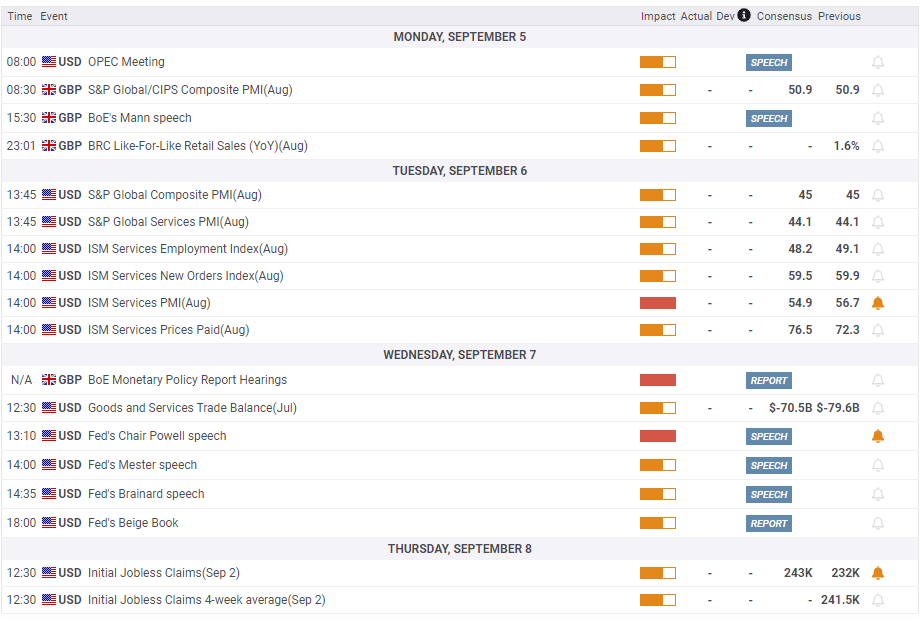
It’s likely to be a relatively quiet start to the week, as US traders will be away on Monday, in observance of the Labor Day holiday. Although a speech from BOE policymaker Catherine Mann will be closely eyed for fresh hints on the policy outlook.
Tuesday will see the US ISM Services PMI release, with the prices paid sub-index once again in focus, as it could confirm peak inflation and affect the Fed rate hike sentiment. Traders will then gear up for the BOE monetary policy report hearings on Wednesday, with eyes on Governor Andrew Bailey and his colleagues’ testimony ahead of the September 15 rate hike decision.
Thursday’s ECB interest rate decision and Fed Chair Jerome Powell’s speech will be next of note for any impact on the market sentiment and US dollar valuations. The weekly US jobless claims will also entertain traders ahead of Friday’s UK Consumer Inflation Expectations and second-tier US economic data.
Meanwhile, recession fears amid a global tightening spree and raging inflation will continue to drive risk trends amid a data-light week on the UK calendar.
GBP/USD: Technical outlook
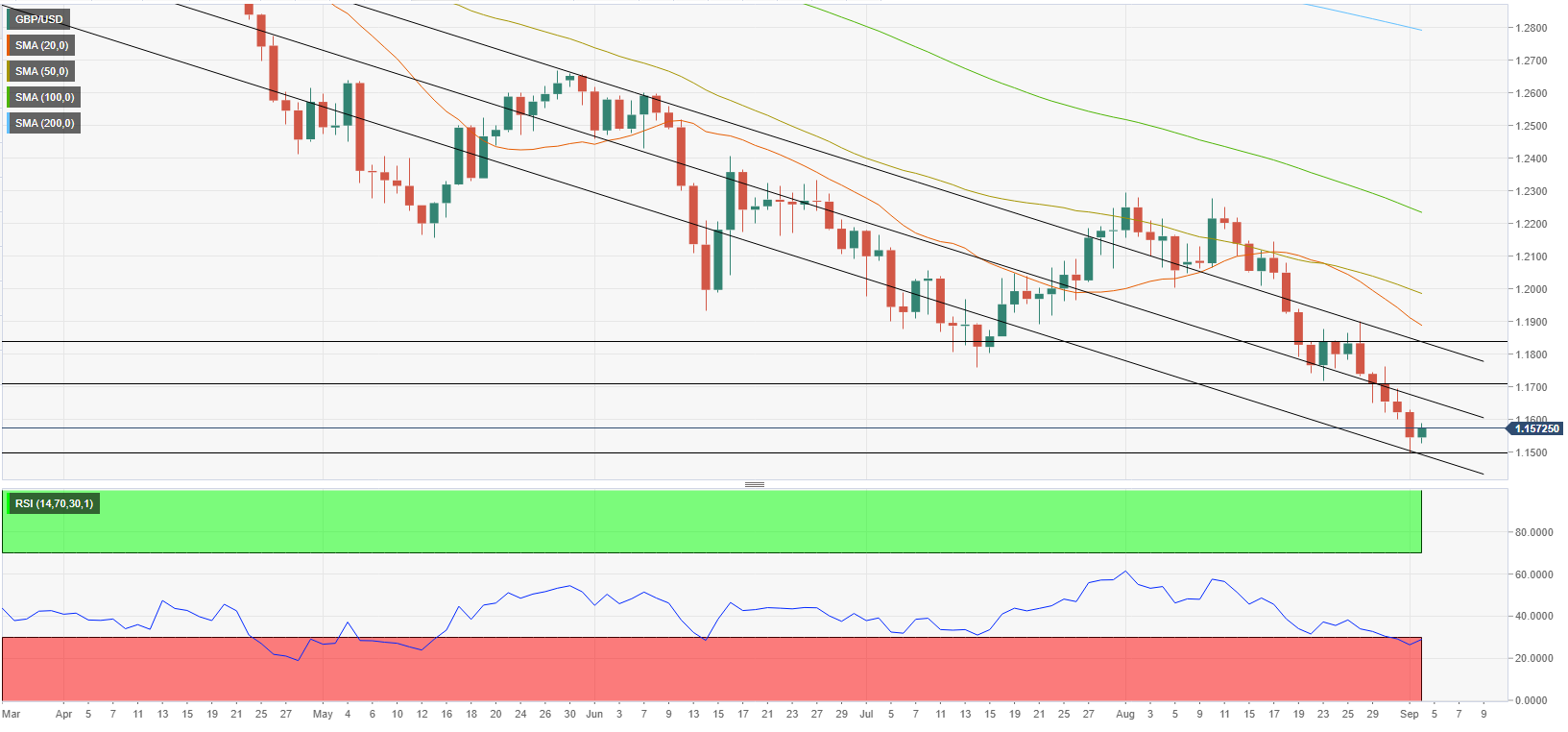
Despite Friday's rebound, the Relative Strength Index (RSI) indicator on the daily chart stays below 30, suggesting that GBP/USD has more room on the downside before it corrects its oversold conditions.
On the upside, 1.1700 (psychological level, mid-point of the descending regression channel coming from March) aligns as first resistance ahead of 1.1850 (static level, upper-limit of the descending regression channel) and 1.1900 (20-day SMA).
On the flip side, if GBP/USD falls below 1.1500 again and starts using that level as resistance, it could extend its slide toward the 1.1410/1.1400 area (March 2020 low, psychological level).
GBP/USD: Forecast poll
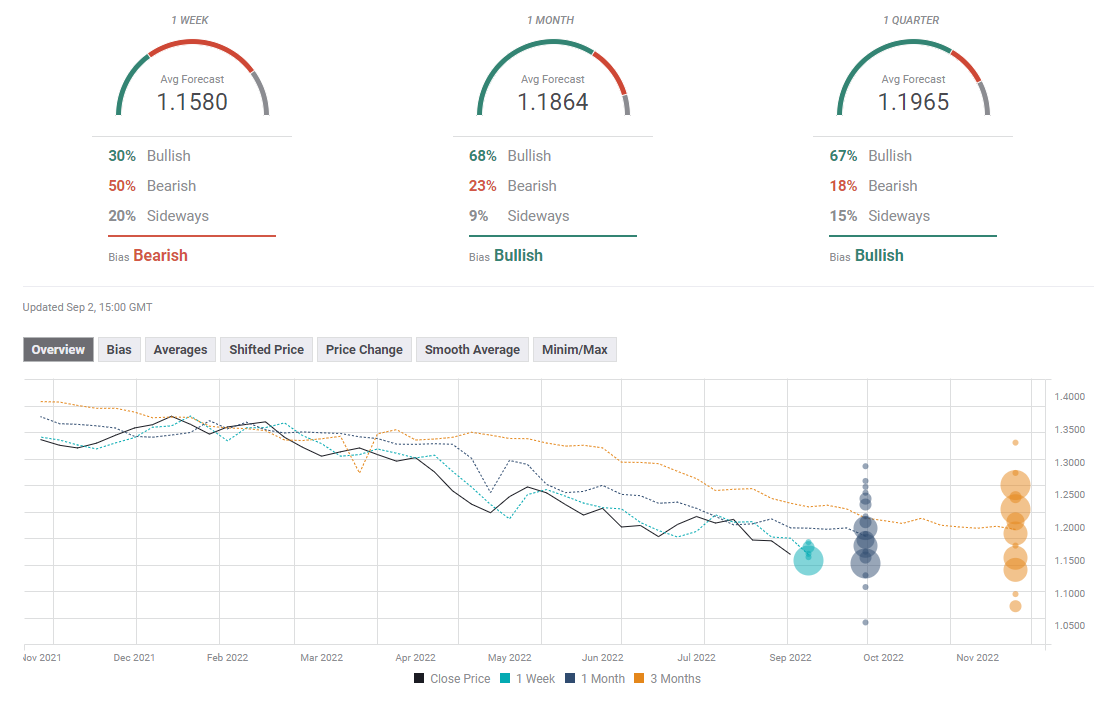
The FXStreet Forecast Poll shows that half of the polled experts expect GBP/USD to remain bearish next week but only two experts see the pair trading below 1.1500. The one-month and the one-quarter views both point to an overwhelmingly bullish sentiment with average targets sitting at 1.1864 and 1.1965, respectively.
Premium
You have reached your limit of 3 free articles for this month.
Start your subscription and get access to all our original articles.
Author
Dhwani Mehta
FXStreet
Residing in Mumbai (India), Dhwani is a Senior Analyst and Manager of the Asian session at FXStreet. She has over 10 years of experience in analyzing and covering the global financial markets, with specialization in Forex and commodities markets.