|

GBP/USD outlook: Near-term structure weakens after a double failure at 1.1500 barrier
GBP/USD

Cable remains in red for the second day, pressured by weaker risk sentiment and downbeat report from the BoE, which showed raised expectations for inflation in one year time to 9.5% from 8.4% estimation in August and expectations for 4.8% inflation in three years.

Inflation in UK eased to 9.9% in September from 10.1% in August, but still about five times above the central bank’s 2% target.

BoE remains on track for further rate hikes to in fight to bring red-hot inflation under control, though high borrowing cost would further hurt already weakened economic growth.

Overall negative near-term picture could be partially offset by better than expected UK PMI data which showed unexpected increase of activity in construction sector, sending the index to three-month high.

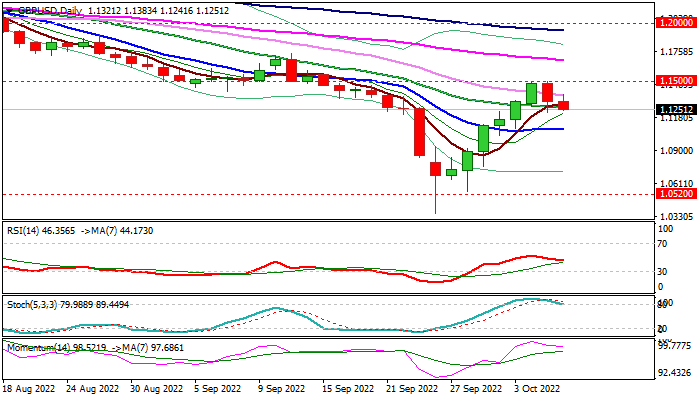
Daily studies show near-term structure weakening, following a pullback after repeated reject at round-figure 1.15 resistance, as negative momentum is rising and stochastic emerging from overbought territory. Fresh bears tested initial support at 1.1225 (Fibo 23.6% of 1.0348/1.1495 recovery leg), but need break here to further weaken near-term structure and open way for attack at key supports at 1.1082/1.1057 (10DMA/Fibo 38.2%) and psychological 1.10 level, to generate stronger reversal signal on break. Falling 30DMA offers immediate resistance at 1.1373, guarding the upper pivot at 1.1500, violation of which would bring bulls back to play.

Res: 1.1373; 1.1410; 1.1460; 1.1500.
Sup: 1.1225; 1.1082; 1.1057; 1.1000.
GBPUSD

Interested in GBP/USD technicals? Check out the key levels

    1. R3 1.1741
    2. R2 1.1618
    3. R1 1.1472
  1. PP 1.1349
    1. S1 1.1203
    2. S2 1.1081
    3. S3 1.0934

Author

Slobodan Drvenica

Slobodan Drvenica

Windsor Brokers

Industry veteran with over 22 years’ experience, Slobodan Drvenica joined Windsor Brokers in 1995 when he was an active trader for more than 10 years, managing the trading desk and own account departments.


More from Slobodan Drvenica
Share:

Editor's Picks

EUR/USD flirts with daily highs, retargets 1.1900

EUR/USD regains upside traction, returning to the 1.1880 zone and refocusing its attention to the key 1.1900 barrier. The pair’s slight gains comes against the backdrop of a humble decline in the US Dollar as investors continue to assess the latest US CPI readings and the potential Fed’s rate path.

GBP/USD remains well bid around 1.3650

GBP/USD maintains its upside momentum in place, hovering around daily highs near 1.3650 and setting aside part of the recent three-day drop. Cable’s improved sentiment comes on the back of the Greenback’s  irresolute price action, while recent hawkish comments from the BoE’s Pill also collaborate with the uptick.

Gold clings to gains just above $5,000/oz

Gold is reclaiming part of the ground lost on Wednesday’s marked decline, as bargain-hunters keep piling up and lifting prices past the key $5,000 per troy ounce. The precious metal’s move higher is also underpinned by the slight pullback in the US Dollar and declining US Treasury yields across the curve.

Crypto Today: Bitcoin, Ethereum, XRP in choppy price action, weighed down by falling institutional interest 

Bitcoin's upside remains largely constrained amid weak technicals and declining institutional interest. Ethereum trades sideways above $1,900 support with the upside capped below $2,000 amid ETF outflows.

Week ahead – Data blitz, Fed Minutes and RBNZ decision in the spotlight

US GDP and PCE inflation are main highlights, plus the Fed minutes. UK and Japan have busy calendars too with focus on CPI. Flash PMIs for February will also be doing the rounds. RBNZ meets, is unlikely to follow RBA’s hawkish path.

Ripple Price Forecast: XRP potential bottom could be in sight

Ripple edges up above the intraday low of $1.35 at the time of writing on Friday amid mixed price actions across the crypto market. The remittance token failed to hold support at $1.40 the previous day, reflecting risk-off sentiment amid a decline in retail and institutional sentiment.