GBP/USD Forecast: Pound Sterling looks fragile to start new week
- GBP/USD lost its traction after recovering above 1.2600 on Monday.
- 1.2540 aligns as next important technical support for the pair.
- Hawkish BoE commentary failed to help Pound Sterling stage a rebound.

GBP/USD climbed above 1.2600 in the Asian trading hours on Monday but retreated below that level in the early European session. The pair remains technically bearish but a positive shift in risk sentiment could help Pound Sterling limit its losses.
After touching its weakest level since mid-June below 1.2550 in the early American session on Friday, GBP/USD managed to erase some of its daily losses. Nevertheless, the pair ended the week in negative territory, losing more than 100 pips.
Pound Sterling price in the last 7 days
The table below shows the percentage change of Pound Sterling (GBP) against listed major currencies in the last 7 days. Pound Sterling was the weakest against the US Dollar.
| USD | EUR | GBP | CAD | AUD | JPY | NZD | CHF | |
| USD | 0.67% | 1.33% | 0.44% | 0.11% | 0.84% | 0.42% | 0.18% | |
| EUR | -0.66% | 0.67% | -0.22% | -0.55% | 0.16% | -0.28% | -0.49% | |
| GBP | -1.34% | -0.66% | -0.90% | -1.28% | -0.49% | -0.95% | -1.17% | |
| CAD | -0.43% | 0.23% | 0.89% | -0.37% | 0.40% | -0.06% | -0.28% | |
| AUD | -0.10% | 0.63% | 1.29% | 0.37% | 0.78% | 0.34% | 0.12% | |
| JPY | -0.85% | -0.17% | 0.47% | -0.40% | -0.78% | -0.45% | -0.68% | |
| NZD | -0.36% | 0.25% | 0.93% | 0.02% | -0.28% | 0.43% | -0.24% | |
| CHF | -0.16% | 0.51% | 1.17% | 0.28% | -0.11% | 0.67% | 0.23% |
The heat map shows percentage changes of major currencies against each other. The base currency is picked from the left column, while the quote currency is picked from the top row. For example, if you pick the Euro from the left column and move along the horizontal line to the Japanese Yen, the percentage change displayed in the box will represent EUR (base)/JPY (quote).
While delivering his prepared statement at the annual Jackson Hole Symposium on Friday, Federal Reserve Chairman Jerome Powell refrained from confirming that the Fed will hold the policy rate steady for the rest of the year. "The Fed will decide next rate moves based on data," Powell noted and said that they are prepared to raise rates further if needed.
On Saturday, Bank of England (BoE) Deputy Governor Ben Broadbent said the policy needs to remain in restrictive territory, explaining that the rise in wages in response to rising prices were unlikely to fade as rapidly as they emerged. These comments, however, failed to provide a noticeable boost to Pound Sterling at the beginning of the week.
The only data featured in the US economic docket will be the Dallas Fed's Texas Manufacturing Outlook Survey. Ahead of this week's high-impact US data releases, however, market participants are likely to ignore this report.
In the meantime, US stock index futures were last seen rising between 0.2% and 0.3%. Following the risk rally seen in Wall Street on Friday, a bullish opening on Monday could make it hard for the US Dollar to gather strength and allow GBP/USD to stage a technical correction.
GBP/USD Technical Analysis
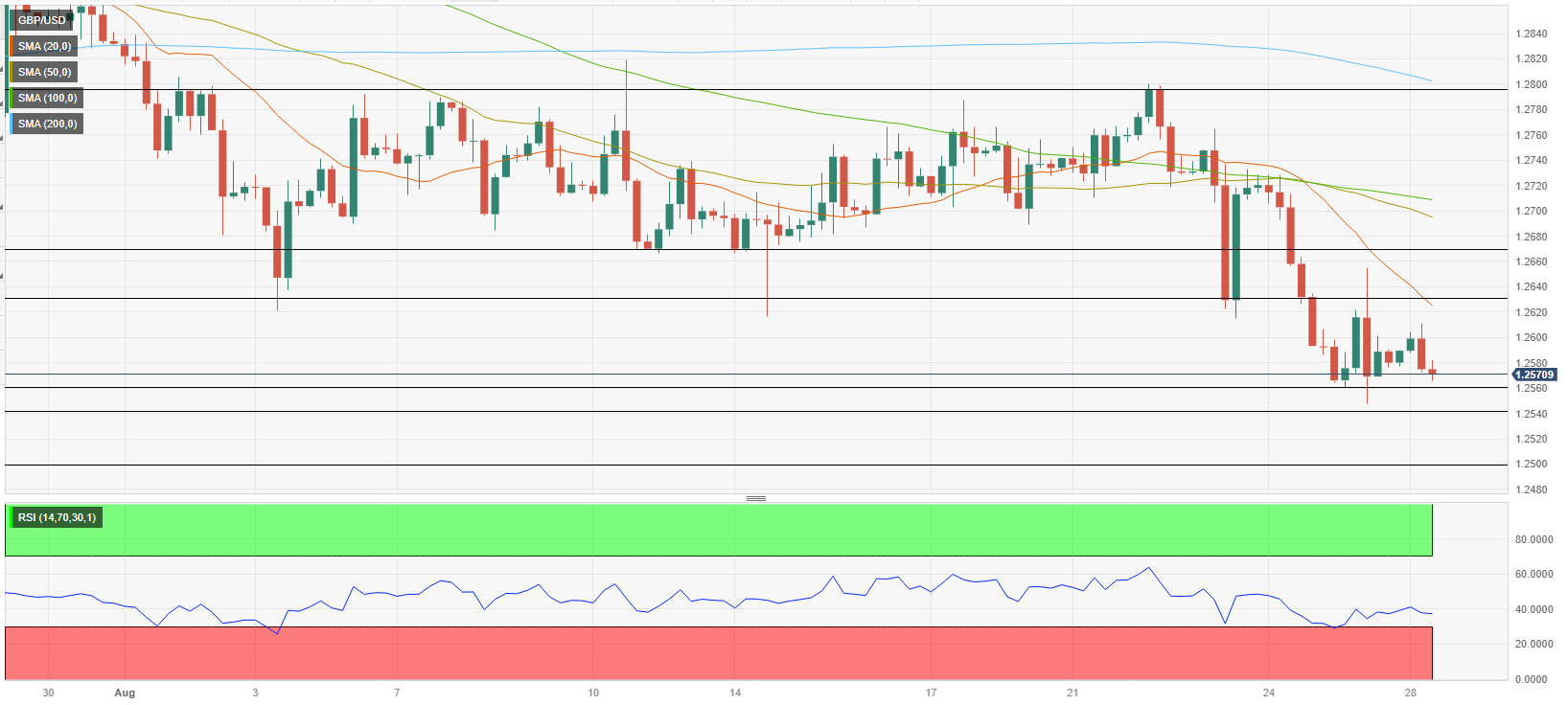
The Relative Strength Index (RSI) indicator on the 4-hour chart edges lower below 40 on Monday, suggesting that sellers retain control. On the downside, 1.2540 (static level) aligns as next important support. A 4-hour close below that level could bring in additional sellers and open the door for an extended slide toward 1.2500 (psychological level, static level) and 1.2440 (static level from May).
In case GBP/USD rises above 1.2600 and stabilizes there, sellers could turn hesitant and book their profits. In that scenario, 1.2630 (static level), 1.2670 (static level) and 1.2700-1.2710 (50-period Simple Moving Average (SMA) on the four-hour chart, 100-period SMA) could be seen as next recovery targets.
Premium
You have reached your limit of 3 free articles for this month.
Start your subscription and get access to all our original articles.
Author
Eren Sengezer
FXStreet
As an economist at heart, Eren Sengezer specializes in the assessment of the short-term and long-term impacts of macroeconomic data, central bank policies and political developments on financial assets.