FX Volatility Set To Rise

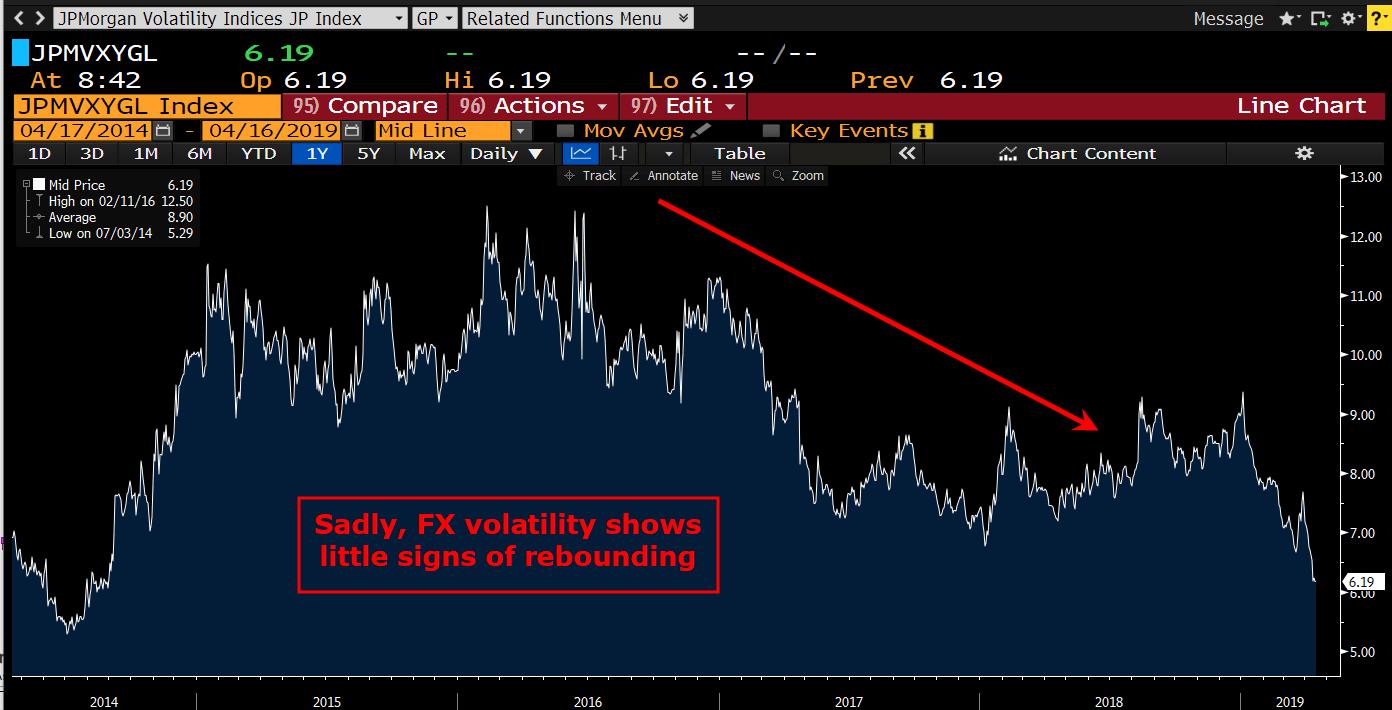
Good day traders.
We are all painfully aware of how low FX volatility has drifted in recent months, the chart below clearly shows this. And while trade frequency moves lower in this type of environment it does not mean there are not trades to take. It simply means there are fewer trades and it requires a bit more patience as markets take more time for scenarios to play out.
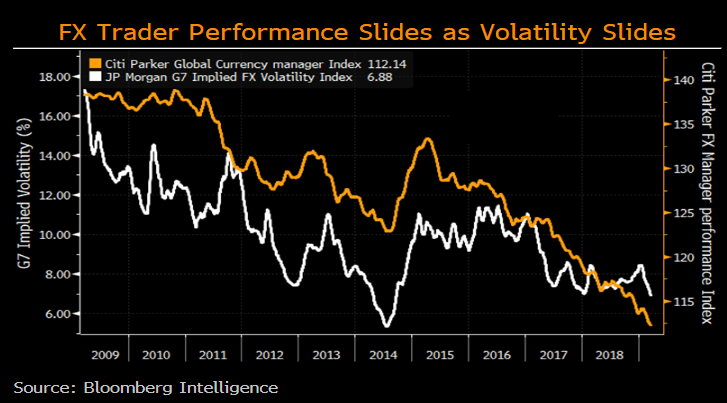
It also does require one to be very selective. Professional FX money managers have had a hard time with this market environment, as you can clearly see in the chart below. Individual traders, regardless of skill levels need to take this to heart. You need to be at the top of your game and have a valid and robust methodology in order to generate returns in an environment such as this.
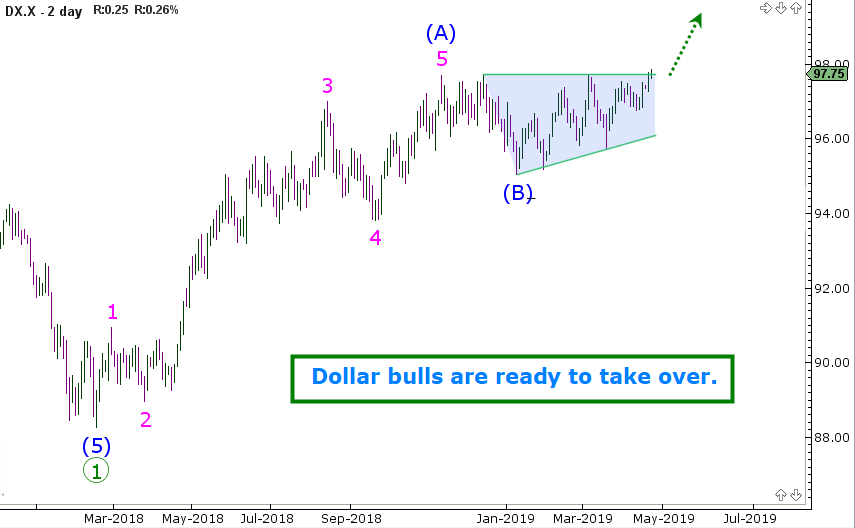
But here is the good news. We are finally seeing some signs that a trend is unfolding. And if that takes place, trade frequency and trade quality will be on the rise.
The Dollar Index (DXY) is poised to break above several months of sideways price congestion. I am looking for a push above 97.75-98.00, if that takes place, we should see a sustained push higher and as a result lower levels in EUR/USD.
Yield spreads between the US and Germany support a stronger USD, thus a weaker EUR. While the chart below shows that EUR/USD has not declined to the same degree that spreads have widened (NOTE: EUR/USD is inverted in the chart below), I suspect it is only a matter of time before EUR/USD starts moving lower. In fact, EUR/USD is already lower by 100 pips this week, there is more to come.
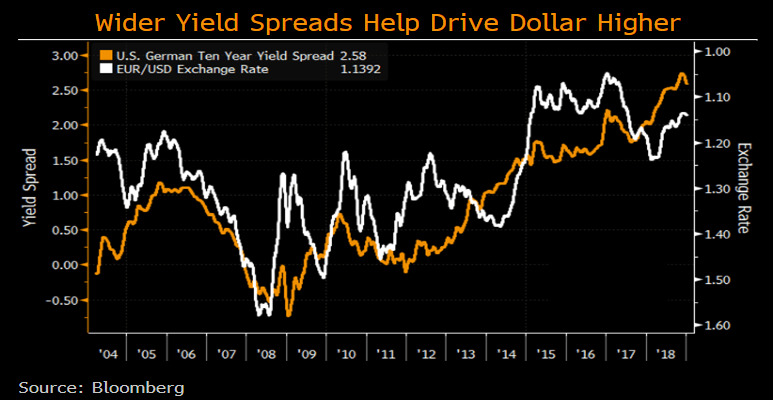
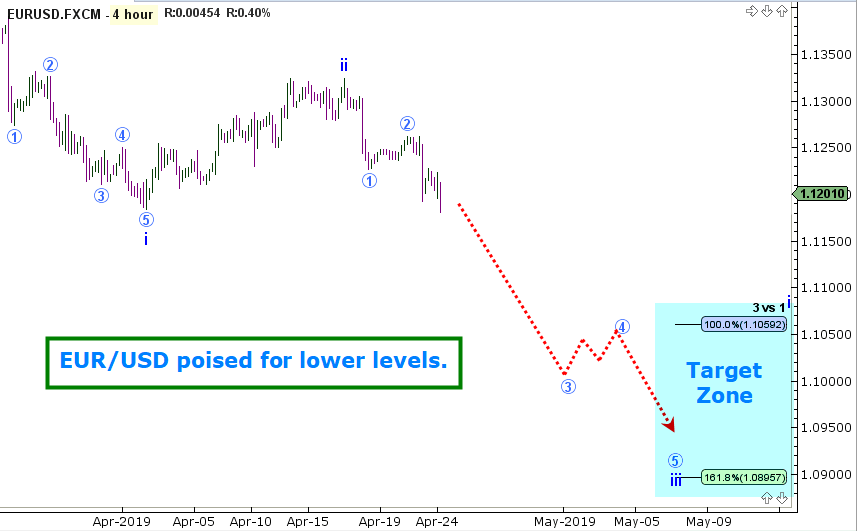
I see much lower levels for EUR/USD looking ahead. Traders with patience and proper position sizing will want to take note of the chart below.
I would also be keen to look at shorts in AUD/USD. Like many other FX pairs, AUD/USD has been trading is a sideways 'chopzone' for months. That changed today. I expect lower levels in the days/weeks ahead.
Today's trend-line break lower sets a nice stage for traders with a bearish bias. The Target Zone was derived as follows:
- Doing a Fib retracement of Wave A we would normally expect Wave B to stall at the 61.8% level
- Projecting the length of Wave a from Wave b, we would normally expect Wave c to be roughly 100% the length of Wave a
Since both of these price measures are congregating around the same area, it strengthens the overall conviction.

So let's get excited about these developments. Based on my take, FX traders should have a solid market environment to trade in over the next several weeks/months.
Author
Dave Floyd
Aspen Trading Group
If he lived anywhere but Central Oregon, where the trails of the Cascades mingle with the warm sunshine and fresh air of the high desert, Dave Floyd would probably be one of those guys who lives and breathes trading and analysis 24/7.