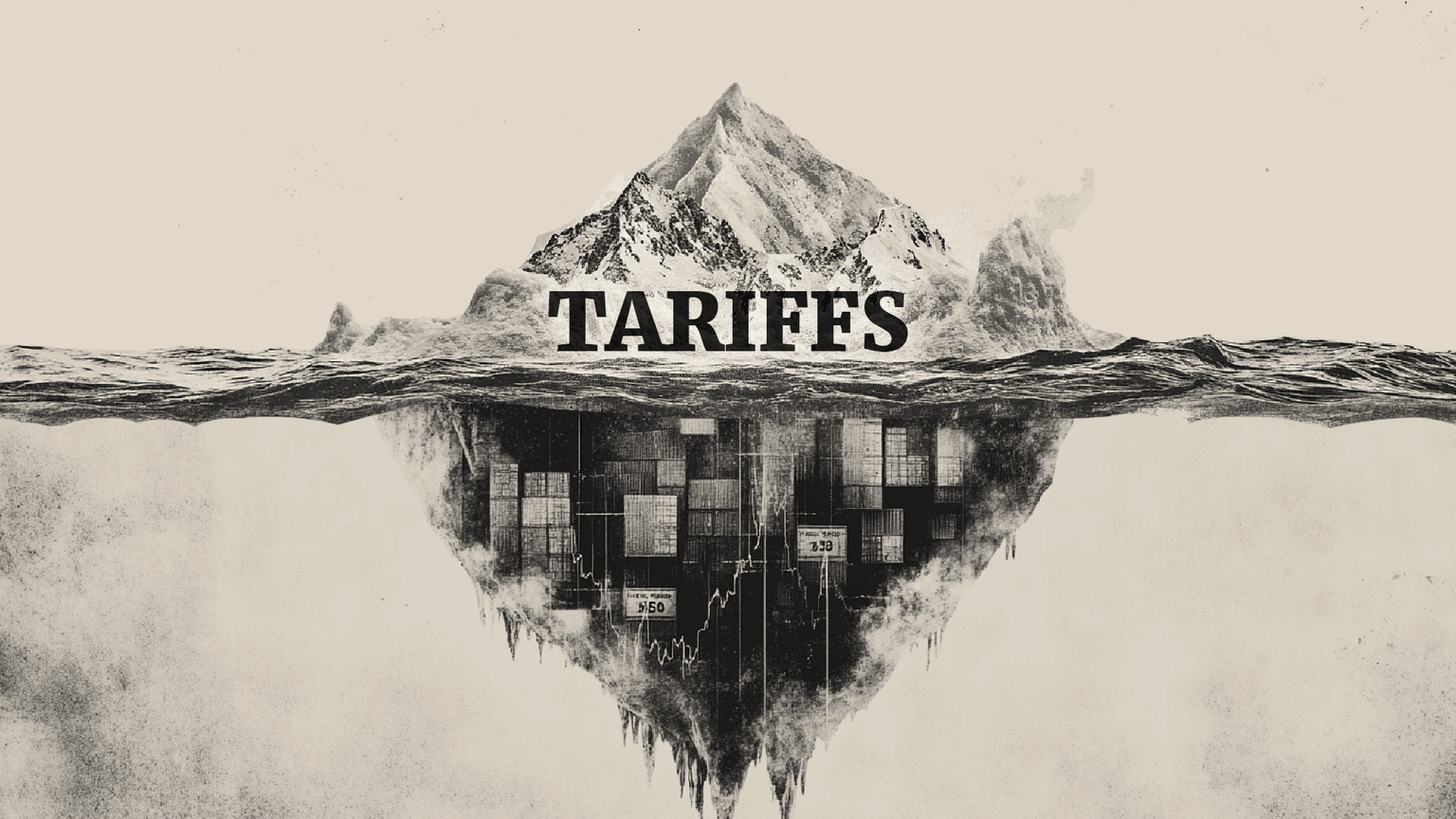
From boom to breakdown: How tariff shock is tipping the US into a White House-made recession

The U.S. economy has long been the global benchmark — the heavyweight champion of growth, capital mobility, and open markets. For decades, it's been where the world comes to invest, trade, and scale. With the most liquid capital markets on earth and historically low trade friction, the U.S. has offered the deepest well of opportunity for global businesses and investors alike.
So yes, demanding fairer trade terms? Reasonable. Levelling the playing field for U.S. consumers and producers? Long overdue in some sectors. But execution matters, and what we have now looks less like a tactical recalibration and more like a White House-engineered recession dressed up as an economic reset. Not a theory, not a tail risk — it’s flashing across the dashboard in real time.
The U.S. economy has long been the global benchmark — the heavyweight champion of growth, capital mobility, and open markets. For decades, it's been where the world comes to invest, trade, and scale. With the most liquid capital markets on earth and historically low trade friction, the U.S. has offered the deepest well of opportunity for global businesses and investors alike.
So yes, demanding fairer trade terms? Reasonable. Levelling the playing field for U.S. consumers and producers? Long overdue in some sectors. But execution matters, and what we have now looks less like a tactical recalibration and more like a White House-engineered recession dressed up as an economic reset. Not a theory, not a tail risk — it’s flashing across the dashboard in real time.
Let’s not forget where we started: the administration inherited a red-hot economy. Growth momentum was strong, unemployment was pinned under 4%, capex was surging, and fiscal policy was lighting a soft fuse under industrial policy. Supply chains were being reshored, data centers were going vertical, defense and energy spending were about to roar. This was a runway for a multi-year American expansion.
Then came the sledgehammer: a sudden, sweeping tariff spike that blindsided the core of the domestic economy — small businesses. These aren’t just mom-and-pop shops. They’re the engine of employment and investment in America, responsible for more than 80% of hiring and capex. And unlike multinationals, they don’t have global treasury teams or price-hedging tools. When imports hit the dock, the tariff bill comes due — in full. No payment terms. No relief window. Just straight-up working capital carnage.
You can expect ships to float offshore. Purchase orders to get shredded. And yes — you’ll see decades-old retailers and wholesalers heading for bankruptcy, not because of bad management, but because Washington hit them with a shock policy shift that gave them no time to adapt.
Meanwhile, the exemptions? Carved out for the titans. The biggest firms — flush with liquidity and global flexibility — get the pass. That’s not just unfair. It’s macro-destructive. It creates a two-speed economy: protected giants at the top, crushed SMEs at the core. If you wanted to fracture the economy from within, this is how you’d do it.
And the GDP math? It's not pretty. According to Bank of Montreal Economics, in 2018, tariffs ticked up from 2% to 3%, and that shaved 0.25% to 0.7% off GDP. This time, we’re talking about a quantum leap — 3% to 18%. Even applying the most conservative models, we’re looking at a 4% GDP drag in 2025. And that doesn’t even price in the cascading uncertainty — the investment delays, the consumer pullbacks, the complete freezing of long-term planning.
It’s not too late to pivot. But it better happen fast.
With Mexico and Canada, the U.S. has a shot at crafting a continental supply chain powerhouse. Zero out tariffs in exchange for a clean labor-capital integration framework. Offer a 180-day window to every allied country: drop your tariffs, keep our 10% placeholder in place, and use that time to crush non-tariff friction. If progress is real, the 10% goes away.
China? That’s a different beast. Keep hard tariffs in place on strategic sectors — EVs, semiconductors, solar tech — but phase in the rest over 18 to 24 months. Give U.S. business room to maneuver instead of setting the factory floor on fire.
Here’s the brutal truth: if these tariffs remain at current levels, we’re not talking about a cyclical cooling. We’re staring down the barrel of a self-inflicted economic contraction — the kind that breaks more than it bends. One that reshapes the policy debate, dents the American brand globally, and lingers long after the press conferences end.
There’s still time to shift the narrative. But the longer this trade gambit runs without a reset, the more it looks like intentional deceleration disguised as strategic leverage — and the harder it’ll be to convince markets that this isn’t just Washington hitting the brakes on America’s engine by design.
Author
Stephen Innes
SPI Asset Management
With more than 25 years of experience, Stephen has a deep-seated knowledge of G10 and Asian currency markets as well as precious metal and oil markets.