FOMC Minutes July 30-31 Meeting Preview: The Fed vs the markets
- July meeting cut the fed funds rate 0.25%, in the first reduction since December 2008
- The Fed cited overseas threats to US economic growth not the expansion itself as the prime reason
- Markets expect a second cut at the September 18th FOMC
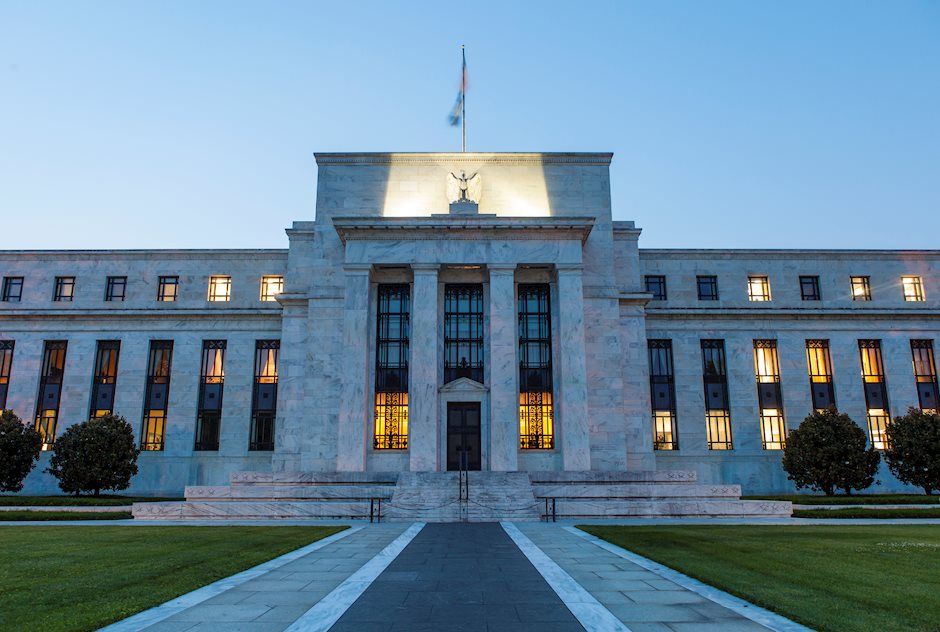

The Federal Reserve will release the edited minutes of the July30-31 Federal Open Market committee (FOMC) meeting on Wednesday August 21 at 18:00 GMT, 14:00 EDT
FOMC Policy
The Federal Reserve policy that switched to neutral in January completed the circle last month with first decrease in the base rate in more than a decade from a 2.50% upper target to 2.25%. The logic behind the decision, as has been consistent from January, cited external threats to the US expansion, the US-China trade war, Brexit and the generalized slowdown in global economic activity.
The FOMC statement was anodyne, “This assessment [for future rate policy] will take into account a wide range of information, including measures of labor market conditions, indicators of inflation pressures and inflation expectations, and readings on financial and international developments.”
Chairman Jerome Powell in his statement and news conference after the announcement made the governors’ concerns far more concrete. “There is nothing in the US economy that presents a threat to the US economy, down side risks are coming from abroad.”
Mr. Powell also referred to the rate cut as a ‘mid-cycle adjustment,” a comment that sent the equities into a swoon, though he modified it later to note that rate cuts were still possible.
He warned against assuming that this was the beginning of a rate cycle. “That is not what we are seeing now, that’s not our perspective now."
Mr. Powell was pointed in mentioning the benefits in employment and wages delivered to the farther reaches of the labor economy by the long running expansion and the pressure the tight job market was exerting on compensation as a fulfillment of its Congressional mandate for full employment.
US Economy
The American economy presents an uneven picture in the middle of the third quarter.
Economic growth averaged 2.6% in the first half, with a minor downward adjustment expected to second quarter activity from 2.1% to 2.0% when the first revision is issued on August 29th. The Atlanta Fed’s GDPNow model was tracking at 2.2% for the third quarter on August 16.
Job creation remains strong. Non-farm payrolls registered 164,000 in July and 193,000 in June putting to rest fears that weak February and May numbers heralded an ebbing expansion. The three month moving average has fallen from 235,000 in January to 187,000 in July but that is still above the new entrant level insuring that labor shortages and their benefits to workers should continue.

Reuters
Other labor market indicators remain robust: initial jobless claims and the unemployment are at or near 50 year lows and the increase in annual wages is close to its decade top.
Retail sales have rebounded from the impact of the partial government shutdown in January. Overall sales rose 0.7% in July more than twice the estimate and have averaged 0.6% monthly from March. The control group which factors into the Bureau of Economic Analysis GDP calculation gained 1.0% last month, ahead of the 0.7% estimate and has averaged a healthy 0.64% over the past five months.
Consumer spending at current levels is commensurate with an economy expanding at its current 2.0%-2.5% rate.
Business sentiment has been falling steadily since its highs of last year and the declining optimism has taken investment spending down with it. The main culprit is the trade war with China and its seemingly intractable economic and political disputes. Next in line for business is the unknown impact of Britain’s exit from the European Union. Finally the global economy has been slowing for most of the year largely under the flail of the trade arguments of its three largest components.
Fed Funds Futures
The credit markets have been predicting lower US interest rates since early last November six weeks before the Fed December rate hike. That conviction is unchanged. The fed funds futures show a 95% chance of a 25 basis point cut at the culmination of the September 18 FOMC meeting and 5% odds for a 50 point cut.

CME Group
FOMC Minutes
In the three weeks since the July 31 FOMC volatility and risk in global markets has increased substantially. The US has threatened to impose tariffs on the balance of Chinese imports, political protests in Hong Kong have escalated dramatically and Boris Johnson the new British Prime Minister has promised that the UK will leave the EU on October 31 deal or no deal.
The Fed judgement that the US economy is in good shape has not been altered by the statistics of the past three weeks but the global picture has worsened considerably.
It is these risks and their implication for Fed policy that will occupy the markets.
Against the increasingly fragile background the minutes are not likely to add much analysis. But the more they reflect the market’s rising global concerns the more certain a September Fed cut becomes.
Author
Joseph Trevisani
FXStreet
Joseph Trevisani began his thirty-year career in the financial markets at Credit Suisse in New York and Singapore where he worked for 12 years as an interbank currency trader and trading desk manager.