First principles – Part one

S2N spotlight
Not sure why, but I have woken up like a bear with a sore head. If my commentary comes across as angry, it probably is. I plan on going for a run shortly to try to channel the energy.
The hype at the moment is all about the China-US trade deal. Trading or investing on the back of news headlines is a sure way to get your head handed to you on a plate, so I am staying clear of all this nonsense of reacting to the news of the day as if anything major has changed.
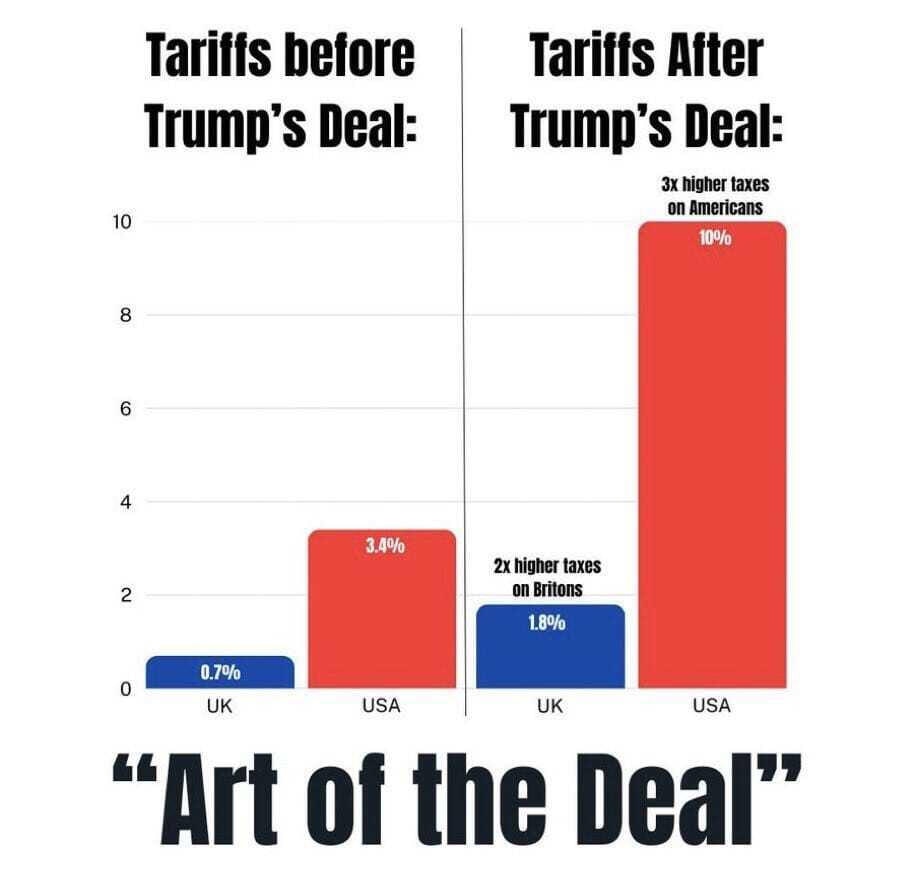
I mentioned last week about the US-UK deal. Here is a really good visualisation of the deal.
We need to remember that before tariff trade wars became the focus of all eyes, the US stock market was trading near all-time valuation highs and at all-time price highs, suggesting subpar returns for the next 10 years as profit margins and valuations normalise.
My advice is to wait and see the details of the “deal” with the US-China. Remember, both countries have bet big on standing their ground. That means there has to be a winner or a loser, or they both agree to be losers, just to a lesser degree than if they choose a war to the death. I see no win-win scenario in this predicament, but I am pretty sure the spin doctors will do their best to make both countries come across as winners. The only winner I see will be volatility.
This brings me to what I was planning on discussing today, before my rant.
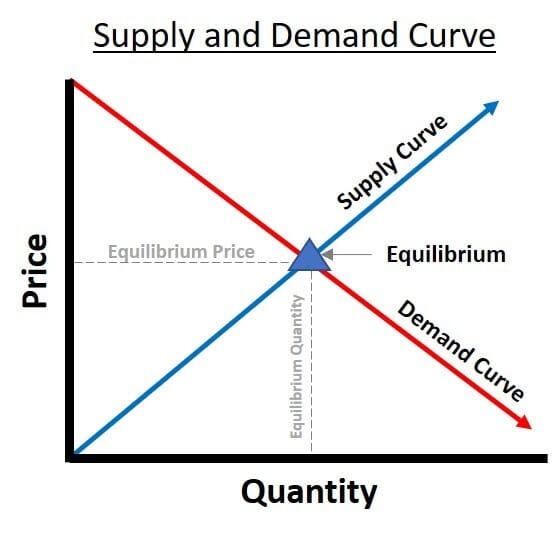
Don’t worry, I am not going to bore you with a full-scale economic lecture. However, every Econ 101 student has learned the classic supply and demand curve. Maybe one day I will write a bit of economic history about how these curves came about from Marshall and Walrus; I found their backgrounds interesting.
It doesn’t matter what brand of economics you follow; the concept is universal and one of first principles. If the demand for a particular product increases and the supply stays constant, then prices should go up. If supply goes down and the demand stays constant, then prices should go up. If you followed that, then you just grasped the most fundamental concept driving the free market.
In the Wall Street Journal on the weekend, I read an article about the revolt against the largest egg farmer in the US, accusing them of price gouging.
There is roughly a hen for every person in the US to produce the required amount of eggs for average consumption. Bird flu hit the US hard over the last 2 years, with more than half the number of hens dying in the US. What would you expect to happen to egg prices if half the supply disappeared with a minimum of a year needed to replace the supply? Eggs are not easily substituted with a similar product, which makes their demand inelastic. A fancy economic word for describing the quantity demanded or supplied changes very little when the price changes.
I pull this data from the Feds St. Louis FRED database; it’s up to March 2025. You may be asking why the fuss. I don’t know about you, but I cannot function without my daily omelette. Yes, it’s a first-world problem, but it is inflationary.
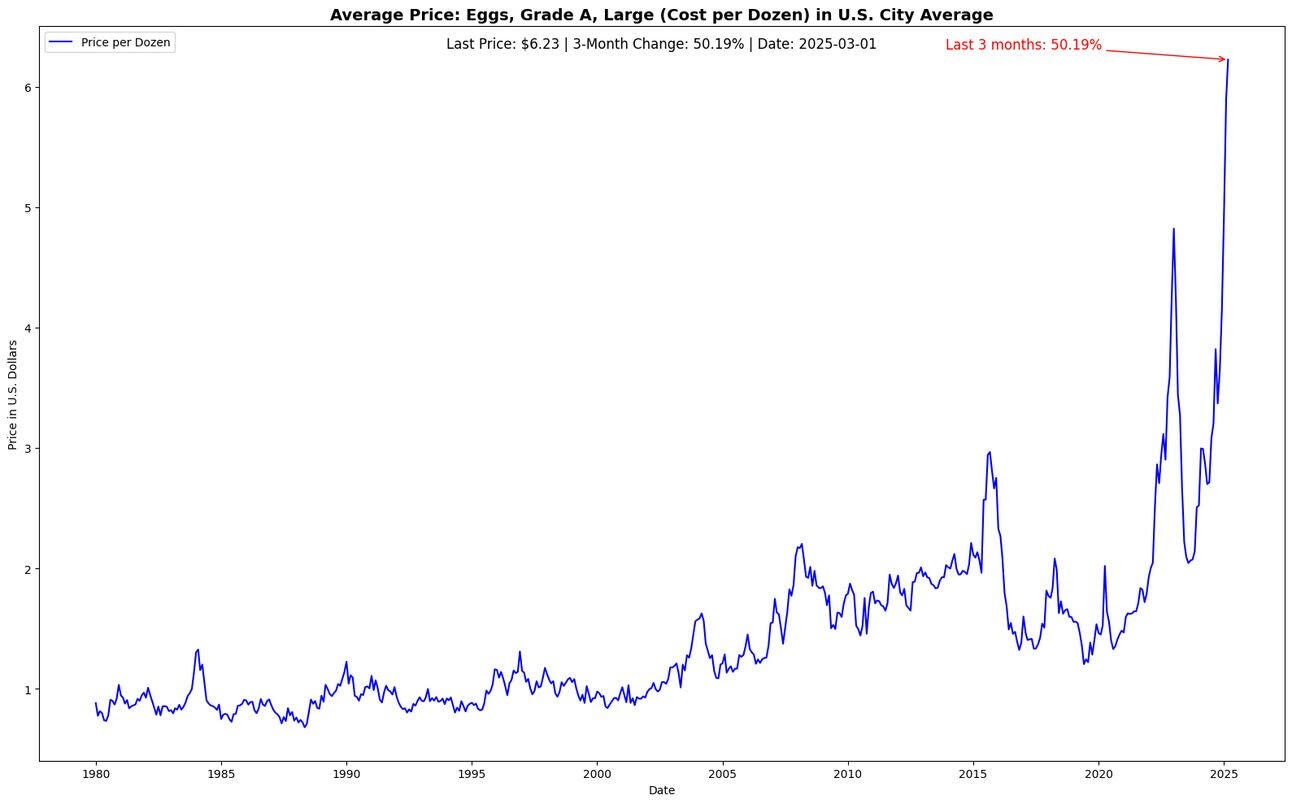
There are certain things the US consumer will not do without, maybe not as inelastic as eggs, but if tariffs make these goods more expensive, there will be inflation.
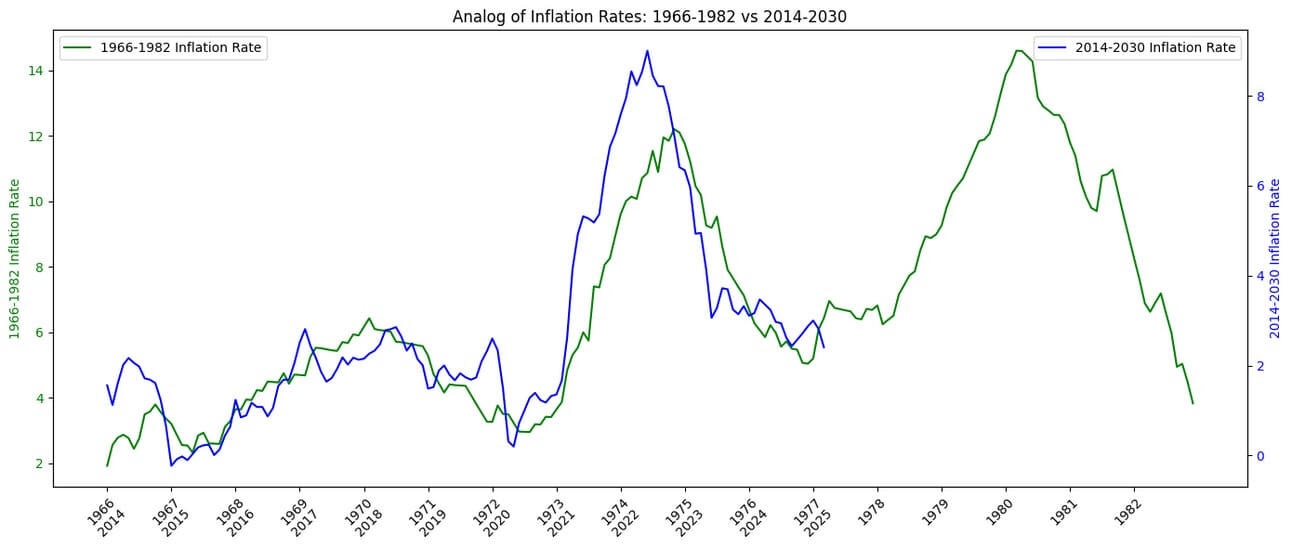
I shared the next chart some time ago, and I am going to stick my neck out further and say I believe the path forward is going to look very similar to this analog of inflation from 1966 to 1982. I will look like a fool if I am wrong, but that won’t be the first time.
S2N observations
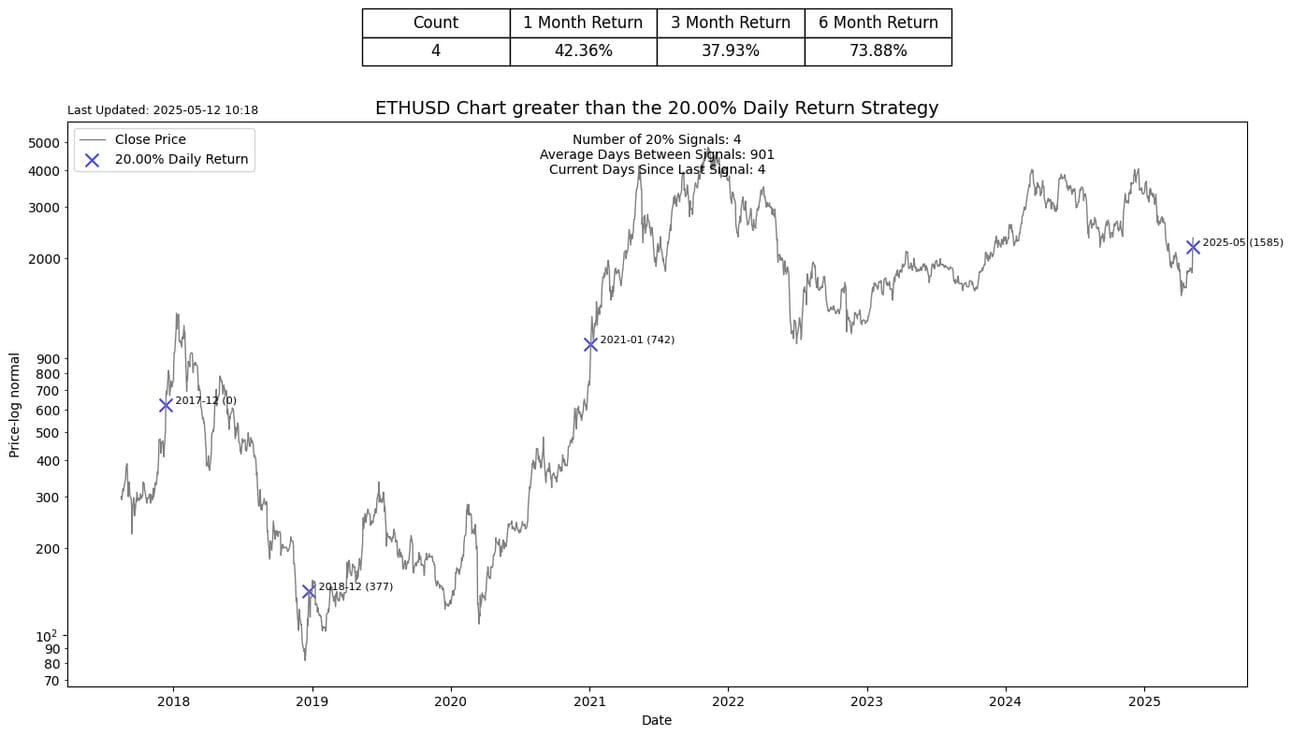
Late last week, Ethereum had a 21% up day followed by 7% on Friday. You can see that it has rallied 20% in a day on 4 previous occasions, which have all proved very profitable over the next 1, 3, and 6 months. Do not regard a sample of 4 as meaningful.
I was wondering what might be driving this rally. I think it is this.
META TO LAUNCH STABLECOINS ON ETHEREUM THIS YEAR. 3.5 BILLION USERS TO BE ONBOARDED! BULLISH FOR $ETH.X (0.73% ).
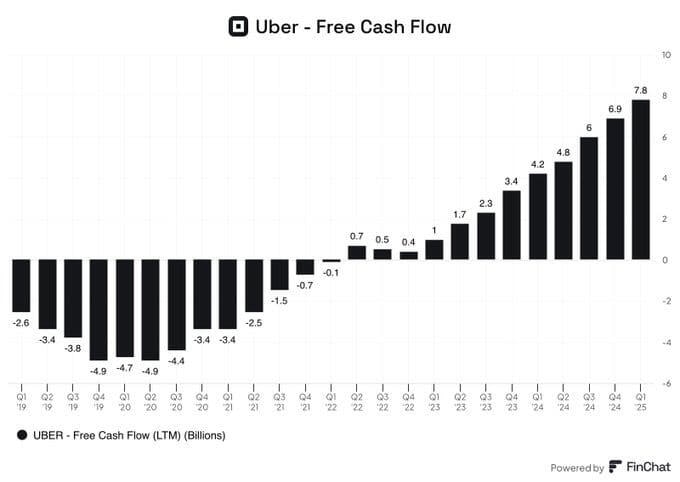
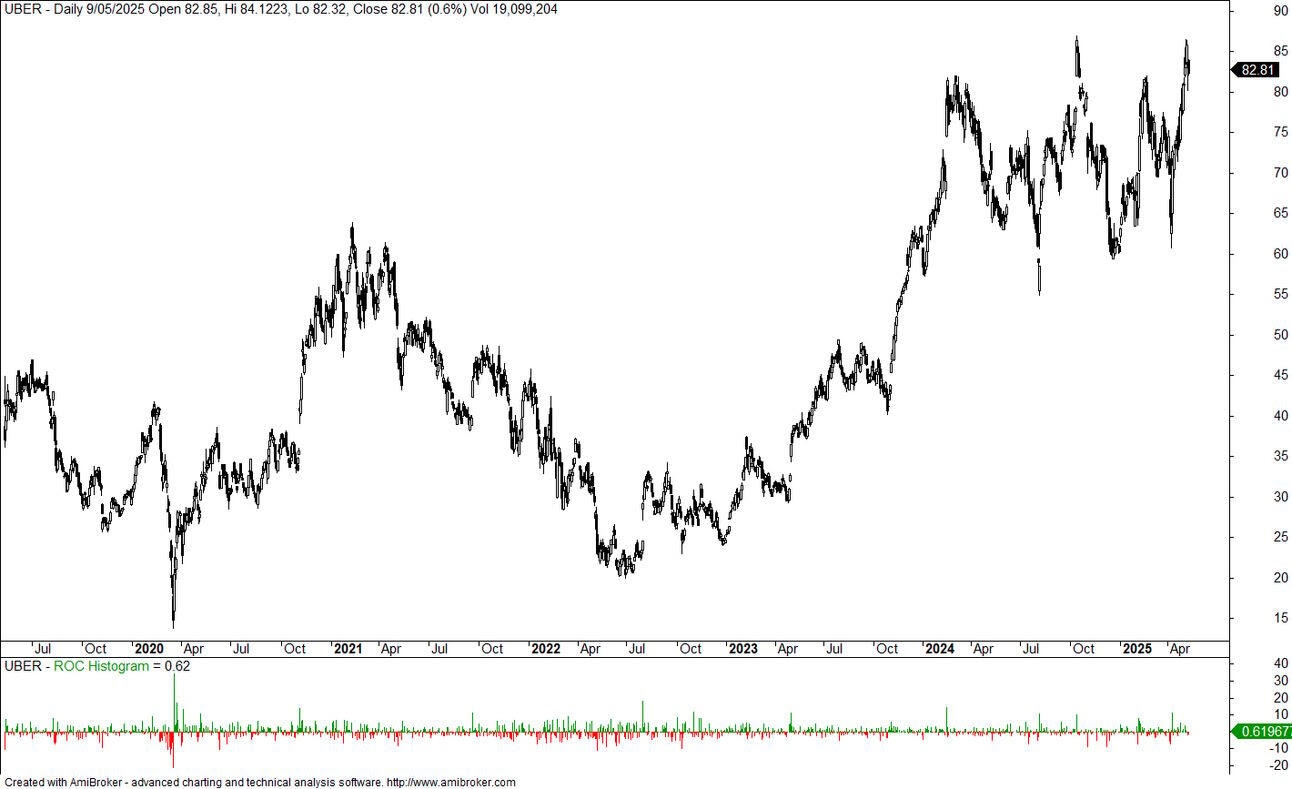
I love symmetry almost as much as I love free cash flow. This is a company making money, $UBER (0.62% ), which is being reflected in its share price about to make new highs.
S2N screener alert
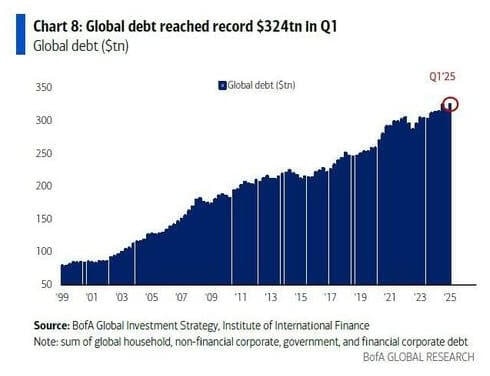
Global debt made a new all-time high.
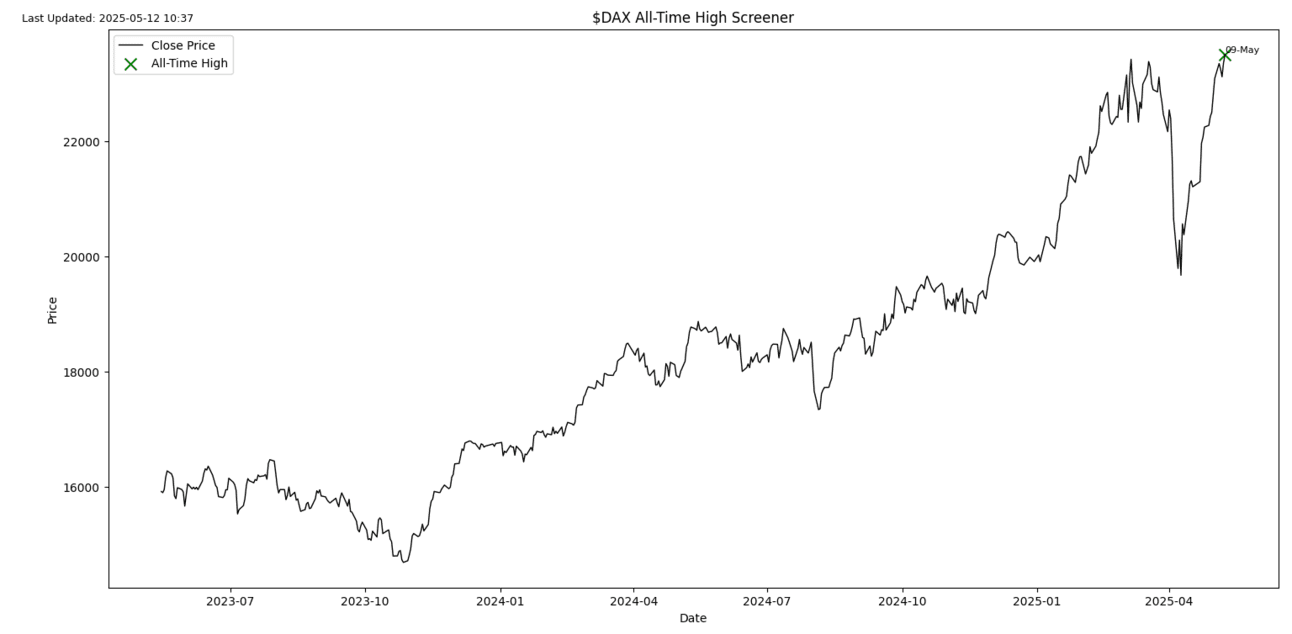
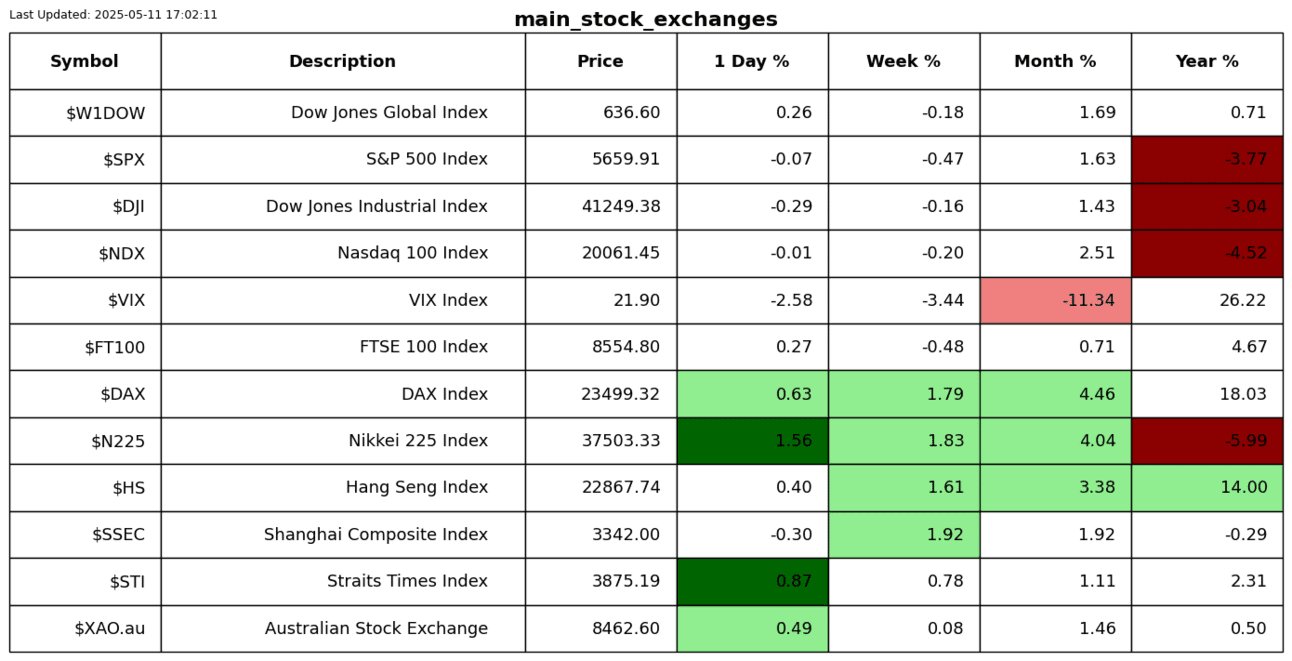
The DAX made a new ATH.
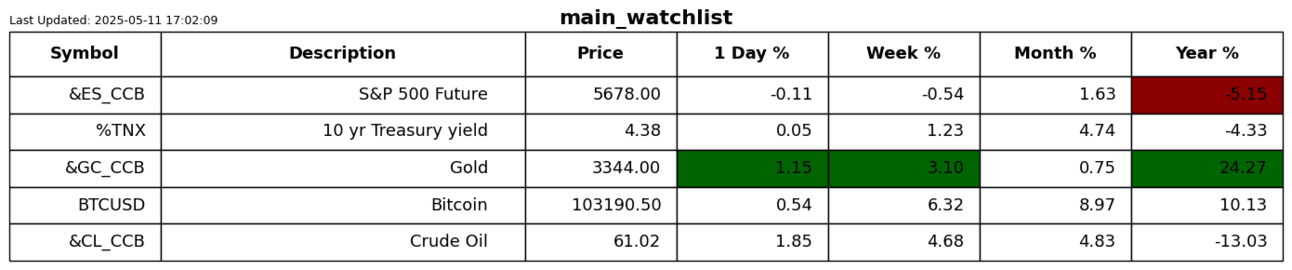
S2N performance review


S2N chart gallery
S2N news today

Author
Michael Berman, PhD
Signal2Noise (S2N) News
Michael has decades of experience as a professional trader, hedge fund manager and incubator of emerging traders.