Federal Reserve Preview: Slowdown ahead
- Fed Funds rate expected to rise 0.25% to 2.5% upper target.
- Futures implied rate increase probability of 70.6%.
- The focus will be on the economic and policy projections which are expected to moderate and Chairman Powell's press conference.

FOMC
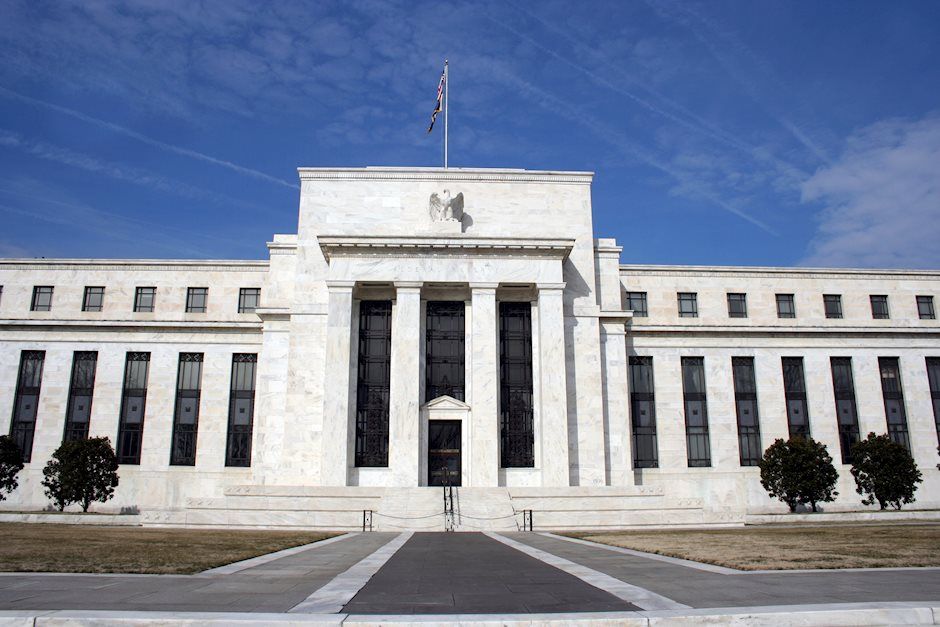
The Federal Open Market Committee (FOMC) is widely forecast to raise the Fed Funds rate 25 basis points to 2.5% after its scheduled two-day meeting on Wednesday, December 19th. The bank will also release its "Projections Materials" detailing the expected course of the US economy and interest rate policy over the next three years.
The US central bank began raising interest rates three years ago after keeping its central policy rate at the zero bound for a seven years in the aftermath of the financial crisis and recession.
With the US economy performing well and inflation near the Fed's 2% target there has been a considerable public discussion about the terminus or neutral rate for Fed policy. This is the level at which interest rates neither encourage nor retard economic activity. The rate is currently presumed to be between 2.5% and 3.5%. Fed Chairman Powell has alluded as much when he stated that the Fed Funds were was just below the neutral level. Mr. Powell has noted that the bank has necessarily become more 'data dependent' as it approaches the end of its tightening cycle.
Data Dependent
'Data dependent' means taking your cues from the economy. Or to put it another way, the Fed will know that the neutral rate is at hand when the economy, other things being equal, begins to slow from the impact of higher rates.
Problems here are twofold. First, it is difficult to tease out the effect of rate policy from the dozens of factors affecting the US economy. If we look at the housing sector, one of the most rate-sensitive areas you can make a strong argument that rates have already had a substantial effect. Existing home sales, about 90% of the US market, peaked a year ago at 5.81 million annualized units. Sales have fallen 10% to 5.22 million in October and are predicted to drop to 5.20 in November. At the same time, the overall economy has powered ahead, expanding at a 3.3% annual rate in the first three quarters.
Second things are never equal. If the US economy begins to slow next year will it be because of the cumulative effect of higher interest rates or from the gathering drag from the global decline in economic growth? Will it be from the impact of the trade dispute with China on US manufacturing and agriculture? Even in the best of times, the Fed is operating in the half-sensed world of economic projections. The most that can be said is that the US economy seems to be bearing higher rates well. That, of course, tells us little about the future.
A further consideration for the bank governors is the sharp equity sell-off in the past ten weeks. The major US average is all now down for the year: the Dow -4.5%, the S&P 500 4.8% and the Nasdaq Composite 2.2% (9:45 am EST, 12/18/18). The Fed does not normally address specific market levels. Even with the recent decline, US equities remain significantly higher since the 2016 election.
Projection Materials
The FOMC and the bank’s economists issue their projections for the economy and rate policy four times a year.
At the last release in September the estimates for US economic growth were 3.1% in 2018, 2.5% in 2019, 2.0% in 2020, 1.8% in 2021 and in the ‘longer run’, as the bank phrases it.
The Fed Funds rate was projected at 2.4% at the end of this year which would be achieved with a hike on Wednesday. They were projected at 3.1% in December 2019 which implies three 0.25% increases to 3.25% and 3.4% at the end of 2020, posting one more 0.25% hike. Rates remain at 3.4% through 2021 and then fall to 3.0% after that.
The market will be closely following whether and how much these projections are reduced.
Author
Joseph Trevisani
FXStreet
Joseph Trevisani began his thirty-year career in the financial markets at Credit Suisse in New York and Singapore where he worked for 12 years as an interbank currency trader and trading desk manager.

















