|

Fed review: Going for the soft landing

  • The Federal Reserve cut rates by 50bp in the September meeting, against our call for only a 25bp cut. The new policy rate target is 4.75-5.00%.
  • The updated dots signal a total of 50bp of additional cuts in 2024, 4x25bp of cuts in 2025 and 2x25bp cuts in 2026. Relative to our call, the Fed signals a longer but more gradual rate cutting cycle.
  • Powell downplayed recession risks despite the larger-than-expected cut, and most of the decline UST yields and weakening in USD FX reversed over the course of the press conference.
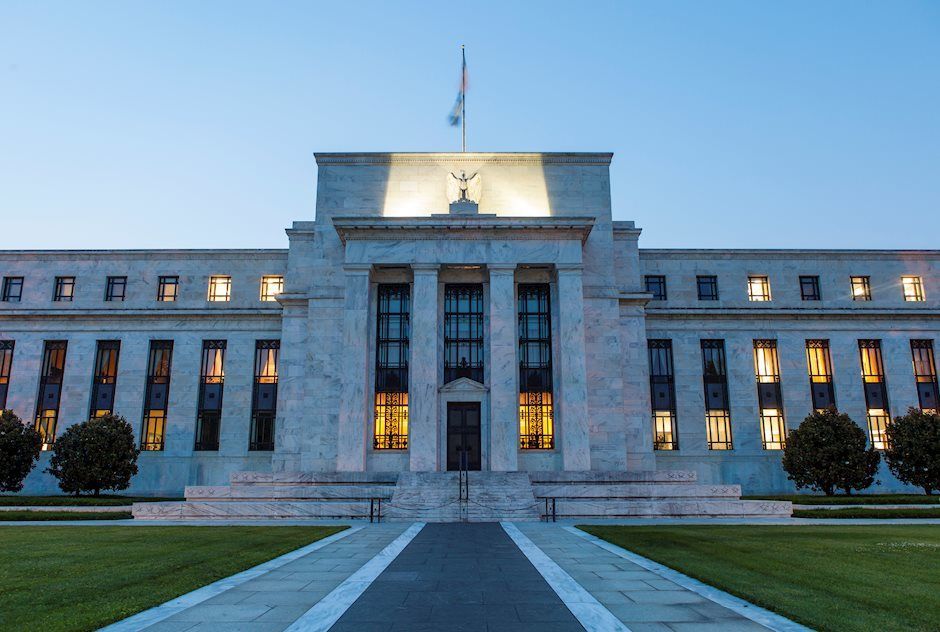
Markets were historically divided between 25bp and 50bp cuts going into the FOMC’s September decision. Powell accompanied the larger rate reduction with an overall positive assessment of the economy, ending the press conference saying: ‘I don’t see anything in the economy right now that suggests likelihood of a downturn is elevated.’

The larger move was motivated by a significant shift in the Fed’s risk assessment. 12 out of 18 participants saw risks to unemployment rate tilted to the upside (prev. 4 participants), and the median unemployment rate forecast was revised up through 2024 2026. While GDP forecasts were left mostly unchanged, 7 participants saw risks tilted to the downside also for growth (prev. 3). Inflation is seen stabilizing to 2% faster than previously expected with a balanced risk outlook.

Powell also mentioned that ‘it feels to me that neutral rate is probably significantly higher than it was pre-pandemic’. The median long-term ‘dot’ shifted to 2.9% (from 2.8%) with 7 participants now seeing the long-term rate at or above 3.25% (prev. 4). So, while the risk assessment and distribution of individual dots suggest that the Fed is open for faster rate cuts in the near-term if needed, rates could stabilize at a higher level longer-term.

Download the Full Report!

Author

Danske Research Team

Danske Research Team

Danske Bank A/S

Research is part of Danske Bank Markets and operate as Danske Bank's research department. The department monitors financial markets and economic trends of relevance to Danske Bank Markets and its clients.


More from Danske Research Team
Share:

Markets move fast. We move first.

Orange Juice Newsletter brings you expert driven insights - not headlines. Every day on your inbox.

By subscribing you agree to our Terms and conditions.

Editor's Picks

EUR/USD flatlines below 1.1800 ahead of Fed Minutes

EUR/USD struggles to find direction and continues to move sideways below 1.1800 for the second consecutive day on Tuesday as markets remain in holiday mood. Later in the American session, the Federal Reserve will publish the minutes of the December policy meeting.

GBP/USD retreats to 1.3500 area following earlier climb

GBP/USD loses its traction and trades flat on the day near 1.3500 after rising to the 1.3530 area early Tuesday. Trading conditions remain thin ahead of the New Year holiday, limiting the pair's volatility. The Fed will publish December meeting minutes in the late American session.

Gold rebounds toward $4,400 following sharp correction

Gold gathers recovery momentum and advances toward $4,400 on Tuesday after losing more than 4% on Monday. Increased margin requirements on gold and silver futures by the Chicago Mercantile Exchange Group, one of the world’s largest trading floors for commodities, prompted widespread profit-taking and portfolio rebalancing.

Tron steadies as Justin Sun invests $18 million in Tron Inc.

Tron (TRX) trades above $0.2800 at press time on Monday, hovering below the 50-day Exponential Moving Average (EMA) at $0.2859.

Economic outlook 2026-2027 in advanced countries: Solidity test

After a year marked by global economic resilience and ending on a note of optimism, 2026 looks promising and could be a year of solid economic performance. In our baseline scenario, we expect most of the supportive factors at work in 2025 to continue to play a role in 2026.

Crypto market outlook for 2026

Year 2025 was volatile, as crypto often is.  Among positive catalysts were favourable regulatory changes in the U.S., rise of Digital Asset Treasuries (DAT), adoption of AI and tokenization of Real-World-Assets (RWA).