Fed Chair mum on foreign nations’ evacuation of Gold from US
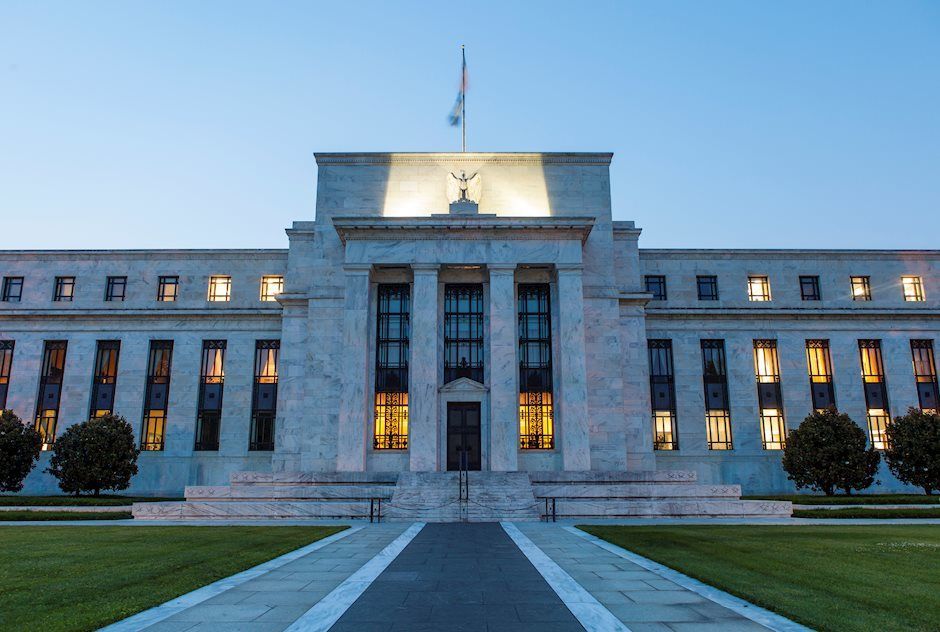

'What does the Federal Reserve know about international gold flows that it doesn't want the American people to know?'
Concerned about a weaponized financial system, many countries have signaled plans to remove their gold and other assets from the U.S. in the wake of the unprecedented Western sanctions imposed on Russia over its invasion of Ukraine.
And at least one congressman is demanding answers from the Federal Reserve as to how much foreign gold has actually been removed from U.S. shores so far.
According to a 2023 Invesco survey, a “substantial percentage” of central banks expressed concern about how the U.S. and its allies froze nearly half of Russia’s $650 billion gold and forex reserves.
One anonymous central banker told Invesco that his country quietly repatriated its gold from London, and some 68% of the banks surveyed said they are keeping their gold reserve within their country’s borders—up from 50% in 2020.
The apparent desire of foreign countries to bring their gold home would accelerate a trend that began when the U.S. decoupled the dollar from gold in 1971. Since then, the Federal Reserve’s custodial services have dwindled from some 13,000 tons of gold to just a little more than 6,000 tons.
But amidst the geopolitical angst, Fed Chairman Jerome Powell is refusing to divulge information about the U.S. central bank’s gold holdings. Insiders say such information could be highly damning.
Fed Chairman Powell’s obfuscations
In December, Rep. Alex Mooney, R-W.Va., asked Powell a series of simple and direct questions, including whether the Federal Reserve has recently repatriated gold to foreign nations, how much gold the central bank is holding now, and how much it held in 2022.
Powell responded to Mooney in a letter dated last Friday, giving evasive non-answers to all the congressman’s inquiries.
The Fed chairman told Mooney that the Federal Reserve does not own gold but holds it as a custodian for other entities—a fact the congressman presumably already knew.
Powell also said that the Fed serves as a custodian for a “small portion” of the U.S. government’s gold, telling Mooney that “any questions you may have about such gold are best directed to the Treasury Department.” Rep. Mooney’s questions were not about the Treasury’s gold.
To Chris Powell, secretary-treasurer of the Gold Anti-Trust Action Committee, the Fed chairman’s responses to a sitting member of Congress are not only unacceptable but also telling.
“The refusal of the chairman of the Federal Reserve Board even to acknowledge, much less reply to, the questions of a member of Congress about the repatriation of gold from the Federal Reserve Bank of New York confirms that something really big is going on with gold internationally,” Powell said in an email to Headline USA.
“The New York Fed long has disclosed, as a matter of routine, the amount of gold it vaults for other countries. Even now total volume of 6,331 metric tons of custodial gold is listed at the New York Fed’s internet site.”
New York Fed’s historical holdings for governments
Indeed, the Federal Reserve Bank of New York, or FRBNY, has listed an estimate for its total gold holdings online for more than a decade.
It appears as if Mooney’s letter may have at least prompted FRBNY to update its website, which states that the bank holds 507,000 gold bars, with a combined weight of 6,331 metric tons, as of 2024.
Before this year, FRBNY had been listing the same statistics on its site for the last five years—claiming that it held 497,000 gold bars, with a combined weight of about 6,190 tons as of 2019.
Before 2019, FRBNY listed statistics that were current as of 2015—508,000 gold bars weighing 6,350 tons—and before that, the FRBNY said it had approximately 530,000 gold bars weighing 6,700 tons as of 2012.
Those numbers show that FRBNY’s gold holdings decreased from 2012 to 2019, then increased by 10,000 bars from 2019 through this year.
Assuming the Fed’s website is accurate, one possible reason for the recent uptick is that FRBNY has taken custody of the gold from Ukraine’s central bank.
Has Ukrainian Gold offset the withdrawals of other nations?
Such a scenario would explain news reports from 2014 about Ukraine’s gold reserves being “hastily airlifted” to the United States from Borispol Airport just east of Kyiv.
At the time, the New York Fed refused to answer questions from the Gold Anti-Trust Action Committee about whether it had taken possession of Ukraine’s gold. But when Ukraine disclosed in July 2022 that it had sold $12 billion of its gold reserves since the Russian invasion, the Gold Anti-Trust Action Committee returned to the issue.
“The United States and its allies have appropriated tens of billions of dollars in military and humanitarian aid to Ukraine. So why would Ukraine need to sell its gold reserves unless doing so was a condition of all that U.S. and European assistance, especially since the United States already had taken custody of the Ukrainian gold?” Chris Powell asked in a July 2022 article.
Chris Powell told Headline USA that it’s time for the Federal Reserve to start providing answers.
“What does the Federal Reserve know about international gold flows that it doesn’t want the American people to know? Does this knowledge involve the grotesque financial mismanagement of the U.S. government and its currency? Why shouldn’t the American people know?” he asked.
“Indeed, since gold is the ultimate measure of the value of ALL government currencies, why shouldn’t the whole world be allowed to know?”
Stefan Gleason, CEO of online bullion dealer Money Metals, praised Congressman Mooney for continuing to ask the obvious, but seemingly tough, questions of the Fed and the Treasury about their gold activities.
“The answers as well as non-answers that Mooney receives back from these clandestine government money managers are truly remarkable. Who ever imagined the most basic questions would be so difficult to answer?” Gleason asked.
To receive free commentary and analysis on the gold and silver markets, click here to be added to the Money Metals news service.
Author
Ken Silva
Money Metals Exchange
Ken Silva is an investigative reporter for Headline USA whose reporting interests include FBI corruption, clandestine government activities, and extremist groups.