Eurozone Inflation Preview: Core holds the keys, with 4% set to trigger a EUR/USD rally
- The eurozone is expected to report another increase in inflation in June.
- A Core CPI read of 4% or higher would show that price pressures are broadening, boosting the euro.
- Conversely, stagnating core prices at 3.8% would cause the ECB to rethink, weighing on the currency.

A hot summer in Europe – and when it comes to inflation, there is no letting up from this heatwave. Prices have been rising at accelerating paces since the cold winter, and have been hitting new highs in the spring. In May the headline Consumer Price Index (CPI) hit 8.3%, with Core CPI at 3.8%. The European Central Bank's target is 2%.
How high can price rises go? Economists expect preliminary inflation figures for June to show another acceleration, at least in core: to 8.3% for headline and 3.9% for underlying inflation. The ECB has already announced the end of bond-buying, stating it would raise rates by 25 bps in July – and leaving the door open for a 50 bps move in September. The upcoming release will help shape expectations and move the euro. I believe Core CPI is more important and that it could surprise to the upside, boosting the euro. Here is why::
Why Core CPI matters more than beforehand
Central banks are nearly powerless in impacting energy and food prices – ECB President Christine Lagarde cannot spot Russia's blockade on Ukrainian grain exports. However, it can impact the prices of other things, by raising rates, encouraging Europeans to save, and discouraging them from taking loans.
Lagarde has recently said that unemployment is low and labor shortages are rising leading to higher wages, so cooling the economy might be necessary. As wages are highly correlated to core inflation, these figures have become even more important.
The economic calendar is pointing to an increase of 3.9% in Core CPI in June, up from 3.8% in May.
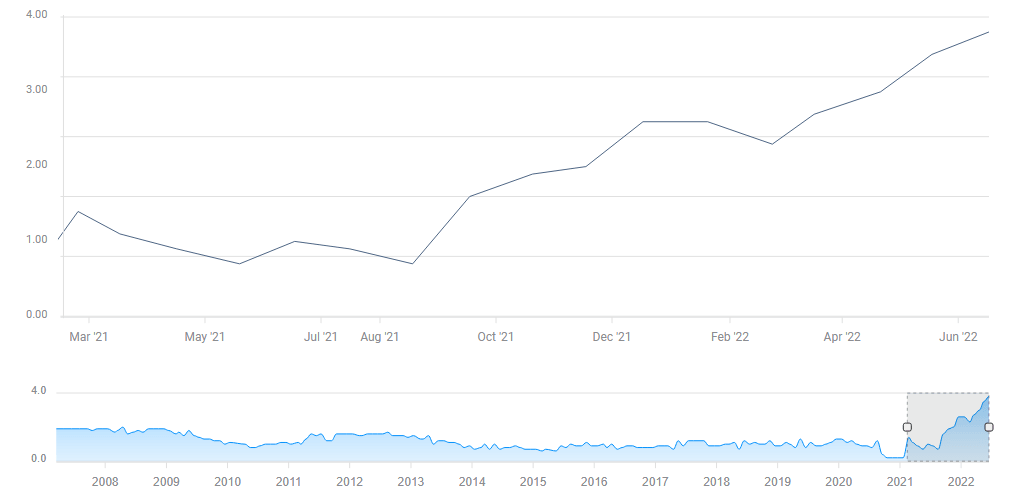
Source: FXStreet
Economists have had an amazing track record in the past seven months, forecasting with precision figures. That adds to the importance of this data point – any deviation would be a substantial surprise.
Three scenarios
Better than expected: I think that Core CPI has room to surprise to the upside, as Europeans take advantage of near non-existent covid restrictions and warm weather to spend. If it hits 4%, the euro would rise. Topping another round number would amplify the impact on the common currency.
As expected: A 3.9% read on underlying inflation would still be elevated and reflect an acceleration. While such an outcome is priced in, the common currency would still gain ground.
Below estimates: If Core CPI stays at 3.8% or even falls, it would give the ECB a cause for a pause. Are Europeans already suffering the consequences of higher energy and food prices and spending less on other things? Are higher prices already correcting themselves? In that case, the euro would fall. That is bound to happen at some point, but probably not yet.
Final thoughts
With some calm in sovereign bond markets – Italian yields are back down – the ECB is focused on inflation and especially the type it can influence. Any 0.1% deviation in core prices would rock the euro, and more likely to the upside than to the downside.
Premium
You have reached your limit of 3 free articles for this month.
Start your subscription and get access to all our original articles.
Author
Yohay Elam
FXStreet
Yohay is in Forex since 2008 when he founded Forex Crunch, a blog crafted in his free time that turned into a fully-fledged currency website later sold to Finixio.