EUR/TRY: Wuthering heights; A technical and fundamental update
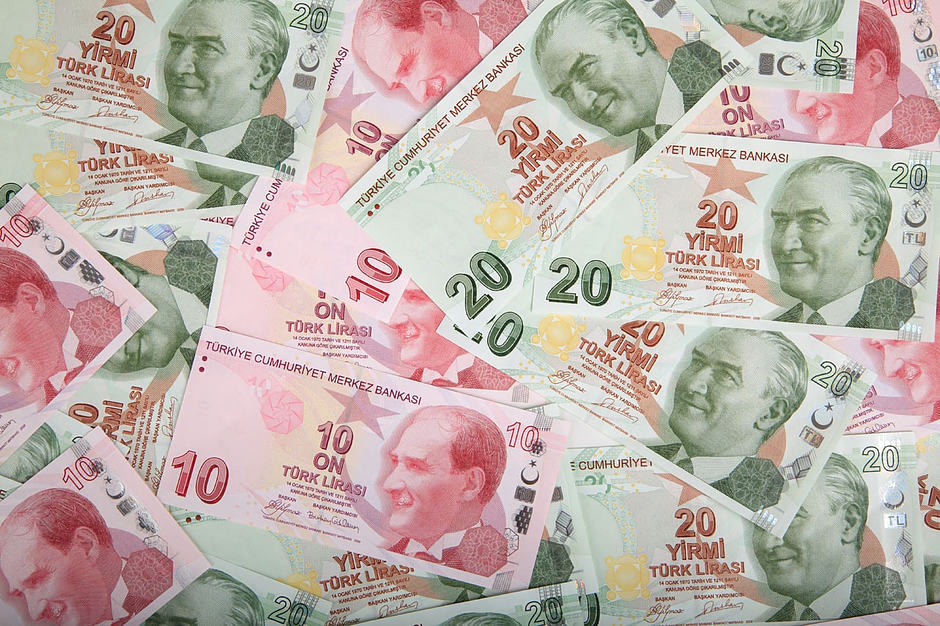

After surpassing the resistance level around 36.8 last week, the EUR/TRY pair has seen a significant boost in the last trading sessions, with the Euro gaining nearly 3% and reaching a new all-time high of 38.
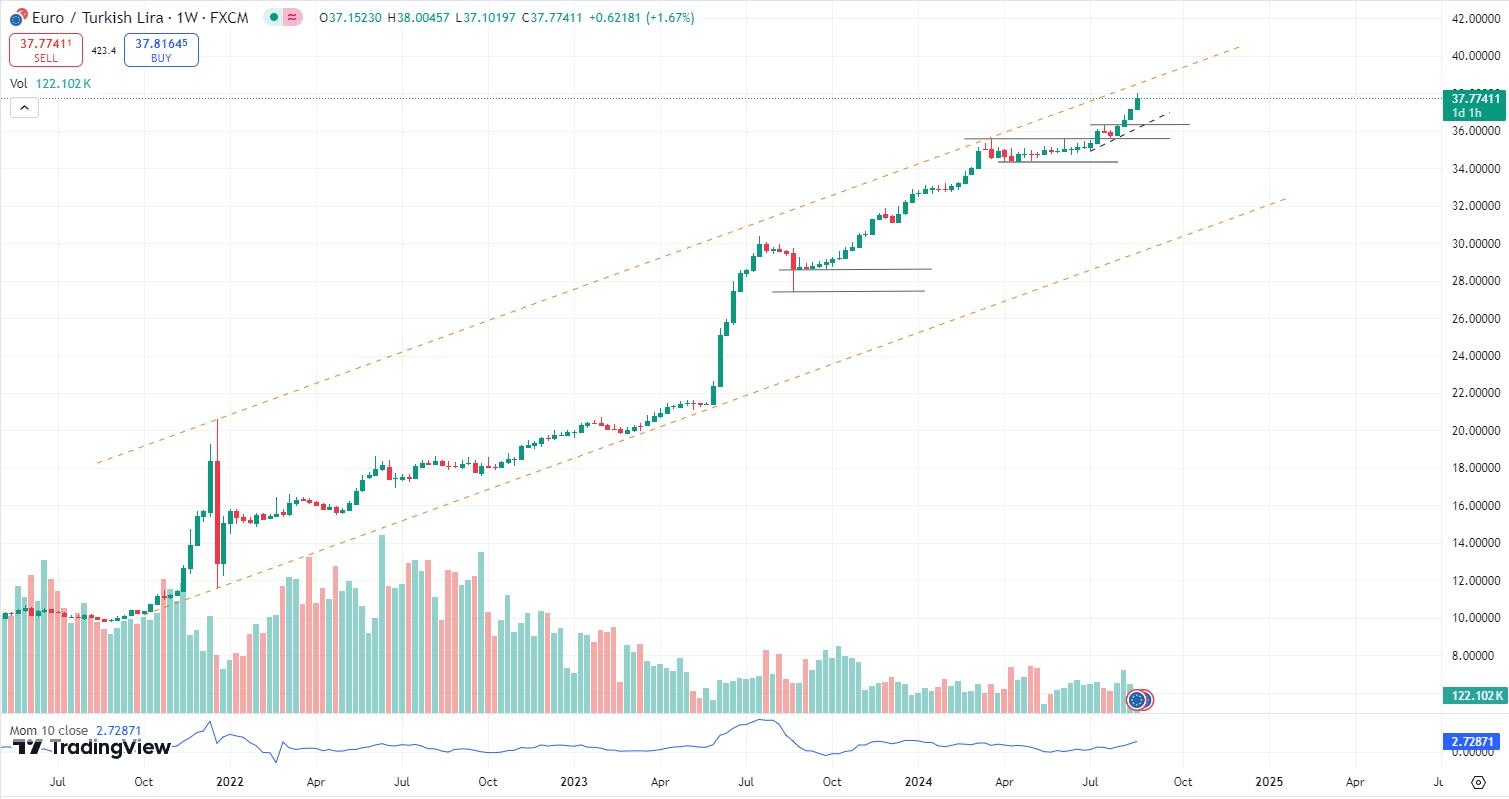
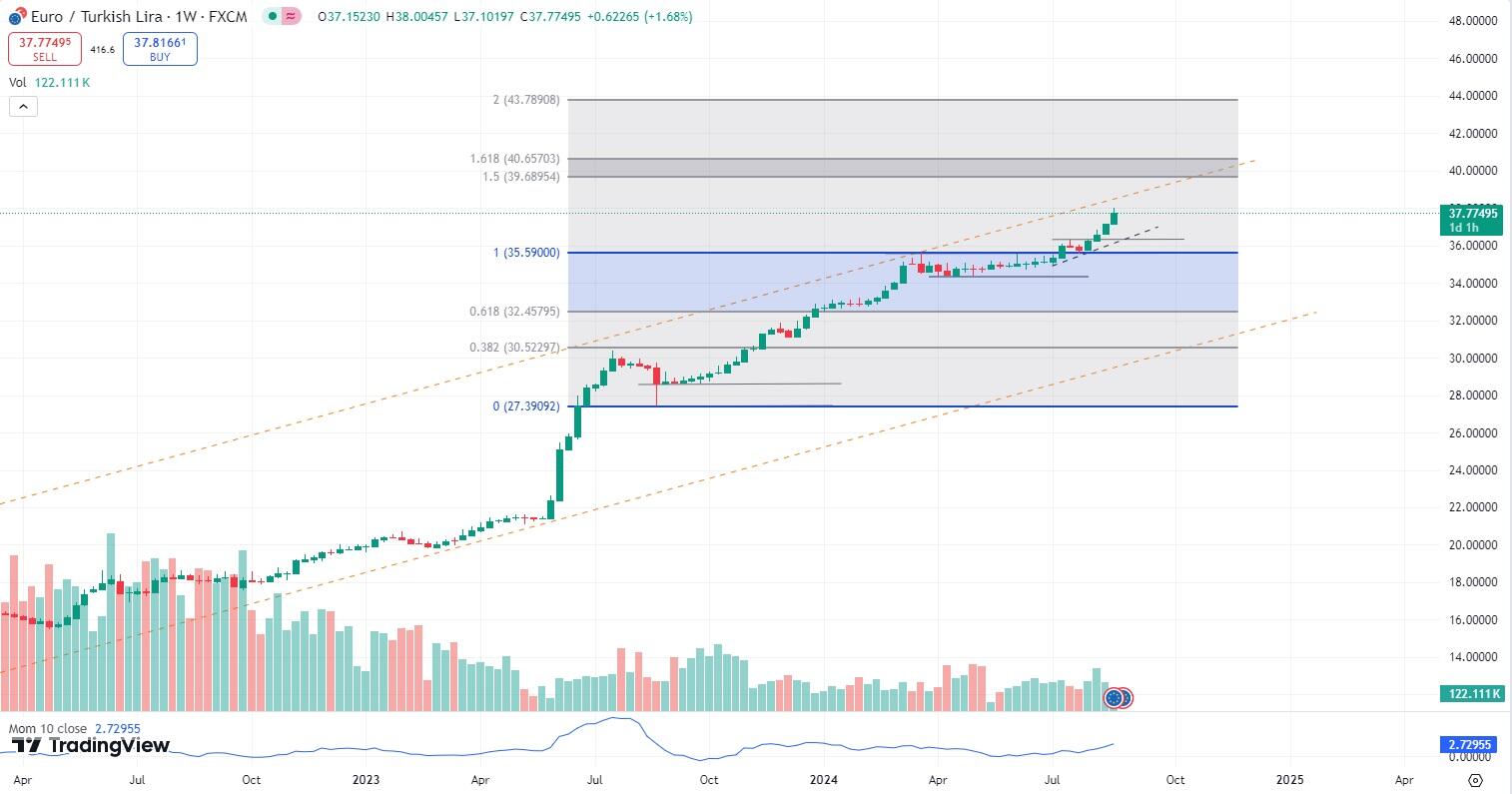
The pair is following a steep, long-term upward trend that shows no signs of exhaustion, despite some deceleration between March and July 2024 when the pair moved within a trading channel before regaining momentum in August. This trend is clearly visible on the weekly chart (Image 1), where the pair is steadily approaching the upper boundary of the ascending channel, characterized by a series of green directional candles in recent weeks (Marubozu type) without any clear retracement since August 2023. A Fibonacci projection based on the leg between the high of March 2024 and the low of August 2023 identifies a potential target price area around 40 (Image 2).
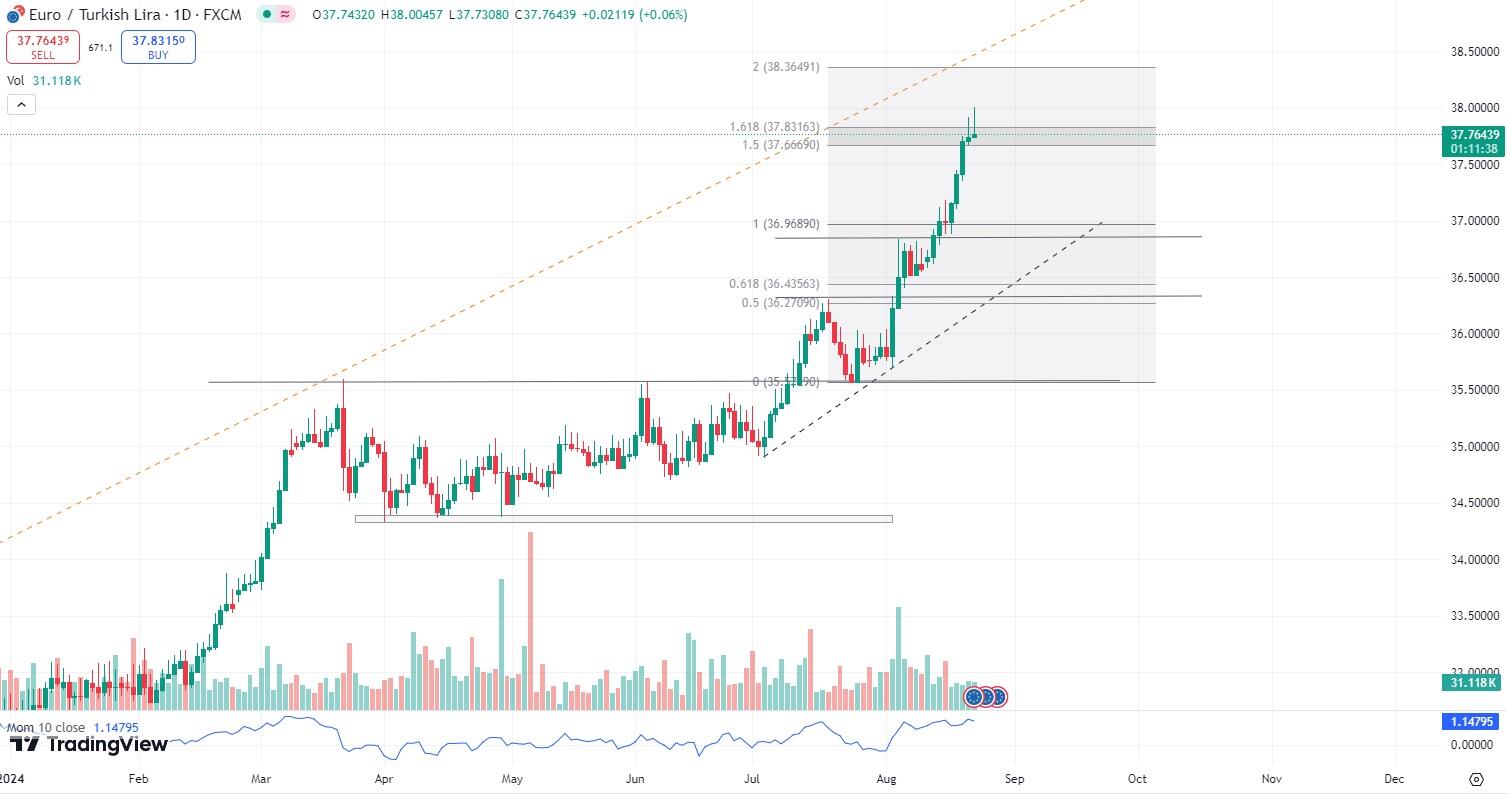
Switching to the daily chart, while the overall picture remains similar, subtle signs of fatigue have emerged in the last two trading days, as indicated by the shape of the candlesticks (short range with long upper shadows). A Fibonacci trend-based extension, using the price levels from July 3rd, 18th, and 24th, suggests a possible target area right around the current trading price. The psychological level of 38 could also act as resistance, while the 38.36 area (double the Fibonacci extension) could represent another potential target (Image 3).
While the recent surge in the EUR/TRY pair has certainly been aided by the Euro's strength against the USD (as EUR/TRY is a cross rate), there are other macroeconomic indications that the Lira's weakness might show some signs of relief in the short term.
This week, Turkey's central bank held interest rates steady at 50% for the fifth consecutive month and reiterated its vigilance toward inflation risks, even as it expects disinflation to accelerate. The bank provided little indication of when it might begin cutting its policy rate, which analysts generally expect to occur later this year. On the contrary, the bank emphasized that it is increasingly focused on aligning public inflation expectations with its own projections for the disinflation path.
Expectations from the real sector and households regarding inflation are influencing the pace of potential rate cuts, which will be timed to maintain a tight monetary policy with a reasonably high real interest rate (according to a BofA Securities note cited by Reuters). Additionally, a sudden increase in the exchange rate would not be favorable for Turkey, given its significant budget deficit, short-term foreign currency debt, and the private sector's vulnerability. Although some working sectors, such as exporters and tourism operators, have recently raised concerns about the current exchange rate level in real terms, a further increase in the exchange rate may not benefit Turkey, particularly in the absence of robust internal demand.
Therefore, while the EUR/TRY is currently riding high, potential technical levels and economic factors in Turkey suggest that caution is warranted. Investors should watch for key signals from the Turkish central bank and broader economic indicators that could influence the pair's direction.
As always, we will continue to monitor the market's evolution, awaiting further clues on how the overall picture might develop.
Author
Giuseppe Bocci, CTA
Independent Analyst
Giuseppe Bocci is an independent trader primarily active in the U.S. stock market, international bonds, commodities, and forex. He has been trading full-time for about ten years, turning a passion into a profession.