Enantiodromia
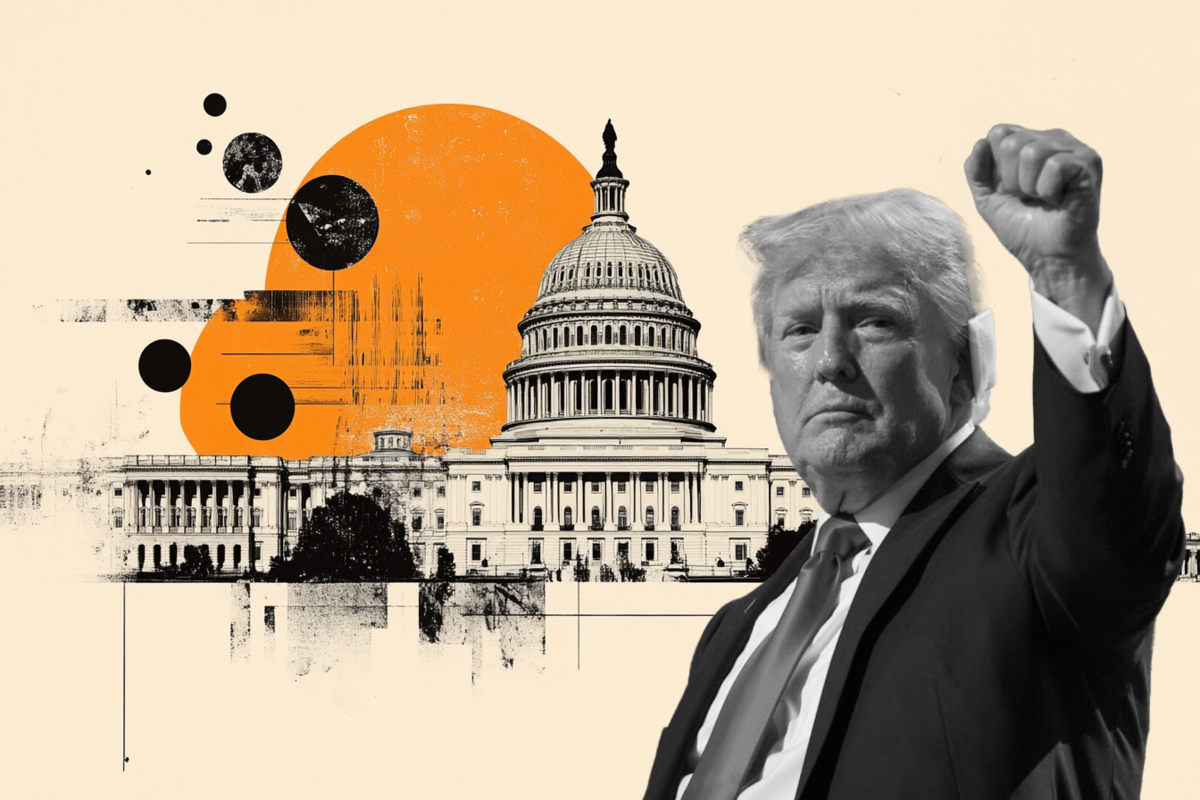

I am pretty over all this tariff talk, but it is serious stuff and is a big driver of financial markets. Most of today’s action happened after the closing bell, so the after-market price action is not in the daily data in this newsletter.
Many who know me know that I am passionate about the human mind and its psychological drivers. The school of psychology that I most identify with is Jungian analysis, or depth psychology, or analytical psychology, as some like to call it. This might not be easy reading, but I promise you if you read the letter, you will see how powerful the idea is, even if you don’t quite see the parallels I am trying to draw.
Carl Jung, the Swiss depth psychologist and founder of analytical psychology, coined a powerful term that cuts to the heart of how human nature works—enantiodromia. Derived from the Greek for "running towards the opposite," it describes the tendency for any extreme attitude or behaviour to eventually transform into its opposite. In Jung's words, "the superabundance of any force inevitably produces its opposite."
Jung draws many physics parallels to the psyche. This isn't just abstract theory. Jung believed the psyche demands balance. When one side of the personality is exaggerated or repressed—be it rationality, dominance, humility, or freedom—it creates a kind of psychic pressure. Eventually, the pendulum needs to swing, like it or not. The unconscious brings forth the neglected opposite with ferocity, leading to dramatic reversals in individuals, societies, and political systems.
Enter Donald J. Trump
In Trump, we find a living, breathing archetype of enantiodromia—someone who doesn’t just experience inner opposites but embodies them in full spectacle. His life and presidency are a case study in the psychological forces Jung described, playing out on the world stage.
Trump began as a brash, secular, limousine-riding New York liberal, donating to Democrats, embracing social tolerance, and basking in the glitter of celebrity culture. In 1987, when his bestseller book The Art of the Deal came out, I loved every word I read. It was a seminal moment for me and a foundation for my early passion for property.
Fast forward to 2016, and that same man was standing at the head of a right-wing populist movement, embraced by evangelicals, preaching border walls, trade protectionism, and moral traditionalism. How does such a pivot happen?
Look deeper, and you’ll see the telltale signs of Jung’s law in motion. Trump's economic nationalism—his use of tariffs, disdain for globalism, and America First agenda—represents a radical swing away from the Republican Party's decades-long embrace of free markets and globalisation. Once the party of Reagan, free trade, and open borders, the GOP under Trump became the party of walls, tariffs, and trade wars. It's not just policy reversal—it’s psychic compensation.
Jung would say Trump didn't simply break the mould—he revealed the shadow of the political and economic systems that came before him. The repressed frustrations of the working class, the ignored costs of globalisation, the collective fatigue with political correctness—these were the neglected elements. And when systems ignore the shadow long enough, they birth a figure who is the shadow.
Trump’s own psyche seems to be in constant enantiodromia—swerving from bravado to grievance, from charm to vengeance, from performer to prophet. He operates like a psychic pendulum, swinging between extremes and dragging the collective consciousness of a nation along with him. His rise wasn’t an accident. It was an inevitable backlash to imbalance.
In Trump, we aren’t just watching politics—we’re watching myth. The myth of the outsider, the trickster, the agent of chaos who unknowingly restores balance by swinging so hard in one direction that the entire system is forced to confront its opposite.
If Jung were alive today, he might not vote for Trump—but he’d surely recognise him. Not as an anomaly, but as an archetype. When I first encountered Jung as a first-year psychology student, I was turned off by all the myth stuff. I used to think of him as some sort of wizard. Fast forward 30 years, I am more convinced than ever that markets move due to a collective unconscious.
The financial establishment is far more comfortable calling it “animal spirits.” I am not ashamed to say that I believe we do things as a collective that are not always congruent with our rational individual selves. When Trump spoke today from the Rose Bowl with that now infamous flimsy tariff poster, he mentioned how disgusted he was that so many past presidents allowed this ripoff to continue, while pointing to the Oval Office.
What I don’t believe Donald J. Trump realises is that he didn’t find this moment. The moment found him.
S2N observations
In keeping with my zeitgeist narrative. This week, we witnessed another such expression.
Newsmax (NMAX) IPO’d on Monday, 31 March 2025, at the IPO price of $10, raising $75 million. It closed Monday at $83. On April Fools Day, the stock traded up to $279; that is a 2600% rise from the IPO price. It then “crashed” to $50, where it is currently trading, down 80% from its highs. Is there anything rational about this story other than living up to its name, News to the Max?
S2N screener alert
As a South African-Australian, this alert popped up on my list and gave me a little buzz. The Rand had a bad day against the Australian dollar. The Rand, believe it or not, still has outperformed the Aussie over the last two years. I still cannot wrap my head around that.
-638792529618279366.png)
S2N performance review
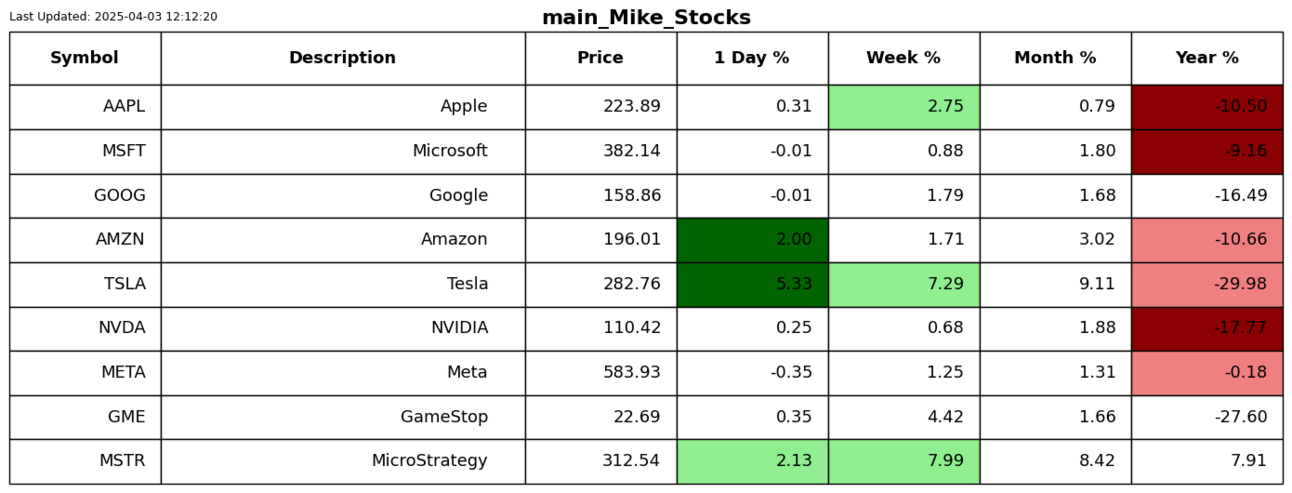


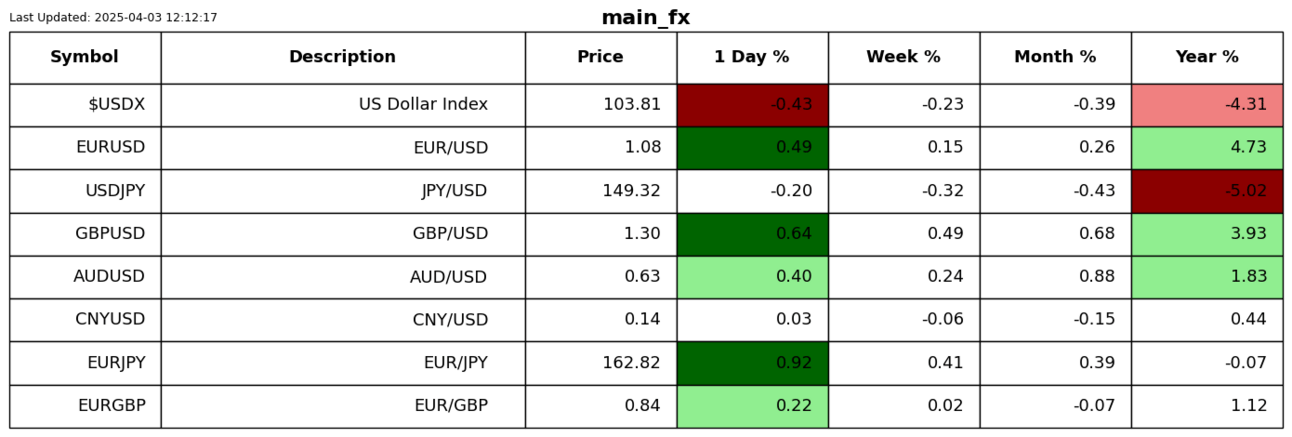
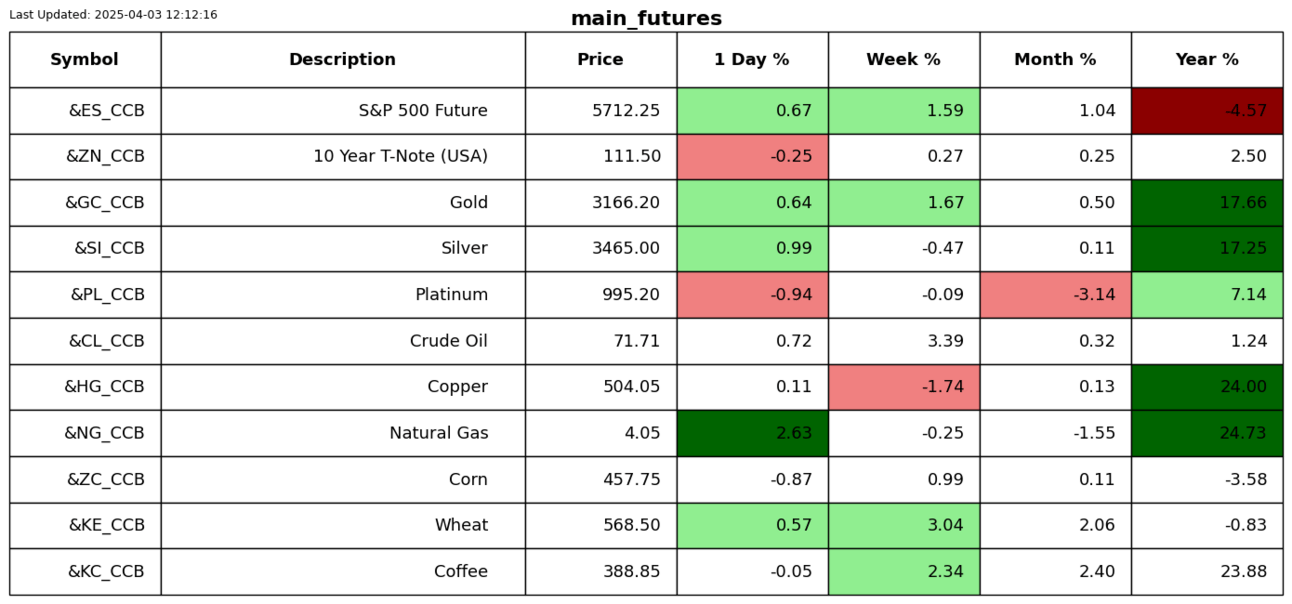
S2N chart gallery
S2N news today
-638792530820803093.png)
Author
Michael Berman, PhD
Signal2Noise (S2N) News
Michael has decades of experience as a professional trader, hedge fund manager and incubator of emerging traders.

















