ECB moves towards neutral, but remains data dependent
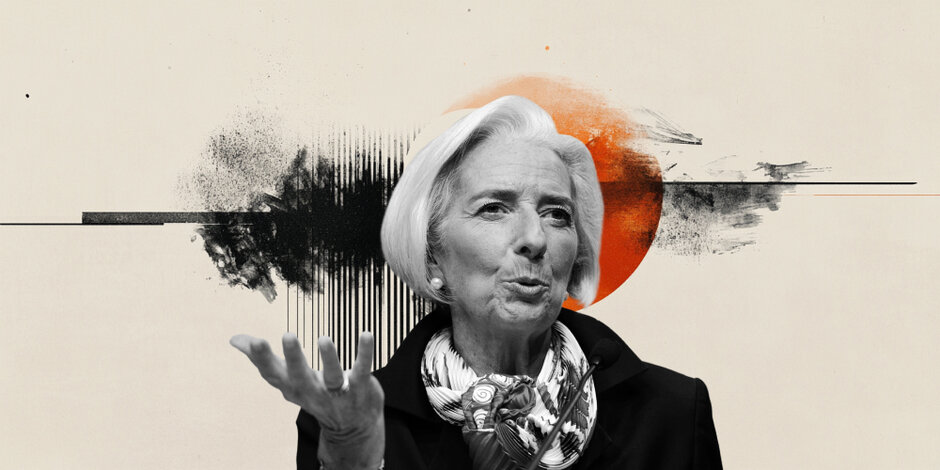

The ECB meeting delivered a 25bp rate cut as expected earlier on Thursday, but there were chunkier issues for the ECB to deal with, including German fiscal policy and US tariffs.
Below, we list the most important points from this meeting, and the market reaction.
The ECB statement was mildly more hawkish than expected. It summarized the current level of interest rates as ‘becoming meaningfully less restrictive’ although the ECB stopped short of saying that it was approaching neutral. The euro has rallied during this meeting, and is above the $1.0800 level, however, we think that the upside could be capped for this week, due to the sharp move higher in the euro in recent days. Even so, the breakdown in the dollar makes $1.10 the next obvious target for EUR/USD, and talks of parity are dead.
There is a major repositioning going on across European markets including FX , equities and bond markets. Yields are rising, European currencies are surging, and European equities are easily outperforming US indices YTD. 2025 is a very different year to 2024, as the baton gets passed from the US to Europe.
Back to the ECB, the ECB would not pre-commit to future interest rate cuts and Chirstine Lagarde referenced the ECB’s commitment to data dependency.
The ECB reiterated that the disinflation process remains well on track, although 2025 inflation expectations included in the latest ECB Staff Forecasts, were revised higher to 2.3%, due to stronger energy price volatility.
However, the ECB staff inflation forecasts look out of date already, due to the sharp decline in the oil price this week.
The GDP forecasts were revised downwards to 0.9% for 2025, and 1.2% for next year. These forecasts have attempted to factor in the impact of tariffs and lower exports from the EU. However, the weaker growth forecasts were also predicated on weakness in investment, and there is a lot of uncertainty when it comes to global economic forecasts this week.
The past week has seen a seismic shift in EU investment expectations on defense and for infrastructure.
The ECB President was obviously bombarded with questions about Germany dropping its debt brake, and its huge increase in government spending plans. However, the Chancellor said it is too early to know what the economic impact of this fiscal policy change would be. Lagarde said that much would depend on the details and how quickly the money can be spent.
Lagarde said that the impact of Germany’s fiscal policy statement makes the ECB more data dependent than ever.
Lagarde did not directly reference the sharp rise in German bond yields this week. The German 10-year yield is higher by 46bps in the last two days. Usually moves of this magnitude would be met with panic in financial markets. Not this time. Lagarde said that she would not change the ECB’s policy stance based on a short term move in bond yields, however, she did not sound concerned about the broad-based increase in European bond yields either. The ECB President noted that the EU’s bond market remains solid, and spreads between Germany and other countries have not blown out. For example, the French 10- year yield is higher by 44bps this week, the Italian, Spanish and Portuguese yields are also higher by approximately 45bps this week.
The ECB does not set fiscal policy, and it would only step into the bond market if there was some dislocation. This is not the case. Yields are rising sharply across the currency bloc, due to higher investment pledges and the potential upside to growth. It could also be a sign that the market is expecting some unity when it comes to debt issuance and pan national EU bonds could be a bigger market force going forward.
European yields, and some global yields, have moved higher in unison this week. Japanese 10-year yields are also higher by 14bps, and UK yields are higher by 16bps, which highlights how much fiscal policy is driving the market.
ECB rate cut expectations have been scaled back in the aftermath of this meeting. The 2-year yield is now expected to end 2025 above 2%, and there are less than 2 further rate cuts priced in by the market for the rest of this year.
Although the ECB would not pre-commit to future rate cuts, the fact that Christine Lagarde did not push back on lower rate cut expectations is a sign that the ECB is comfortable with a neutral rate around 2%.
We are now in a situation, where the ECB could cut interest rates by less than the Fed this year, which is supportive of a broad-based euro recovery.
Author
Kathleen Brooks
XTB UK
Kathleen has nearly 15 years’ experience working with some of the leading retail trading and investment companies in the City of London.

















