|

Don’t get too bullish on the DXY

Those who’ve been long the US dollar index (DXY) since the middle of last year have done well for themselves. The DXY has gained 12% from its January 2021 swing low of 89.21 to trade close to 99.75 at the time of writing. Making similar gains from current levels will undoubtedly prove more challenging. Traders should be factoring this into their risk-reward assessments going forward for several reasons.

First and foremost, as the DXY moves higher it’s likely to meet fierce resistance between the 100-103 range. In March 2020, dollar sellers were quick to step into the market when price attempted to breach the 103 level. Buyers may meet similar selling pressure on any re-attempt at these levels. Even more selling pressure is likely to arise toward the 103.8 level.
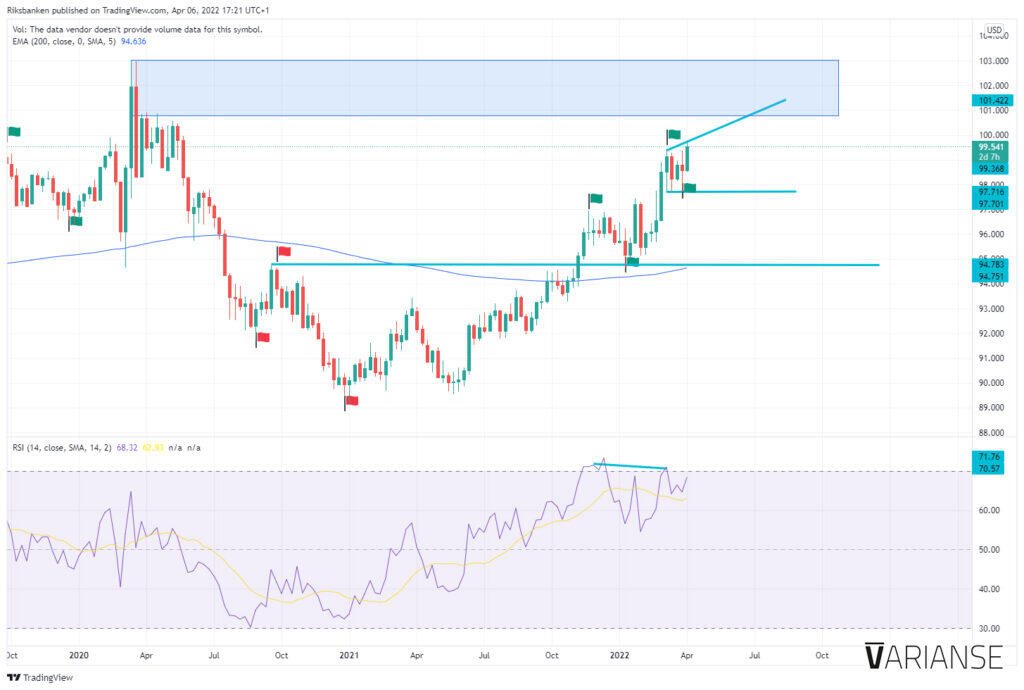
Secondly, from a market structure perspective the uptrend in the DXY is a lot more recent than appears to the naked eye. The 94.74 September 2020 swing high of the previous downtrend was only breached in November last year. This alone would not be concerning if it weren’t for a bit of RSI divergence between the latest two swing highs raises questions about further momentum.

Lastly, if indeed 99.418 represents the last true previous swing high and 97.685 the low in March, then traders are potentially facing a right-angled ascending broadening wedge pattern. Such a pattern adds a bit of ambiguity about further direction.
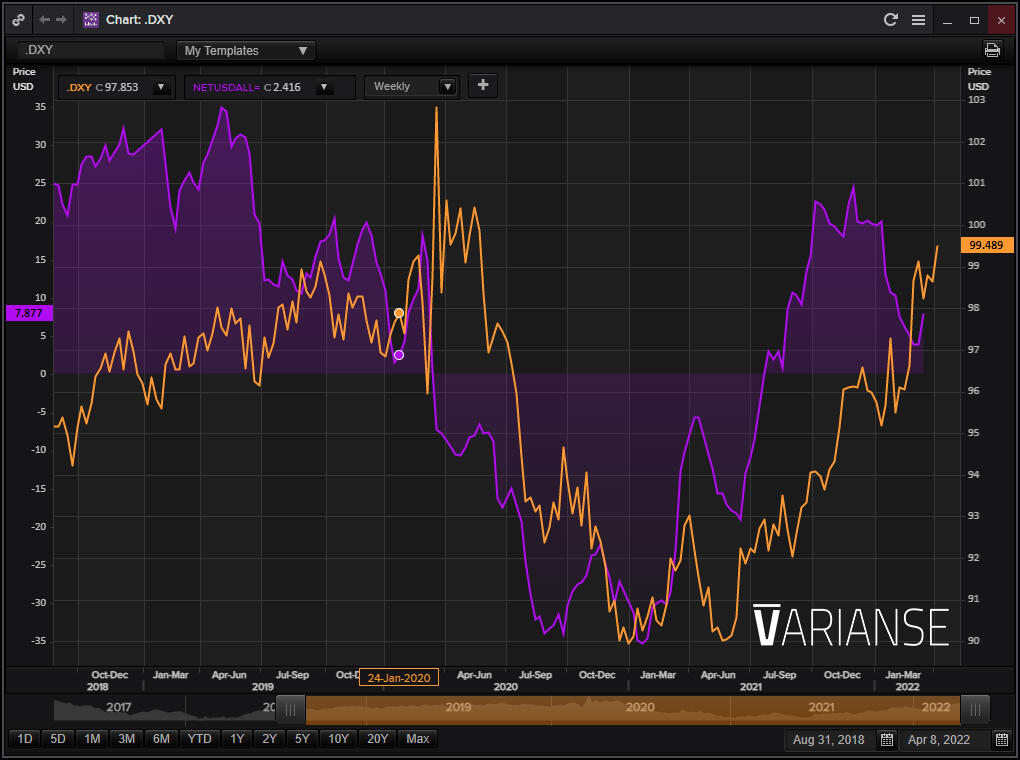
All that said, the DXY is clearly in an uptrend and the long US dollar positioning that drove the DXY higher earlier in the year has faded. So, there is still scope for a further rise in price. Nevertheless, traders should certainly be taking note of some of the red flags being thrown by the latest leg higher in the DXY.

Author

Carl Paraskevas

Carl Paraskevas has over twenty years’ experience in finance and banking, primarily in research related roles at several institutions.


More from Carl Paraskevas
Share:

Editor's Picks

EUR/USD: US Dollar to remain pressured until uncertainty fog dissipates

Unimpressive European Central Bank left monetary policy unchanged for the fifth consecutive meeting. The United States first-tier employment and inflation data is scheduled for the second week of February. EUR/USD battles to remain afloat above 1.1800, sellers moving to the sidelines.

GBP/USD reclaims 1.3600 and above

GBP/USD reverses two straight days of losses, surpassing the key 1.3600 yardstick on Friday. Cable’s rebound comes as the Greenback slips away from two-week highs in response to some profit-taking mood and speculation of Fed rate cuts. In addition, hawkish comments from the BoE’s Pill are also collaborating with the quid’s improvement.

Gold: Volatility persists in commodity space

After losing more than 8% to end the previous week, Gold remained under heavy selling pressure on Monday and dropped toward $4,400. Although XAU/USD staged a decisive rebound afterward, it failed to stabilize above $5,000. The US economic calendar will feature Nonfarm Payrolls and Consumer Price Index data for January, which could influence the market pricing of the Federal Reserve’s policy outlook and impact Gold’s performance.

Week ahead: US NFP and CPI data to shake Fed cut bets, Japan election looms

US NFP and CPI data awaited after Warsh’s nomination as Fed chief. Yen traders lock gaze on Sunday’s snap election. UK and Eurozone Q4 GDP data also on the agenda. China CPI and PPI could reveal more weakness in domestic demand.

Three scenarios for Japanese Yen ahead of snap election

The latest polls point to a dominant win for the ruling bloc at the upcoming Japanese snap election. The larger Sanae Takaichi’s mandate, the more investors fear faster implementation of tax cuts and spending plans. 

XRP rally extends as modest ETF inflows support recovery

Ripple is accelerating its recovery, trading above $1.36 at the time of writing on Friday, as investors adjust their positions following a turbulent week in the broader crypto market. The remittance token is up over 21% from its intraday low of $1.12.