DOJ Asked to Examine New Systemic Risk in Gold & Silver Markets
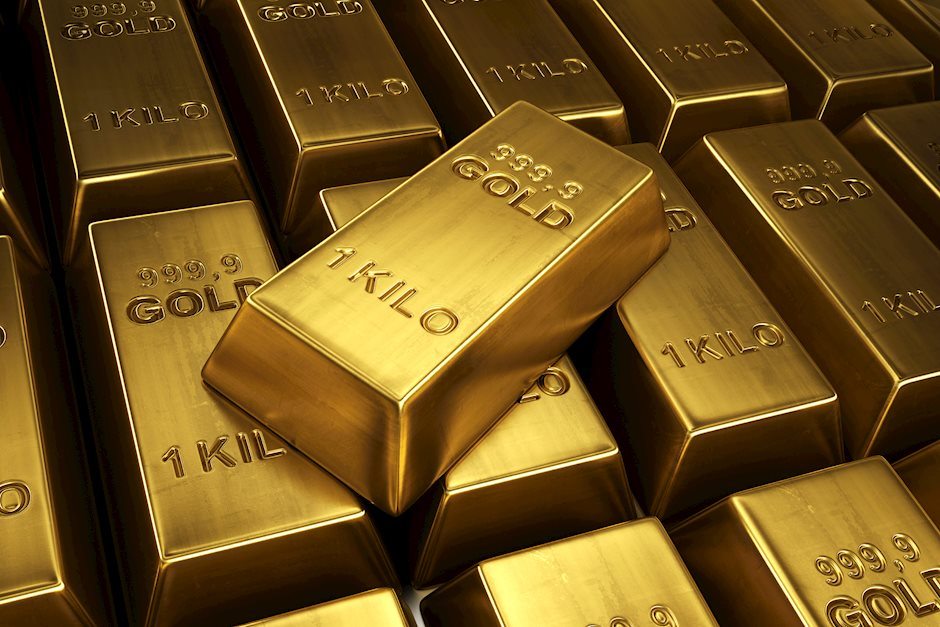

Impeachment circus lows and stock market highs dominated the news cycle this week, and precious metals are quietly attempting a recovery.
Bulls still have some work to do to repair the technical damage inflicted on both metals during last week’s selling. Gold and silver still face some overhead resistance and the potential for concentrated short selling by financial institutions in the futures markets.
Significant price bottoms are usually reached after the commercial sellers force the speculative longs to capitulate. We certainly saw some of that last week. Whether there is one final washout ahead remains to be seen.
Futures market manipulation of precious metals prices remains an obstacle to free and fair price discovery. Despite some recent prosecutions involving price rigging by banks, the Gold Anti-Trust Action Committee believes the rabbit hole goes much deeper.
The Gold Anti-Trust Action Committee reported this week that U.S. Representative Alex Mooney of West Virginia is pushing Attorney General Bill Barr to pursue additional investigations of price rigging in the futures markets. Mooney raises concern in particular about a mechanism for settling metals contracts called "exchange for physicals." He notes this may pose "some danger of a systemic issue."
Both Mooney and GATA have repeatedly raised questions with the Commodity Futures Trading Commission that have gone unanswered. Perhaps Attorney General Barr’s office will be more responsive to credible allegations of criminal manipulation in the precious metals markets.
In the meantime, metals investors will have to be prepared for more artificially induced price volatility in their holdings. The best way to beat the paper manipulators long term is to avoid playing in their rigged casino and keep accumulating precious metals in physical form. The supply and demand fundamentals of the physical market will ultimately win out and force their hand.
Futures contracts, exchange-traded funds, and other derivative products tied to gold and silver prices are no substitute for the real thing. Only the actual metal is a time-tested store of value and hedge against financial turmoil including the risk of an inflation outbreak.
Speaking of inflation, on Wednesday the Labor Department reported that U.S. consumer prices rose more than expected in October. The consumer price index increased 0.4% last month as households faced higher costs for food, energy, healthcare, and a range of other goods. It was the largest monthly CPI gain since March.
Many economists believe the CPI actually understates real-world inflation. The Federal Reserve has other preferred gauges for estimating inflation, but they all have their flaws as well.
Fed Chairman Jerome Powell talks over and over again about pursuing a “symmetrical” 2% inflation target. But this number is completely arbitrary and is found nowhere in the central bank’s original “stable prices” mandate.
Prospective Federal Reserve Board nominee Judy Shelton is skeptical of the prevailing thinking at the Fed on inflation. Shelton was floated by President Donald Trump as a Fed member several months ago and is still waiting for an opportunity to be confirmed by the Senate.
She will have a difficult time given her unorthodox but very common sense views on things like true price stability. She appeared on CNBC this week and offered these thoughts:
Judy Shelton: There are so many indices for evaluating inflation that right away, it's confusing. Of course, for me, a dependable dollar wouldn't lose value at all. Instead, we have this regimented built in 2% obsolescence and I would rather, and I think Paul Volcker has expressed this as well, not have 2% because that very easily can become 4%. I've seen some economists saying, well that would make life a lot easier for central bankers. They would have more room to maneuver, but it makes life infinitely more complicated for the people who have to use money.
I'm leery that the Fed now talks about symmetrical inflation. If they ever do hit their target, it now sounds like they're willing to go above that amount for a non-determined period of time so that somehow they balance out and say, well, over the long run we hit 2%. At least, people are not listing inflation as their primary concern these days, but still it's a very interesting intellectual challenge to discuss what is the right rate of inflation. I guess I prefer zero.
Sound money advocates would certainly welcome Shelton’s perspective having a seat at the Fed’s policy making table. She has previously expressed support for reintroducing gold into the monetary system as a way of tethering the value of the dollar to something solid.
But for now, the monetary system isn’t tethered to anything except the unlimited demand by bankers and politicians for new dollars to be created out of thin air.
To receive free commentary and analysis on the gold and silver markets, click here to be added to the Money Metals news service.
Author
Mike Gleason
Money Metals Exchange
Mike Gleason is a Director with Money Metals Exchange, a national precious metals dealer with over 500,000 customers.