Despite upside surprise, Retail Sales show lost momentum

Summary
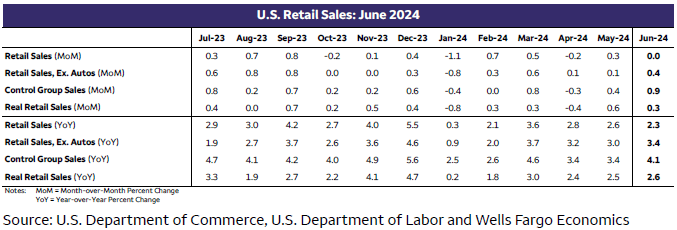
Despite lower sales at autos dealers and at gas stations, retail spending held steady in June. Excluding those categories, it was the best month since January 2023, and that means upside risk for Q2 consumer spending.
When doing nothing is really something
Retail sales stalled in June, but that was actually a lot better than expected. For starters, the consensus expectation was for 0.3% decline, and on top of that, last month's modest 0.1% increase was revised up to a 0.3% increase which should have set up a more difficult base for the June change.
The rationale for such low expectations was rooted in expectation for some distortions this month. For starters, some softness is price related, particularly in gas prices which were down about 14¢ from May. There was also further price declines in the auto sector, but remember that dealers were also contending with a major cyber-attack on a software firm that supports auto dealers across the country. Ex-autos and gas, retail sales were up 0.8%. That is the biggest monthly gain since January 2023.
In stripping out a few more components, like restaurants and building materials, the control group measure of sales came in even stronger, rising 0.9% last month. Recall that this measure feeds directly into the BEA's calculation of real goods spending in the GDP accounts, and while retail growth has outpaced broader goods spending recently (chart), the better-than-expected outturn positions for a rebound in Q2 goods consumption after a weak first quarter. Real goods spending slipped at a 2.3% annualized rate in Q1, and today's data present some upside to our estimate for total real personal consumption expenditures to rise at a 1.6% annualized rate in Q2.
Author
Wells Fargo Research Team
Wells Fargo