Currency market – BOJ: 2013 to 2015 and 2023
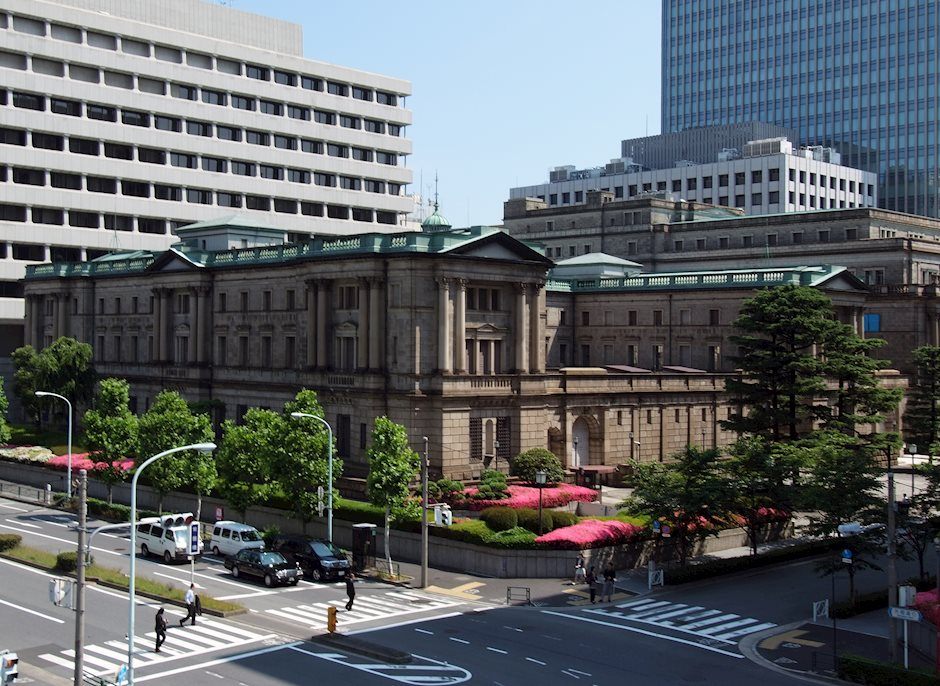

The BOJ is represented by 9 members to cover Japan's 9 regions and 47 prefectures. Each board member represents a specific region. Inside regions are cities. Another nomenclature for prefecture is city as 47 Japanese cities. Tokyo for example is located in the Kanto region along with 6 cities.
Each region is specialized. Ueda spoke today in Osaka in the Kansai region and represents the 2nd largest economy of Japan with a population of 20 million. The Chubu region represents the manufacturing base and provides Japan's exports. Shikoku provides Agriculture and adds to a higher GDP.
The BOJ's board of 9 members appears as a permanent fixture to never change.
The question for today is why the mixed messages from Ueda to Interest rates and YCC. Are changes ahead and what will change. What caused the mixed signals or Ueda just talking the Old BOJ lines from decades past.
I submit, its old talk from decades ago as Ueda served as a BOJ board member in 2014. He knew and saw the wholesale changes from 2015 and the positive economic effects. More importantly, the BOJ as a deeply conservative body never renders wholesale changes. Moves are done in tiny increments.
The question to the BOJ is not how great were changes but find the flaws and problems. None exist and none will be found after the current 2 year study is complete.
Ueda's speech today highlighted every favorite BOJ phrase dating to 2013. Economy recovering moderately is an all time favorite and seen in every BOJ statement, Minutes and Outlook report since 2013.
Monetary Easing has been part and parcel to the BOJ since 2013 and contained in every statement, minutes and Outlook report particularly when Kuroda became BOJ Governor in April 2013 and Prime minister Abe was elected in 2013.
Baseline scenario. Normally refers to future Inflation and / or overall economy assessments.
Virtuous cycle. Refers to Wages and Prices. The BOJ is highly accommodtive to Japanese businesses.
Effect of rising import prices likely to gradually dissipate. Ueda's words today are exactly stated in all BOJ statements, minutes and outlook reports since 2013.
Import Prices. Here's a common statement from 2013 to 2015. This statement was common for 2013 – 2015. Import prices are expected to exert upward pressure for the time being, reflecting developments in international commodity prices and foreign exchange rates.
Internal and external shocks. Every BOJ minutes and Outlook report references overseas economies. The United States, Europe and China are most vital to the BOJ.
Inflation. Began as a Goal by BOJ Governor Skirakawa in 2012 then target and revolved to today's, 2% Inflation Target and sustainable.
FX moves to reflect fundamentals.
FX Moves Vs Fundamentals.
2013 = Quantitative easing. Inflation traveled from negative in 2013 to +3.4% in 2015. USD/JPY April 2013 – June 2015 = 92.56 to 125.85 or 3329 pips at 128 pips per month.
From 2013 to 2015, Import prices were high, Exports flat and Inflation skyrocketed along with USD/JPY. Inflation then dropped back to negative for the next 7 years. USD/JPY traded from 2015 to 2022 in a range from 125.00 to 98.00.
The main driver to USD/JPY moves from 2013 to 2015 was the additional insertion of Quantitative easing as Call Rates fell to the floor.
The driver to markets and fundamentals is the same old money supply V interest rate story. Inflation rise or fall was irrelevant.
By 2015, Quantitative Easing changed slightly from target to the monetary base and JGB yield maturities. Purchases from 3M traveled to 7 year then 10 year yields while the monetary base changed alongside JGB purchases. Remember 80 trillion then 120 and higher.
How vital is Inflation to the United States when interest rates skyrocketed and money supplies dropped like a rock to cause DXY to trade to 114.00 highs from low 90.00's.
A vital change for the BOJ was to the Outlook Report. From 2013 to 2015, the Outlook report was issued twice yearly. From 2015 to 2023, the Outlook report is released 4 times per year.
What didn't change since 2013 was the Monetary Policy Statement and to a certain degree as the Minutes. The BOJ went to the copy machines to release the exact same document every year since 2013.
Author
Brian Twomey
Brian's Investment
Brian Twomey is an independent trader and a prolific writer on trading, having authored over sixty articles in Technical Analysis of Stocks & Commodities and Investopedia.