Chair Powell: Status quo

Markets
On Wednesday, Wall Street mirrored the positive momentum in global equities, with major U.S. stock indexes registering gains. The benchmark U.S. Treasury yield also dipped to a one-month low following Federal Reserve Chair Jerome Powell's remarks, which reassured investors regarding the trajectory of interest rates amidst lingering inflation concerns.
While Powell acknowledged that inflation has not yet been wholly subdued, he signalled the possibility of rate cuts later in the year. This stance eased some of the apprehensions in the market, leading to a partial rebound from Tuesday's notable sell-off.
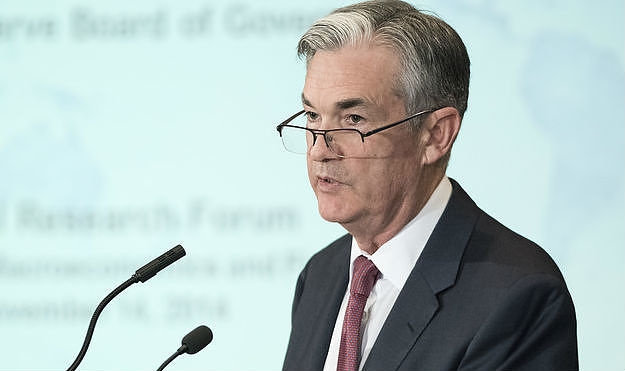
Powell's remarks during his congressional testimony, echoing a recent speech by the Fed's Christopher Waller titled 'What's the rush?', appear to have triggered a relief rally in the market. Despite the robust January jobs and price data, Powell's tone was not as hawkish as some analysts had anticipated.
Many observers thought that Powell could have struck a more hawkish tone, given the strength of the economic indicators. However, by sticking to the script, market policy concerns were put to ease.
We believe that our policy rate is likely at its peak for this tightening cycle. If the economy evolves broadly as expected, it will likely be appropriate to begin dialing back policy restraint at some point this year.”( Jerome Powell)
The recent data showing "hot" PCE inflation and personal income growth in January underscores the Federal Open Market Committee's (FOMC) vigilance. However, the decline in year-on-year PCE inflation measures is providing the Fed with additional breathing room to maintain a data-dependent and patient approach as they deliberate the timing of their first interest rate cut. But the core message remains one of successful disinflation and Fed rate cuts later this year.
Therefore, market expectations for rate cuts remain unchanged, reflecting the apparent signal of the status quo conveyed by the Chair. The steady state in rate-cut pricing suggests that investors perceive the Fed's stance as aligned. Hence, sentiment is in a non-bubble state of balance for now.
There is, ofcourse, the big February US jobs data released on Friday, which will be a crucial chapter in the rate cut enigma. Still, after one of the principal high-risk events of the week has come to pass, and if we can clear Friday’s NFP with the rates outlook relatively unscathed, it's plausible investors will then be able to re-stamp their ticket to board the second leg of the rally wagon journey in bullish fashion.
Regarding macroeconomic indicators, the latest Job Openings and Labor Turnover Survey (JOLTS) report released by the Bureau of Labor Statistics (BLS) on Wednesday indicated a minimal change in job openings compared to the previous month, offering an inconclusive snapshot of the labour market conditions as of the last business day of January.
The headline figure of 8.863 million job openings in the latest report may have disappointed those seeking signs of gradual normalization in the labour market. However, the decline in the quit rate provided a balancing factor. The release also presented challenges for actionable interpretation due to several revisions.
While the JOLTS update did not alter the prevailing narrative, we should expect a decline in job openings toward pre-pandemic levels to coincide with a weakening economy and actual job losses.
Forex markets
The US dollar sold off, not unexpectedly, after Powell hat tipped that the Fed is on track to cut rates this year.
USDJPY pushed below 149.50 and is perhaps posied to test 149 as Tokyo FX desks are taking the threat of a Bank of Japan rate hike more seriously, so it will be essential to keep an eye on the Tokyo Fix in the lead-up to the Bank of Japan meeting. However, if the US rate cuts expectations hold or increase post NFP, it is conceivable that, on its own, it could pull USDJPY below the 149 level.
Oil markets
Oil prices surged after the Energy Information Administration reported a significant drawdown of more than 5 million barrels (bbl) in total U.S. oil and petroleum products stocks during the week ended March 1. This reduction occurred as refiners increased their run rates following heavy maintenance, while demand for refined fuels experienced a notable uptick.
The report provided a bullish boost to the oil complex, indicating significant draws in gasoline and distillate stocks alongside a seasonal increase in fuel consumption. This suggests that US drivers are ramping up their demand for fuel, which is positive for the oil market.
And while crude stockpiles increased f for the sixth consecutive week, the unexpected decrease of 100,000 barrels per day (bpd) in domestic crude oil production, coming down from a record-high of 13.3 million bpd, provided additional price support for the oil complex.
Author
Stephen Innes
SPI Asset Management
With more than 25 years of experience, Stephen has a deep-seated knowledge of G10 and Asian currency markets as well as precious metal and oil markets.

















