Central bank inflation forecasts: ‘Trust us, we know better’
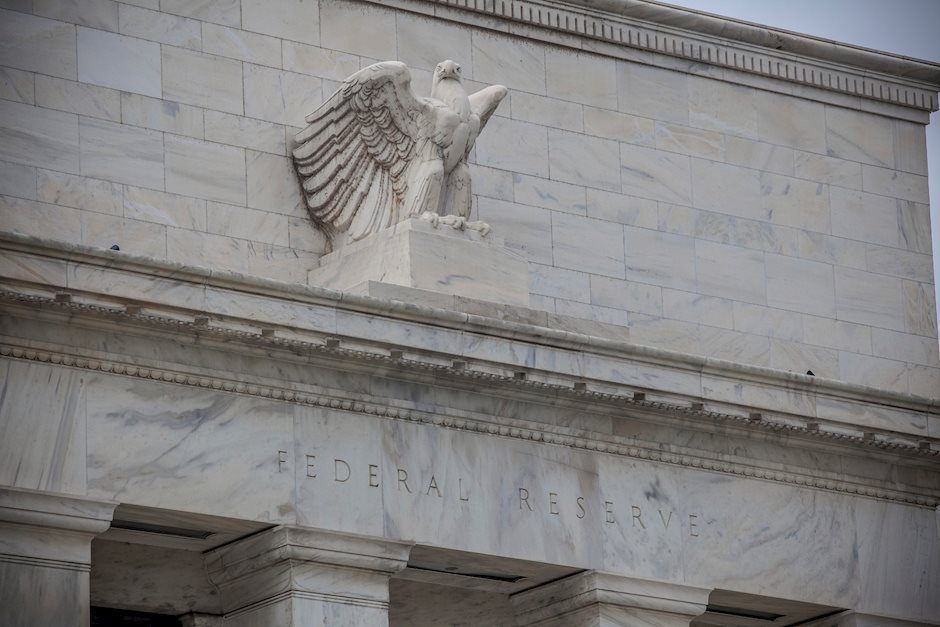

Strong belief in the quality of central bank economic forecasts enhances monetary transmission and hence the effectiveness of monetary policy. In the current environment of rising inflationary pressures, the belief of market participants that central banks have better forecasting skills should limit the rise in inflation expectations. Research casts doubt on whether such a belief is warranted. Although Fed staff projections tend to have lower forecast errors than private sector forecasts, the difference has narrowed since the 1990s. In the Eurozone, forecast errors for inflation of the Eurosystem/ECB staff projections were equal to those of the Survey of Professional Forecasters.
Strong belief in the quality of central bank economic forecasts enhances monetary transmission and hence the effectiveness of monetary policy. These forecasts can steer expectations of households and businesses but can also influence the assessment of private forecasters of the economic outlook.
This influence can be direct – private forecasts take central bank forecasts as a reference point – or indirect. In the latter case, changes in central bank communication or unexpected policy decisions can be interpreted as signaling a change in view about the future. An unanticipated rate hike can cause an upward revision of private sector forecasts, something which, at first glance, is counterintuitive.
These questions are particularly relevant at the current juncture, given the build-up of inflationary pressures, as reflected in business surveys in a large number of countries. This has caused an increase in market-based measures of inflation expectations. The message of the Federal Reserve and the ECB on the other hand is that higher inflation due to supply bottlenecks should be transient. If markets believe that central banks have better forecasting skills, this should limit the rise in inflation expectations. What does the historical record have to say on this? Based on an analysis by the ECB, the forecast errors for Eurozone inflation of the Eurosystem/ECB staff macroeconomic projections were equal to those of the Sufrvey of Professional Forecasters but below those of other institutions.
Yet, “all forecasters underpredicted HICP inflation between 2010 and 2012 and in 2017 and 2018, but inflation surprised everyone on the downside between 2013 and 2016.” In the US, ahead of the meetings of the FOMC, the staff of the Board of Governors of the Federal Reserve produces a comprehensive set of forecasts based on econometric models, subjective assessments, and a ‘suggested path’ for monetary policy. The forecasts are made public five years later. An analysis of core inflation for personal consumption expenditures covering the period 1997-2008 finds that, for forecast horizons beyond one year, Fed staff forecasts tend to be outperformed by alternative, simple approaches based on the historical behaviour of inflation or on the assumption that inflation follows a random walk.
An ECB working paper concludes that for the period 1968-2006, the Federal Reserve forecasts for inflation and output are superior to private sector forecasts. However, “the relative forecast performance is […] not robust in the presence of large macroeconomic shocks such as the Great Moderation and oil price shocks”. The Covid-19 pandemic represents a huge shock, so this point may be very relevant in the current environment. Other authors have found that the superiority of the Fed’s inflation forecasts has declined considerably after 1994, although it hasn’t disappeared altogether. To conclude, the insistence of the Fed and the ECB that the increase of inflation due to supply demand imbalances should be a temporary phenomenon can be read as a message of ‘trust us, we know better. Based on the research comparing the quality of central bank and private sector forecasts, market participants will probably err on the side of caution, which is reflected in the rise of nominal bond yields.
Author
BNP Paribas Team
BNP Paribas
BNP Paribas Economic Research Department is a worldwide function, part of Corporate and Investment Banking, at the service of both the Bank and its customers.