Canadian GDP Preview: Upbeat figure may be an opportunity to sell CAD – scenarios
- Economists expect Canadian growth of 3% in the second quarter.
- Upbeat growth may be a one-off amid a sea of issues.
- USD/CAD may drop in response to the news but rise afterward.


Economists expect a 3% annualized growth rate in a developed economy – and they may be correct in the case of Canada for the second quarter.
Canada stands out
The North American nation has been enjoying upbeat economic figures – while other economies struggle. The UK and Germany contracted, the euro-zone has grown by less than 1% annualized, and the US by only 2%. Headlines reporting about high uncertainty, risks of recession, and central bank easing have been seen everywhere.
But not in Canada.
Jobs reports have beaten expectations in both employment and wage growth – 3.6% annualized in June. This resulted in higher consumption with a leap of 0.9% in June. While the Bank of Canada has dropped its intention to raise rates – it is far from cutting them as inflation remains around the 2% target.
Overall, a 3% annualized growth rate seems right for the second quarter and such an outcome can push the Canadian dollar higher.
Why a CAD advance may be temporary
A 3% growth rate deserves applauds in the current global environment, but further context about the Canadian economy is needed. Looking back at the first quarter, we note a meager expansion of only 0.4%. Upbeat figures in the second quarter may represent a rebound – but only a temporary one.
Early indicators for the second quarter are mixed, with employment falling by 24.2K while wages continue rising by 4.5% year on year. Looking even further back to 2017, we see that Canada's economy advanced by 4.5% only to slow down to 1.7% in the third quarter of that year.
So, the economy may be tilting back to slower growth in the third quarter.
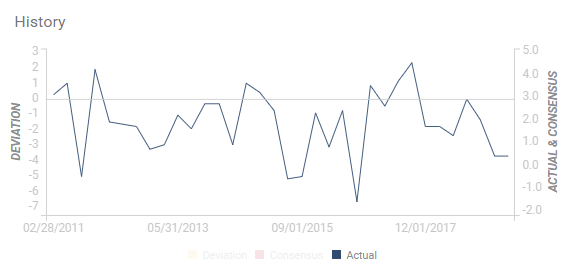
Data for Q3 will only be available in several months. In the meantime, price action in the loonie will be driven by other events – the trade war standing out. Despite positive comments from both Washington and Beijing, the US is set to impose new tariffs on September 1st – and China is on course to retaliate. The Canadian dollar has previously dropped in response to intensifying tensions.
Moreover, Canada's critical export is also on the back foot. Oil prices have failed to take advantage of falling inventories and lost ground as fears for falling global demand loom. Another potential slide in oil prices may further drive the C$ down.
Scenarios for trading USD/CAD
1) Within expectations: Overall, there is a case to sell the Canadian dollar – buy USD/CAD – in case the Canadian GDP comes out at 3% or a tad higher – up to 3.4% annualized.
2) Big beat: If GDP growth beats with 3.5% or higher, the loonie may advance nicely and ignore the factors mentioned above, gradually extending its gains.
3) A small miss of between 2.5% to 2.9% may trigger some choppy trading but without an immediate trend. However, given the global weakness, the C$ may drop as time passes by – similar to the first scenario.
4) Significant miss: It would take a growth rate closer to America's 2% to send the loonie lower immediately. It could continue falling later on.
Conclusion
Expectations for a robust growth rate of 3% seem justified but concerns about slower growth, later on, trade tensions, and weak oil prices may weigh on the Canadian dollar after the initial positive response. It would take a significant beat to sustain the loonie's rise. In case of a miss, the door to the downside is wide open.
Author
Yohay Elam
FXStreet
Yohay is in Forex since 2008 when he founded Forex Crunch, a blog crafted in his free time that turned into a fully-fledged currency website later sold to Finixio.

















