Bueller? Fed’s Powell talks tariffs, “tension,” and Ferris Bueller
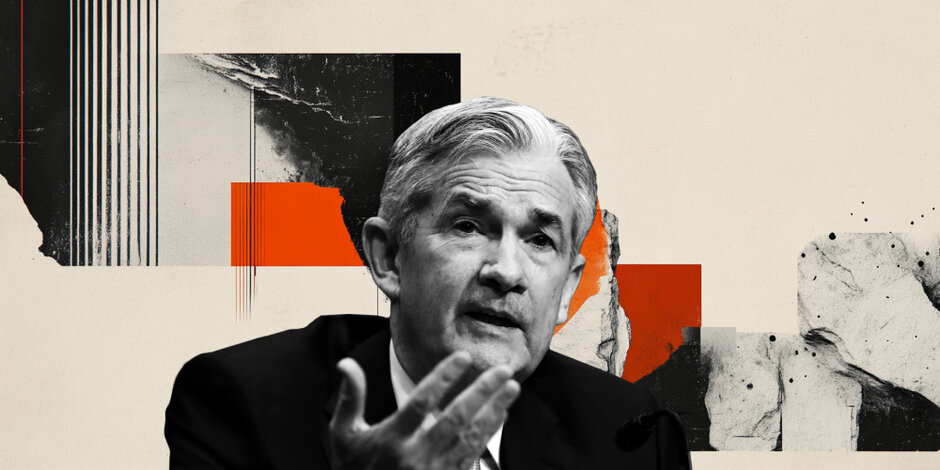

Federal Reserve Board Chairman Jerome Powell discussed the potential “tension” in meeting the Fed’s dual mandate at an address delivered to the Economic Club of Chicago.
The tension refers to the challenges that may emerge in seeing the Federal Reserve’s dual mandate of price stability and maximum employment move in sync.
“Our obligation is to keep longer-term inflation expectations well anchored and to make certain that a one-time increase in the price level does not become an ongoing inflation problem,” Powell told the assembled Wednesday.
The Fed chair added that without price stability, the economy cannot achieve long periods of strong labor market conditions.
“We may find ourselves in the challenging scenario in which our dual-mandate goals are in tension,” Powell said. “If that were to occur, we would consider how far the economy is from each goal, and the potentially different time horizons over which those respective gaps would be anticipated to close.”
Tariff impact: Higher inflation, slower growth
Inflation rates have dropped in recent months, with CPI inflation dropping to 2.4% in March, the lowest since last September. Powell also said that early estimates show that PCE prices rose 2.3% over the 12 months ending in March – with core PCE prices rising 2.6%.
Meanwhile, the economy has added 150,000 jobs per month, on average, through March, which is solid, but down from last year, he said. But going forward there is uncertainty around both sides of the mandate.
Powell also addressed the substantial policy changes initiated by the Trump Administration, including trade, immigration, fiscal policy, and regulation. With those policies still evolving, their impacts on the economy are highly uncertain, he said.
On tariffs, specifically, Powell said the increases are “significantly larger than anticipated.” And the economic effects will likely include higher inflation and slower growth.
“Both survey- and market-based measures of near-term inflation expectations have moved up significantly, with survey participants pointing to tariffs. Survey measures of longer-term inflation expectations, for the most part, appear to remain well anchored,” Powell added.
On the economy, Powell said the data suggests that growth slowed in the first quarter compared to last year. The official GDP numbers for Q1 come out on April 30.
Also, surveys of households and businesses show a “sharp decline in sentiment and elevated uncertainty about the outlook, largely reflecting trade policy concerns,” he said. Powell added that forecasts for the full year point to slowing but still positive growth.
Life moves pretty fast
Powell concluded his speech by quoting “that great Chicagoan Ferris Bueller” who noted in the Ferris Bueller’s Day Off that ‘life moves pretty fast.”
It has certainly moved fast over the past few weeks with all of the massive changes announced around tariffs and trade policy. But Powell reiterated that while life moves pretty fast, the Fed is in no hurry.
“For the time being, we are well positioned to wait for greater clarity before considering any adjustments to our policy stance,” Powell said. “We continue to analyze the incoming data, the evolving outlook, and the balance of risks. We understand that elevated levels of unemployment or inflation can be damaging and painful for communities, families, and businesses. We will continue to do everything we can to achieve our maximum-employment and price-stability goals.”
Author
Jacob Wolinsky
ValueWalk
Jacob Wolinsky is the founder of ValueWalk, a popular investment site. Prior to founding ValueWalk, Jacob worked as an equity analyst for value research firm and as a freelance writer. He lives in Passaic New Jersey with his wife and four children.