Bank of Japan exits negative interest rate policy


Summary
-
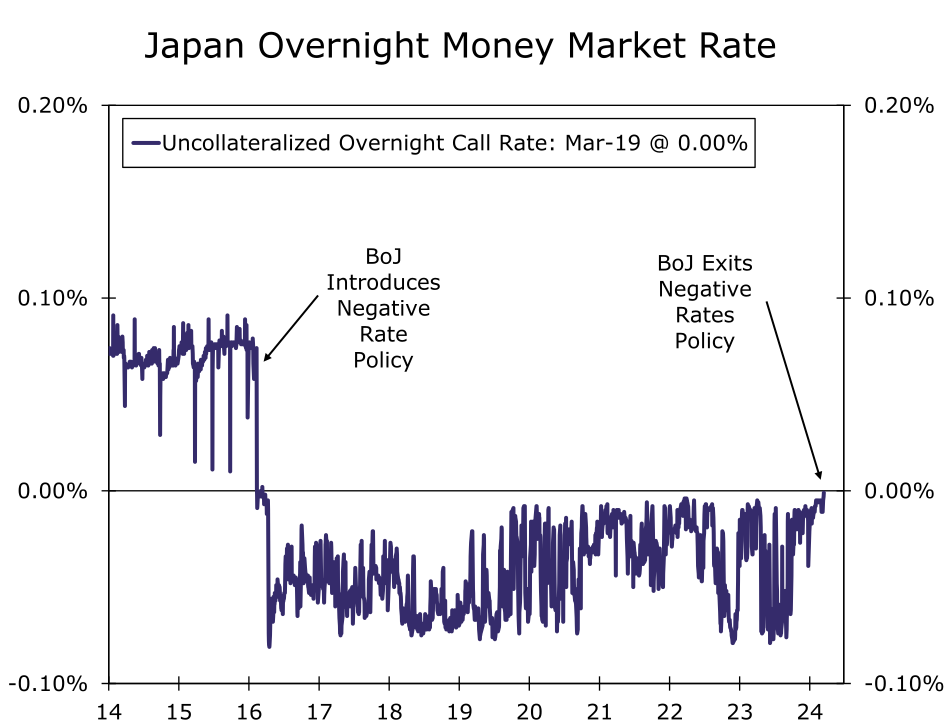
In a historic—albeit well-anticipated—policy shift, the Bank of Japan (BoJ) formally ended its ultra-easy and nonconventional monetary stance at today's monetary policy announcement.
-
The BoJ hiked rates for the first time since 2007, exiting negative interest rates and saying it would encourage the uncollateralized overnight call rate to remain at around 0.00% to 0.10%. The central bank also formally ended its Yield Curve Control policy, but said it would continue to buy Japanese government bonds.
-
The large pay increase announced by Japan's largest labor union federation as part of the Spring wage talks was clearly a key factor behind today's policy shift, and the central bank judged “it came in sight that the price stability target of 2 percent would be achieved in a sustainable and stable manner” over time.
-
The BoJ did not offer clear guidance of further monetary tightening. However, so long as trends in Japan's economic growth and wage and price inflation remain reasonably constructive going forward, we expect the central bank to lift the target range for the uncollateralized overnight call rate by 10 bps, to 0.10% to 0.20%, at its October monetary policy meeting. We also see the risks as tilted to further monetary tightening in 2025.
Author
Wells Fargo Research Team
Wells Fargo