A protocol for overconfidence after a winning streak – EUR/USD, NZD/JPY, ETH/USD


Weekly thoughts
After a fantastic March and April, I have had a rough couple of weeks trading.
And that’s usually how it goes - that’s why I have a protocol to deal with it.
Directional/volatile markets are the best friend of momentum trading.
Likewise, range-bound/volatile markets are great for reversion-to-the-mean traders.
Investors tend to prefer lower volatility.
March and early April had strong trends especially in forex markets. But heading into May it's been more choppy.
My style of trading uses momentum. Volatile and non-directional (i.e. choppy) markets tend to be the worst for trend following/momentum.
When the market aligns with your strategy, naturally your trades tend to work out better - and you go on a winning streak. This is a pretty good feeling.
Your analysis is being proven right. Your P&L is ticking up. You start to feel like you’ve cracked it – like you’re seeing the market clearly and executing well. And, to be fair, you probably are.
BUT..
“All good things must come to end”
There are two things that usually conspire to end a winning streak. As traders, we must learn to manage one while accepting that we can’t control the other.
Those two things are:
1) Overconfidence after a winning streak
2) Market conditions change
1. Overconfidence
After a string of wins, you may start to loosen up. You take trades that aren’t quite as clean. You size up when you probably shouldn’t. You skip waiting for full confirmation because “you know where this is going.”
You’re not being reckless, just a little too comfortable. But comfort is a dangerous thing in a game where risk is ever-present.
Overconfidence can be subtle. It might look like:
- Taking more trades than usual
- Thinking you’ve ‘earned’ a bigger position size
- Ignoring small red flags in a setup
- Dismissing losing trades as anomalies rather than feedback
The problem is that overconfidence blinds you to risk just as market conditions start to shift. Which brings us to the second reason winning streaks end.
2. Market conditions change
This is the part you can’t control.
Markets don’t stay the same. What worked last week or last month might stop working tomorrow. Volatility can dry up. A strong trend can suddenly stall or reverse. A clean breakout environment can morph into a range-bound mess.
As traders, we’re often the last to know the shift has happened, usually after a few trades stop working and we start questioning ourselves.
So, how do you deal with it?
The post-winning streak protocol
Winning streaks can cloud judgement. To counter this, you create a hard rule that forces you to pause, reassess, and re-centre.
Here are some examples of how to structure that rule:
Rule 1: The “3-win pause”
After 3 consecutive winning trades, you take a minimum break from trading. It could be 1 day for swing trades, 2 hours for a day trader.
Why it works:
- Gives emotional highs time to settle.
- Forces you to re-engage with the market with fresh eyes.
- Prevents overtrading from euphoria.
Rule 2: The post-win checklist
After X consecutive winning trades (you decide the number), you must complete an extra checklist before entering your next trade.
The checklist could include:
- Is this setup as good as or better than the last winning trades?
- Am I forcing this trade to keep the streak going?
- Would I take this trade if I were on a losing streak?
- Have market conditions changed?
- Is my position size in line with my plan?
You could even print this checklist and physically tick it off before you’re allowed to click "Buy" or "Sell".
Rule 3: “Quality-only” filter
After a winning streak, you only allow yourself to take Grade A setups i.e. no B or C setups for the next 5 trades.
This forces you to be highly selective and keeps the bar high. It removes the temptation to "keep the run going" with mediocre setups.
Rule 4: Trade size cooldown
After X number of winning trades, you reduce your position size by 25% for the next 2 trades regardless of how strong the setup looks.
These rules might seem like they “get in the way” of momentum, but that’s exactly the point. The biggest risk after a winning streak is yourself, not the market.
The market doesn’t care if you’re on a streak. But your behaviour does change and without guardrails, those changes can quickly turn profitable runs into costly reversals.
Setups and signals
We look at hundreds of charts each week and present you with three of our favourite setups and signals.
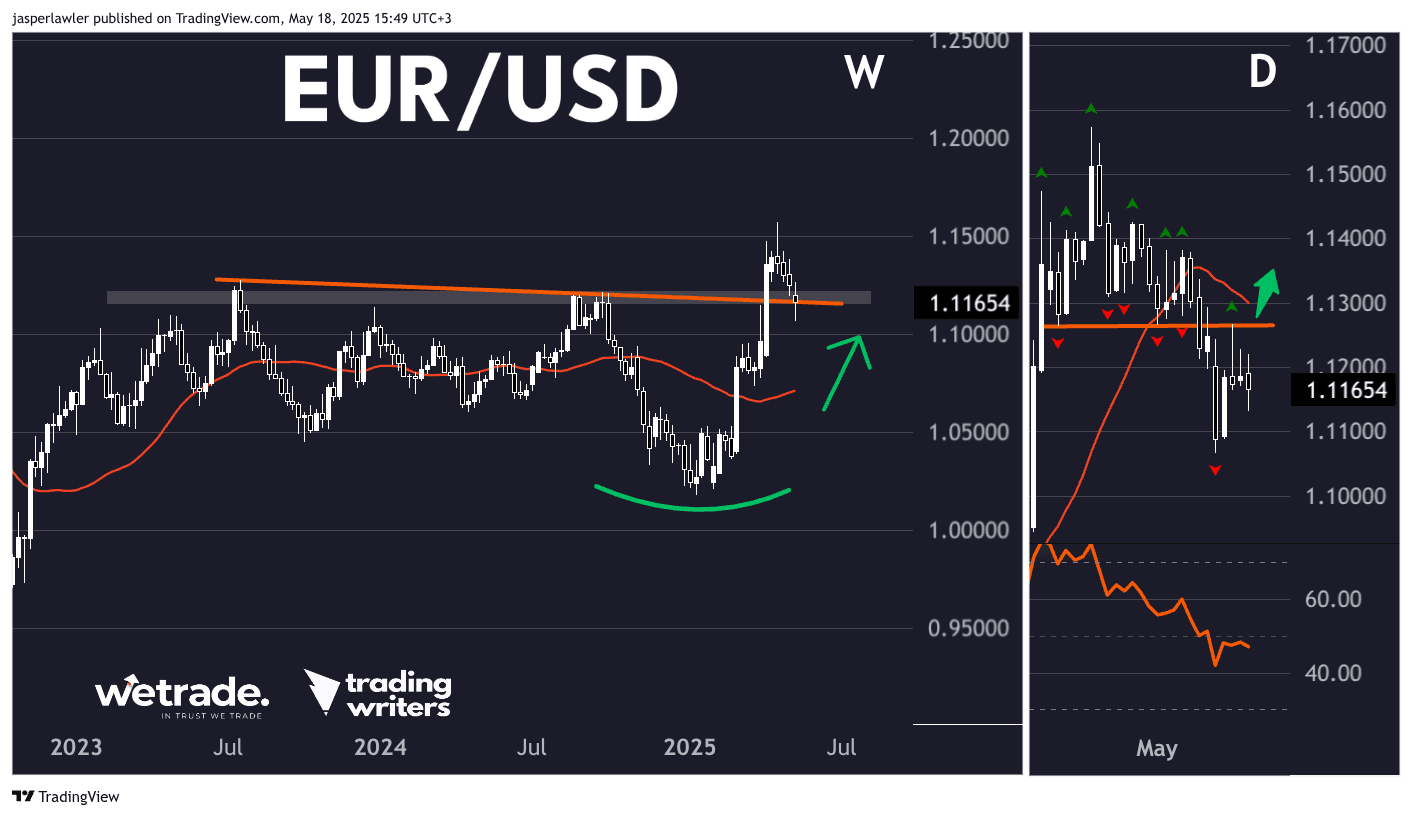
EUR/USD
Setup
Our bias based on the weekly chart is bullish. We’re looking for the price to find support on the retest of broken trendline resistance. A weekly close back under the trendline would turn us neutral/bearish.
Signal
The daily chart is in a downtrend so we want to see a bullish reversal. A daily close back over former support-turned resistance at 1.1265 could confirm the reversal.
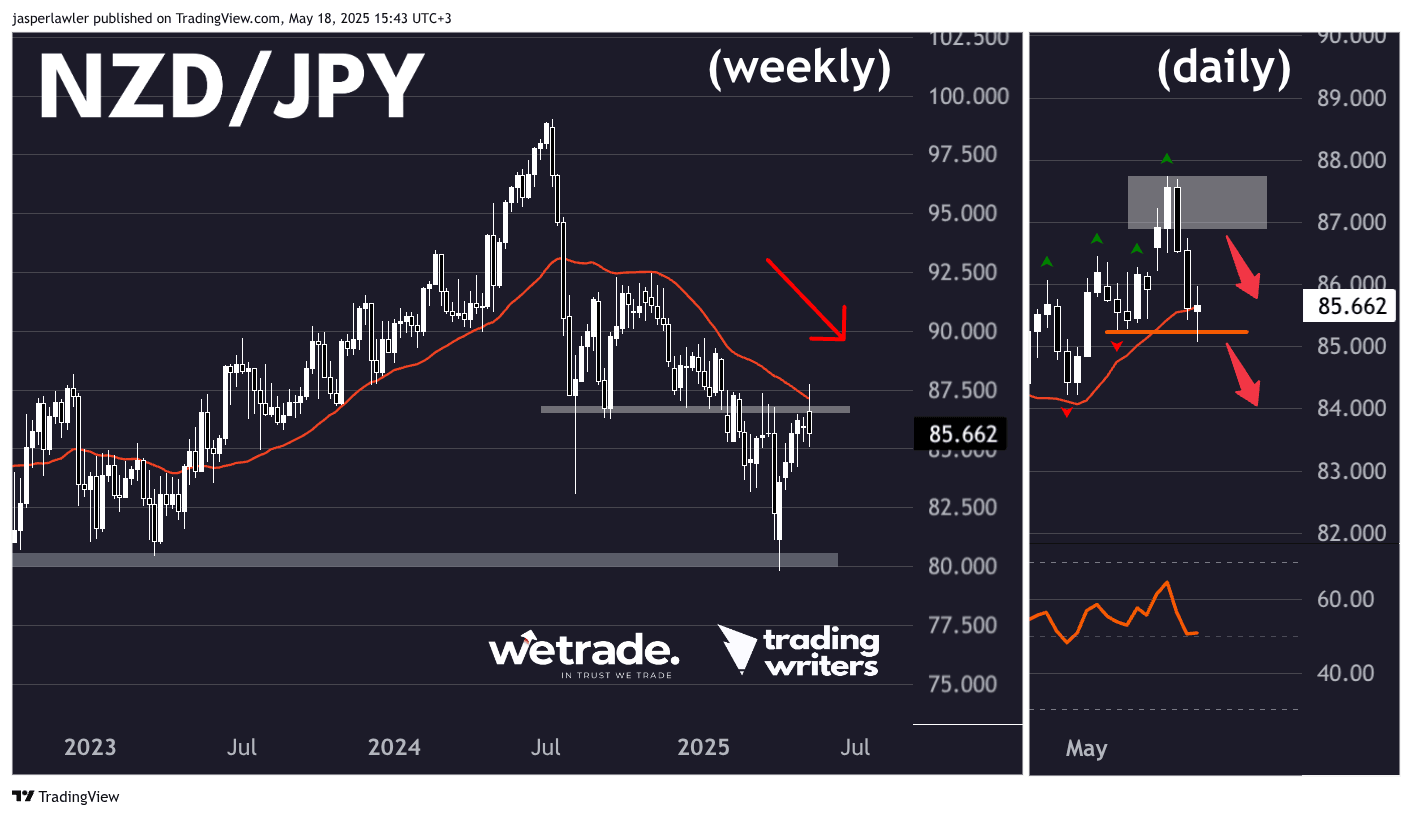
NZD/JPY
Setup
We are bearish while the weekly chart closes under the down-sloping 30-week moving average. The fakeout above 87 is the first hint of a bearish reversal. The strong move off 80.0 indicates a bottom could be in but this trade relies on just a retest of the lows.
Signal
For now the daily chart is trending up. While it continues to trend higher, we would not get short. But a close under 85 or a rebound and failure at 87 could be the signal that the price is rolling over.
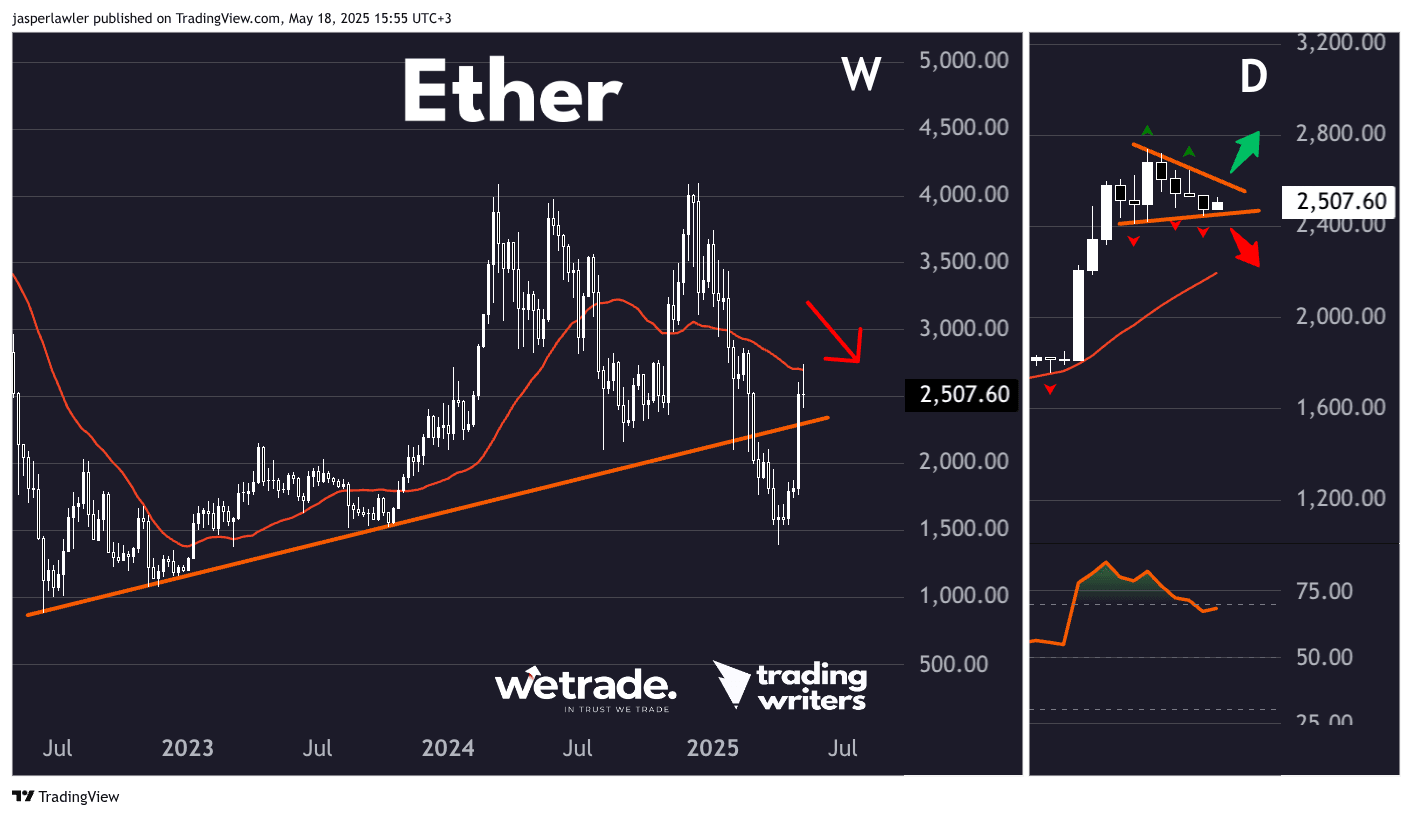
Etherium (ETH/USD)
Setup
We are bearish after ETH rejected its 30-week moving average. However, we will be ready to flip bullish should it close the week above the MA given the bullish momentum (up $1000 in a month).
Signal
A triangle pattern on the daily chart offers a chance to trade a breakout in either direction. Note, should the breakout fail - be ready to trade the fakeout in the other direction.
Author
Jasper Lawler
Trading Writers
With 18 years of trading experience, Jasper began his career as a stockbroker on Wall Street in New York City before sharpening his analytical skills at top trading firms in the City of London.