A hasty Fed and the impact on equities
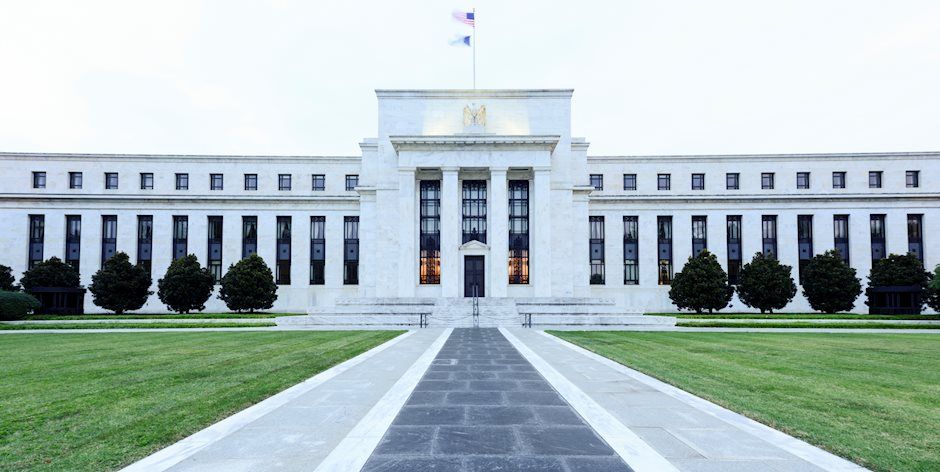

It is a rare event indeed when Bloomberg’s World Interest Rate Probability screen is telling me that there is a 98% chance of a Fed rate hike in 8 days’ time. Expectations for a Fed rate hike are rarely this high with more than a week to go until the rate decision. What is even more surprising is that the markets are now starting to look at a possible rate hike in June too. The Fed Funds Futures market is pricing in a 41% chance of a rate hike in June, compared with a 28% chance this time last week.
The Fed has made a concerted effort to prep the market for a rate hike this month, Dudley, Yellen and Fischer, all top brass at the Federal Reserve with dovish tendencies, have come out in support of a hike. The markets have duly reacted. When the market expects something to happen with a 98% of a probability, it should be pretty much baked into asset prices, so should be a non-event?
Could payrolls scupper the rate hike?
Well, yes and no. Janet Yellen was keen to point out in her speech last week that a rate hike was still data dependent. A disappointing payrolls report this Friday, particularly another month of weak wage growth, could put the brakes on a rate hike. If this happens then the market reaction is likely to be severe, particularly for the bond market, we would expect prices to shoot higher and yields to fall dramatically, the 10-year yield could, theoretically, break below 2.3% support. Equities, on the other hand, are likely to benefit, since it would keep the cost of capital lower for longer.
Why a hasty Fed may not interrupt this rally for long
The US equity market had a weak start on Monday, with global indices faltering. Losses were fairly contained, interestingly, the dollar and US Treasury yields both rose at the start of the week, suggesting that this second rate hike from the Fed could derail the equity/ Treasury yield/ US Dollar positive correlation, at least in the short term. “Three steps and a stumble”, so the saying goes, if the Fed hikes in March, and the market expects them to do so in June, this would be three rate hikes in 7 months, which could disrupt the equity market rally and give the bears the sell-off they have been so desperately looking for.
Not so fast…
I have attempted to highlight various analyses that show market sell-offs are quite hard to come by, and rallies are slow to fade. Recent analysis from Bloomberg suggests that when the S&P 500’s RSI – Relative Strength Index – moves into overbought territory it can be a bullish signal. Since 1929 the S&P 500 managed a 7% gain over the following 6 months after the RSI topped 75, compared with a 3.3% gain in other 6-month periods. JP Morgan also sent a note to investors this week, which told them to stick with stocks in the short-term.
In my humble opinion stocks still have some way to go, after all rates are rising from an historically low base, prospects for growth in the US are extremely high, and global economic data is strong, the Citi Economic Surprise index for major economies is close to its highest level since 2010. This all fills me with confidence that the fundamentals will win the day, rather than the naysayers worried about valuation metrics.
Don’t forget about the ECB and UK Budget – in that order
As we progress through to Tuesday the focus is likely to shift to the ECB (Thus) and the UK Budget (Weds). We believe the Budget could be negative for UK asset prices, especially the pound, as the tighter fiscal stance of the UK versus the US weighs on sterling. The ECB, while it is unlikely to announce any taper for at least 3-6 months, could boost the euro if it backs away from future rate cuts. However, this may be a short-lived boost, as Dutch election risks mount ahead of polling day next Wednesday. EUR/USD risk reversals of a 3-6 month tenor suggest that French elections risk is starting to bite, and bearish bets are at their highest level since 2012.
G20 Fin Min meeting: The US rules the roost
The other thing markets had to digest on Monday was the leaked G20 Finance Ministers’ draft communiqué ahead of their meeting next week in Germany. The key changes: the part about not being protectionist was removed, and replaced with something much lighter – commitment to free trade etc. Also, a reference to members avoiding devaluing their currencies was also missing. Hence the RBA warned overnight that a strong AUD could trigger a rate cut. The RBA may have to deliver on that promise as AUD/USD actually rose on the back of the meeting. There was no reference to Brexit, which suggests that this communiqué was pretty much written by US Treasury secretary Mnuchin, laying out the US’s desire for wiggle room on currency intervention and protectionist trade policies. This is possibly a little too obtuse for the market to react to in the short-term, but it lays out the big themes that could hurt the markets in the coming years.
Author
Kathleen Brooks
XTB UK
Kathleen has nearly 15 years’ experience working with some of the leading retail trading and investment companies in the City of London.