Well, well, well ... Do you still think the Fed will hike rates?
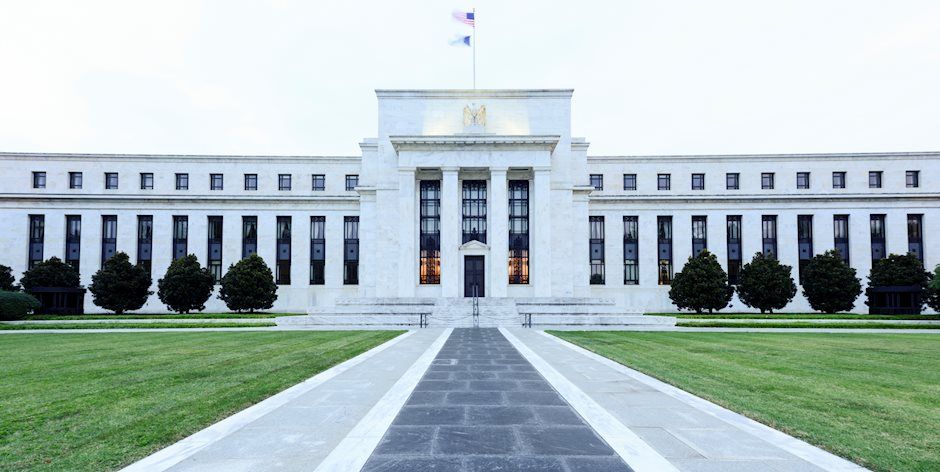

Well, well, well. So now do you finally see?

Source: iStock
I have been advocating for sometime now that the US economy is in a lot worse shape than markets had been banking on, literally banking on.
One can't be blamed though for being sucked into a trance by the Fed's mantra of course, but maybe a lesson can be learned?
I'm talking about the government's first estimate of the second quarter GDP of course that came out on Friday.
Markets had been set up, literally, for a big rebound of the 1.1% growth in the first quarter and the consensus went from a low of 2.2% to as high as 3.4%.
What did we get?

Source: iStock
We got 1.2%. This was substantially lower than estimates, even well below the lowest estimate anyone had made actually. There were also revisions to the prior numbers. Q4 of 2015 and Q1 of 2016 stood out the most to me. Q1 2016 that was already at a terrible 1.1% was revised down to just 0.8%. For the Q4 of 2015, the quarter where the Fed decided to act on when they "finally" raised for the first time in about nine years that had been reported as 1.4% was also revised down to just 0.9%. Now, what will the numbers be revised down to for Q2 do you think? Well, we will just have to wait and see, (Aug 26thfirst revisions), but one thing to me that remains clear is that the Fed ain't going to be raising interest rates in September, that is for sure, and you can bet your bottom dollar that they will not be doing anything before the elections either.
One of the main reasons that I don't think the Fed will raise interest rates is because the average rate of GDP is slightly below just 1% based on the numbers above, and when Q2 is potentially revised lower eventually that will be a number closer to zero, when you then factor in the ridiculously low government version of what inflation exists in the US economy and start to account for the fact that the nominal GDP numbers are always deflated with inflation being subtracted. So, should there be a more realistic inflation reading accounted for, we would then be looking at negative GDP and US economy would actually be in a technical recession by now on first estimates of GDP Q2, so this is hardly the right environment to be hiking interest rates is it?
However, it still feels like the market doesn't get it

Source: iStock
Admittedly, Yellen had emphasized more importance on consumption within the data, thus suggesting a focus on GDP excluding inventories and exports and this time around. Consumption actually added 2.8 percentage points to GDP. Either way, I still can't find a positive in the data to be frank, even the best components are not particularly encouraging because I simply don't believe that they can be accurate. Where are the previous data to suggest that consumer spending has been that robust? You have to go back to pre 2009 to find such data in fact. Meanwhile, Yellen's presentation at the Jackson Hole will be the next key event that will likely conclude that September is off the cards and ironically, she speaks the same day as the first revision to US Q2 GDP.
Don't take my word for it, ask the experts
For now, we turn to nonfarm payrolls at the end of this week, and by now, if you have followed my analysis, you will understand how to interpret the data which needs much scrutiny before an accurate conclusion can be made about the US jobs market. As the year goes by, I anticipate that the jobs data will worsen and indeed this will weigh on consumer spending. That in turn pulls down the GDP for the latter part of H2 that will be reported in the first half of 2017, with lower revisions accounting for the lag which in turn will leave the Federal Reserve in a predicament of higher CPI and lower consumption and growth in the economy. But don't take my word for it, look up former Fed chairman Alan Greenspan, the architect of this nonsense model, who spoke out recently warning of global stagnation. He predicts weak growth and higher inflation going forward, noting rising wages as the first sign of inflation picking up
"I think we're seeing the very early signs of inflation beginning finally to pick up as the issue of deflation fades," Greenspan said in an interview last week on Bloomberg, adding, "we're in a situation now where, looking at the interest rate levels we're looking at, and the inflation rates we're looking at, it's very clear that we're going to be moving reasonably shortly into a wholly different phase."
Author
Ross J Burland
FXStreet
Ross J Burland, born in England, UK, is a sportsman at heart. He played Rugby and Judo for his county, Kent and the South East of England Rugby team.