Federal Reserve leaves rates unchanged, sees a stable future
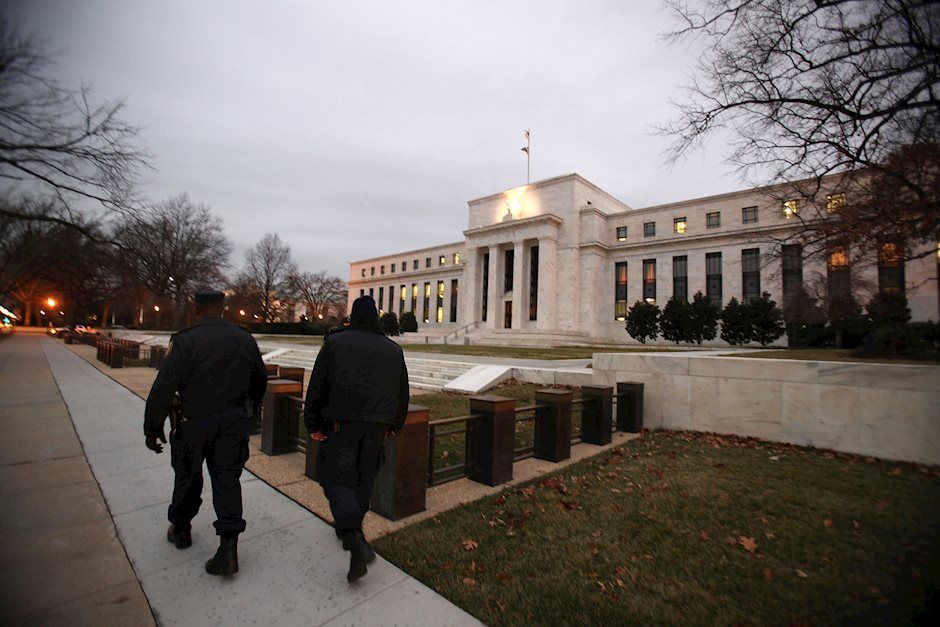

The Federal Reserve kept interest rates steady and the governors indicated that they expected little change in the economy or Fed policy for the next year.
In the first status-quo decision since May the FOMC voted to keep the fed funds target range at 1.5%-1.75% after reducing it 0.25% at each of the previous three meetings. Following the last cut in October Chairman Powell said that the bank deemed the risks to the US economy from the trade dispute with China and the global slowdown had diminished sufficiently to put policy on hold.
The unanimous decision of the 10 member board was also the first since the committee began easing rates. Esther George of Kansas City and Eric Rosengren of Boston had voted against each of the prior decreases.
New economic and rate estimates, the Fed’s quarterly Projection Materials, left GDP predictions unchanged from the last release in September, 2.2% this year, 2.0% in 2020 and 1.9% and 1.8% in subsequent years. The US has averaged 2.4% through the first three quarters in 2019.
Fed funds were projected to be 1.6% at the end of this year and the same for 2020, both down from the 1.9% estimates in the September materials. These adjustments reflected reality. At the conclusion of the September meeting the base target range had been 1.75%-2.0%.

Currency markets were disappointed with the Fed’s non-committal outlook and sold the dollar. The euro gained about 50 points to a high of 1.1146 in the hour after the release, its highest in five weeks.

After each of the previous rate cuts Chairman Powell had stressed the strength of the US economy particularly in the labor market and pointed out that the change in policy was necessary to defend the US expansion from external threats not because of domestic factors.
In his press conference following the October meeting Mr. Powell noted that the US-China trade war and the British exit from the European Union seemed closer to solution.
In addition the US economy has prospered since the October FOMC. Non-farm payrolls have had an excellent quarter with the three month moving average rising to 205,000, increasing wages and a return to the five decade 3.5% low in the unemployment rate. The Atlanta Fed’s current GDP estimate for the final three months of the year is 2.0% sharply higher from 0.3% just one month ago.
Mr. Powell was decidedly lower key in his description of the US economy on Wednesday, mentioning the positive aspects of the expansion fewer times and less emphatically than he did in his last three efforts.
In reference to inflation which has persistently been below the Fed’s 2% target, he made it plain that the bank will not raise its base rate until it sees a significant and persistent increase in prices.
The combination of the Chairman’s subdued performance, the equivocal Fed economic and rate projections and the return of inflation to the policy mix put the dollar on the defensive and provided little spirit for equities which were largely unchanged.
It may be that with the two most often cited external threats to the US economy, Brexit and the US-China trade war reaching potential climaxes in the next few days, with a wide variety of possible outcomes, the central bank did not feel now was the proper time for confident assertions about the economic future.
Author
Joseph Trevisani
FXStreet
Joseph Trevisani began his thirty-year career in the financial markets at Credit Suisse in New York and Singapore where he worked for 12 years as an interbank currency trader and trading desk manager.

















